Senate Judiciary Hears Kash Patel Nomination for FBI Director; Senators Clash Over Weaponization, Jan. 6 Choir and Grand Jury Testimony
Get AI-powered insights, summaries, and transcripts
SubscribeSummary
The Senate Judiciary Committee conducted lengthy questioning of Kash Patel, President Trump's nominee to lead the Federal Bureau of Investigation, focusing on his record, public statements about the FBI and January 6, the 'J6 prison choir' fundraiser, his grand jury testimony in the Mar-a-Lago documents matter and surveillance law reforms.
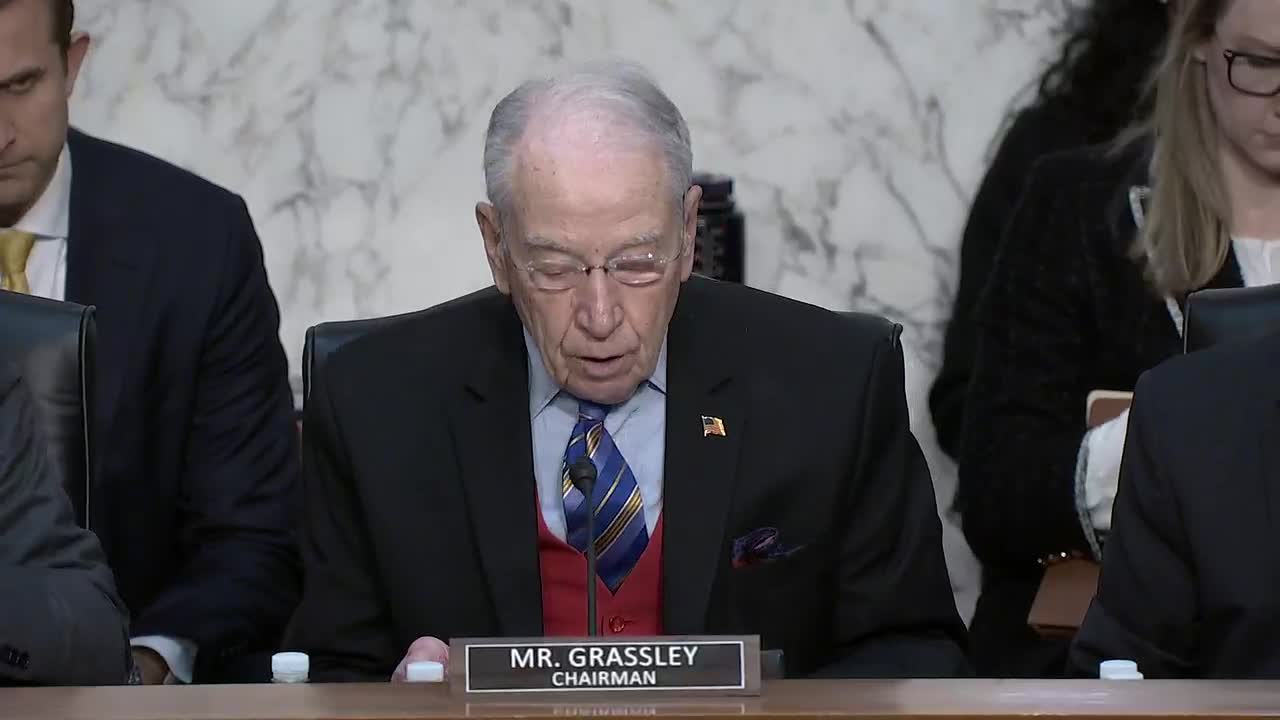
The Senate Judiciary Committee held a confirmation hearing for Kash Patel, President Trump's nominee to lead the Federal Bureau of Investigation. Chairman Grassley opened the proceedings and set the ground rules; Senator Dick Durbin and a range of other senators pressed the nominee on his public statements, prior public-service record, fundraising tied to a recording called the "J6 prison choir," and his testimony before a grand jury in the Mar-a-Lago documents matter.
The hearing focused on trust and the shape of the FBI's mission. Patel told the committee that, if confirmed, he would prioritize violent crime and national-security threats and said he would "let good cops be cops" while also promising faster responses to congressional oversight requests. He affirmed a commitment to transparency and said he would not tolerate "weaponization" of law enforcement: "I will ensure if confirmed that no American is subjected to that kind of torment," Patel said in response to questions about whistleblowers and alleged retaliatory actions.
Patel's critics pressed him on multiple specific concerns. Several Democratic senators cited passages from Patel's book and public remarks that characterize a "deep state," a list of perceived opponents, and statements about prosecuting political adversaries or pursuing the media. Sen. Dick Durbin quoted from Patel's writings and speeches and said those statements raised doubts about Patel's neutrality; Sen. Sheldon Whitehouse and other Democrats warned that rhetoric about political retribution threatened civil liberties and public trust. Conservative senators, including Sen. Mike Lee and Sen. Thom Tillis, defended Patel's prosecutorial and national-security experience and said his record of criticizing past FBI conduct showed a readiness to reform what they described as politicization at the bureau's leadership levels.
A sustained thread of questioning concerned the "J6 prison choir" recording and related fundraising. Senators asked whether Patel produced, promoted or financially benefited from an album that used audio associated with incarcerated January 6 defendants. Patel said he did not personally record the music and that proceeds were used by his foundation for grants to families in need, including grants to service members and police families; he also denied profiting personally. Several senators pressed for more detailed accounting and donor/recipient information; Patel said those expenditure details would be provided in post‑hearing disclosures and answers for the record.
Another major area of dispute was Patel's grand jury testimony and public statements about classified documents found at Mar-a-Lago. Patel repeatedly urged release of his transcript and told senators he had asked the Department of Justice to make his grand jury testimony public; other senators noted that grand‑jury material is subject to court rules and that a court order or other lawful mechanism may be required. Senators also asked Patel whether he had witnessed the former president declassify documents; Patel said he had witnessed a presidential declassification order but said he did not have the full documentary picture of what was recovered at Mar-a-Lago and encouraged committee access to the grand‑jury record.
Patel and multiple senators debated Section 702 of the Foreign Intelligence Surveillance Act (FISA). Patel described 702 as a necessary national security tool used to produce presidential daily briefings and to aid hostage‑rescue operations; he also acknowledged abuses documented by the FISA court and said he would work with Congress on reforms. Senators including Mike Lee and others argued that improper queries and incidental collection of Americans' communications have eroded public trust; Patel said he was open to additional safeguards but cautioned that real‑time warrant requirements could impair time‑sensitive operations.
Senators pressed Patel on other policy matters brought up in public reporting: an internal FBI memo listing houses of worship and the treatment of parents who attended school board meetings, the role of intelligence collection inside the FBI, the effect of pardons on public safety and the staffing and geographic balance of FBI field personnel versus headquarters staff. Patel pledged to investigate any improper targeting of religious worship or parents, to protect whistleblowers, and to move more resources outside the Washington, D.C., area to address violent crime and narcotics trafficking.
The hearing included a mix of endorsements and dissent. Witnessed letters and statements from law‑enforcement groups and former officials both supporting and opposing Patel's nomination were entered into the record; some former FBI officials and a collection of state attorneys general and sheriffs' groups publicly supported Patel, while other former senior officials and a group of career law‑enforcement veterans urged caution. No final confirmation vote occurred during the hearing.
The committee collected follow‑up questions to be answered for the record; senators warned that answers and production of additional records (including, for some senators, Patel's grand-jury transcript and any related DOJ findings) would shape the committee's advice and consent recommendation. The hearing closed with repeated admonitions from both sides that the FBI must be de‑politicized, but with sharply divergent views about whether Patel's past statements and associations show he would do that or whether they indicate a risk of partisan direction if confirmed.