Citizen Portal

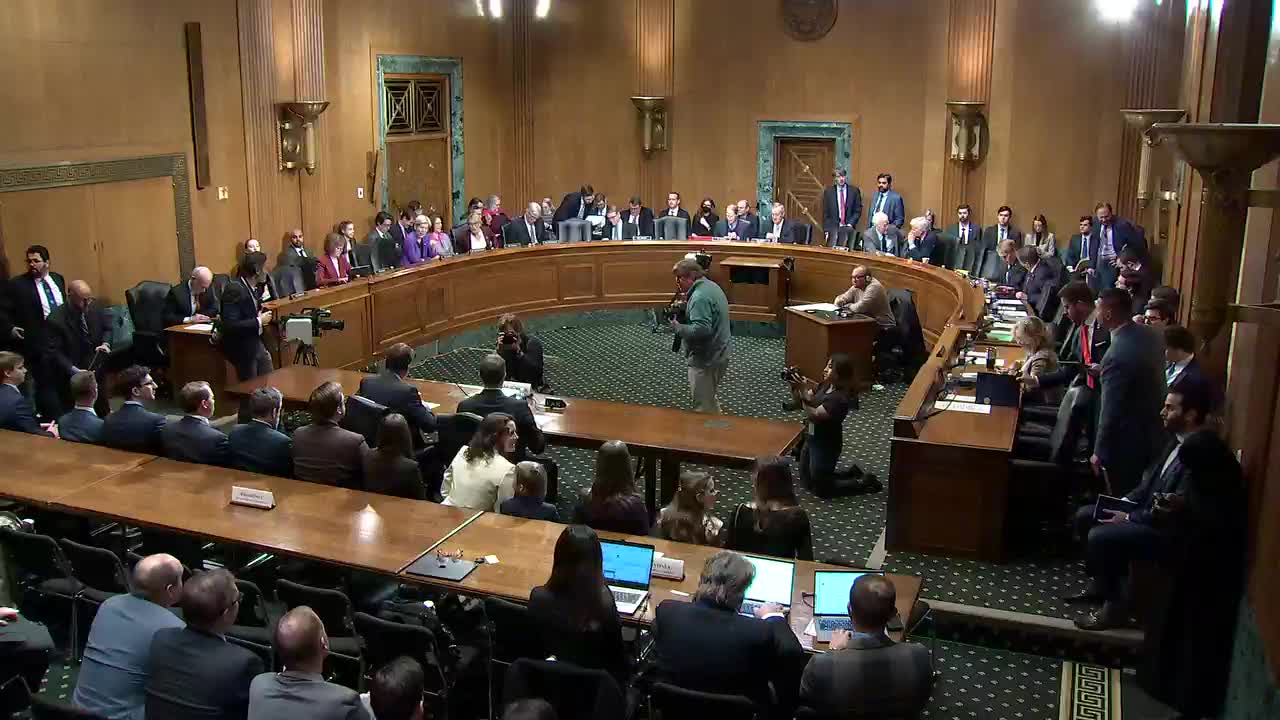
Senate Finance Committee Questioned Jameson Greer on Broad Tariffs, China Compliance, USMCA and Forced Labor at USTR Hearing

2247206 ยท February 6, 2025

Get AI-powered insights, summaries, and transcripts

Subscribe
AI-Generated Content: All content on this page was generated by AI to highlight key points from the meeting. For complete details and context, we recommend watching the full video. so we can fix them.

Summary

The Senate Finance Committee heard testimony from Jameson Greer, President Trump's nominee for United States Trade Representative, on Oct. 12, 2025, and pressed him on whether he would consult Congress on tariff plans, enforce trade agreements with Mexico and Canada, and sustain enforcement actions against China and other trade partners.

The Senate Finance Committee heard testimony from Jameson Greer, President Trump's nominee for United States Trade Representative, on Oct. 12, 2025, and pressed him on whether he would consult Congress on tariff plans, enforce trade agreements with Mexico and Canada, and sustain enforcement actions against China and other trade partners.

Greer told the panel he would follow statutory consultation requirements and provide timely briefings: "Chairman Crapo, we certainly expect to follow the law to the tee with respect to consultations with Congress. I agree with you exactly that the statute directs me to report directly to the president and to you," he said. Committee members repeatedly sought commitments that Greer would keep the Finance Committee informed before major trade actions and that he would pursue enforcement where partners failed to meet their obligations.

Why it matters: Senators said the administration's recent executive orders and public statements about large, across-the-board tariffs could affect farmers, manufacturers, energy consumers and tourism and raised questions about who in the administration would set trade policy. The committee used the hearing to press Greer on specific tools USTR can use, including Section 301 investigations, dispute settlement, the annual National Trade Estimate and the USMCA's enforcement mechanisms.

Most senators opened by welcoming Greer and describing constituency-specific risks. Chairman Mike Crapo noted the statutory reporting relationship for USTR: "By statute and frankly in accordance with our constitution, our negotiator must report to Congress, which means he reports to the Finance Committee." Senator Ron Wyden (ranking member) repeatedly warned that sweeping tariffs risked raising costs for American families and businesses and demanded a clear justification for a universal tariff approach. "Donald Trump governs by whim, and in trade that hurts American families," Wyden said while arguing for targeted measures that minimize consumer pain.

Greer declined to endorse an immediate across-the-board tariff as an established formula, saying the administration should consider a range of tools. He told senators he favors a "toolbox" approach that can include tariffs where appropriate and promised to coordinate with other agencies: "My expectation at a minimum is that the Trump administration is also simultaneously with robust trade policy, they'll be implementing tax policy, energy policy, regulatory policy... and that includes consultation with this committee." He also said he would review China's compliance with the Phase 1 agreement as directed in the presidential trade policy memorandum.

Key policy areas discussed

- Tariffs and exemptions: Multiple senators pressed Greer on the economic effects of the president's statements about 25% tariffs on broad classes of imports and a 10% energy tariff referenced by administration materials. Lawmakers asked whether an exclusion process would be transparent and nonpartisan; Greer said any exclusion process, if used, should be fair and that any program must be transparent and open to small as well as large firms.

- Consultation with Congress: Greer repeatedly committed to the committee's statutory consultation rights. When asked directly whether he would provide prompt, written answers to members, he replied in the affirmative.

- USMCA and trade enforcement: Senators asked Greer to prioritize enforcement of USMCA commitments (including labor provisions and the rapid response mechanism) and to review rules of origin and other provisions during the statutorily required 2026 review to prevent third-country content from undermining the agreement.

- China compliance and Phase 1: Senators from both parties pushed Greer to complete a compliance review of China's Phase 1 commitments and to use available dispute and enforcement mechanisms where China had not fulfilled obligations.

- Forced labor and supply chains: Senators asked how USTR would cooperate with Customs and Border Protection and other agencies on forced labor enforcement. Greer acknowledged CBP's enforcement role and said he would work with the committee and enforcement agencies to sustain and, where necessary, strengthen efforts to prevent forced-labor products from entering U.S. supply chains.

- De minimis shipments, fentanyl, and border/security overlaps: Several senators raised concerns that low-value imports and de minimis exemptions could be used to ship illicit fentanyl precursors or to enable tariff evasion. Greer said he would coordinate with CBP and Homeland Security and that these issues merited closer review.

- Digital trade, intellectual property and industrial policy: Greer told senators he supports confronting discriminatory digital rules that disadvantage U.S. technology companies and that USTR should press for nondiscriminatory rules abroad while coordinating domestic regulatory debates at home.

- Clean energy and manufacturing: Senators from states with solar and EV investments asked how trade policy can protect new U.S. manufacturing from subsidized foreign competition; Greer referenced past safeguard tariffs and said he would consider enforcement and other tools to support domestic production.

Committee business and next steps

Before the hearing, the Finance Committee voted by voice to approve routine committee business en bloc, including the committee budget, subcommittee assignments and committee rules; the motion was moved and seconded and the chair announced, "The ayes have it." The hearing itself produced no committee vote on the nomination; senators filed additional questions for the record. Chairman Crapo closed the session by reminding members that the deadline for submitting questions for the record was 5 p.m. the same day and adjourned the committee.

What senators emphasized: Across the hearing, senators from both parties said they want a USTR who enforces trade agreements, opens export markets, and consults Congress proactively. Some (including Senators Wyden, Warren and Cantwell) cautioned against broad, indiscriminate tariffs that could raise consumer prices and harm farmers and tourism; others (including Senators Grassley, Marshall and Tillis) argued that strong, targeted trade enforcement and the threat of tariffs are necessary to defend U.S. producers and national security.

The committee will collect written questions for the record and consider Greer's nomination in subsequent steps of the Senate advice-and-consent process.