Get Full Government Meeting Transcripts, Videos, & Alerts Forever!
Get email alerts on the Nomination topic
No spam. Unsubscribe anytime.
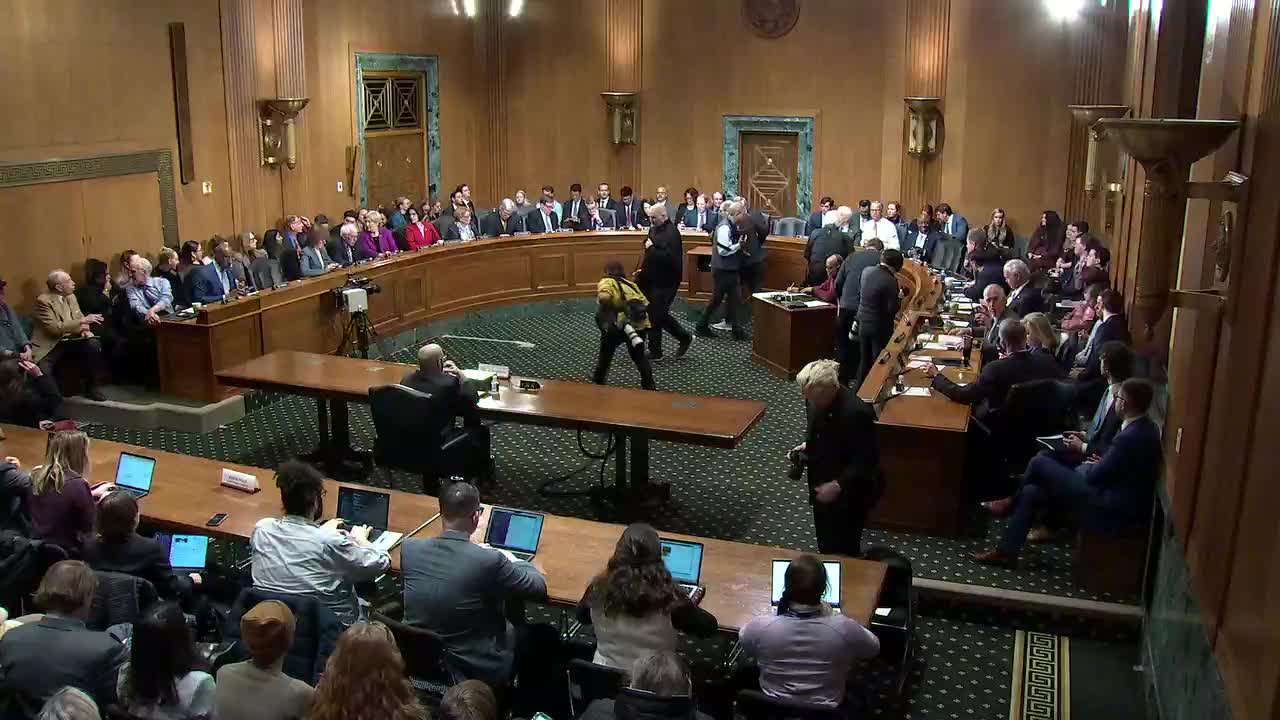
Senate Finance Committee reports Robert F. Kennedy Jr. nomination favorably, 14-13, after debate on vaccines, ethics and qualifications
Summary
The Senate Committee on Finance voted 14-13 to report the nomination of Robert F. Kennedy Jr. to be secretary of the Department of Health and Human Services after senators split over his vaccine statements, ethics arrangements and managerial experience.
The Senate Committee on Finance on an unspecified date voted 14-13 to report the nomination of Robert F. Kennedy Jr. of California to be secretary of the Department of Health and Human Services (HHS), following a day of sharply divided statements about his views on vaccines, his ethics agreement and his qualifications to run large public health agencies.
The committee’s vote came after opening remarks in support from the presiding chair and extended criticism from several Democrats, including Senator Ron Wyden (ranking member), who said he would oppose the nomination. Senators who supported the nomination described the choice as a potential agent of disruptive change in health policy.
Committee debate focused on three recurring themes: Kennedy’s public statements about vaccines and public health, the scope and durability of his amended ethics agreement, and whether he has the managerial competence to oversee agencies that include the Centers for Disease Control and Prevention and the National Institutes of Health.
The presiding chair said Kennedy had responded during the confirmation process and had answered more than 900 questions for the record; the chair said Kennedy had amended his ethics agreement beyond what the Office of Government Ethics required and that the nominee had demonstrated a commitment to the role. The chair moved that the committee favorably report the nomination; the motion was seconded and put to a roll-call vote.
Senator Ron Wyden, the panel’s ranking member, said Kennedy’s record of public statements was disqualifying. Wyden cited a recent analysis and said, “Mr. Kennedy has made 114 separate appearances in just the last 4 years where he has espoused anti vaccine views,” and added that in 36 of those instances Kennedy “directly linked vaccines to autism.” Wyden also disputed a Kennedy remark about a 2019 measles outbreak in Samoa, quoting Kennedy as saying “we don't know what was killing them.” Wyden said that Samoa’s director general of health called that claim “a total fabrication.” Wyden closed by urging colleagues to vote no.
Senator Raphael Warnock said he did not trust Kennedy to oversee public health agencies and called the nominee “manifestly unqualified,” saying in part that Kennedy “appears more obsessed in chasing conspiracy theories than chasing solutions to lower health care costs.” Senator Maria Cantwell said she too would vote no, describing the need for a leader who will accelerate medical innovation and citing the roles of philanthropic and research institutions in that work.
Senator Thom Tillis, who voted for the nomination, said he supported a disruptive approach to health policy and noted that Kennedy is not a trained health-care professional but is a lawyer who has used litigation to pursue food- and vaccine-safety issues. Tillis said he would be watchful about any effort to interfere with the scientific independence of agencies but said the absence of organized opposition from major stakeholder groups influenced his decision to vote aye.
Senator Elizabeth Warren criticized Kennedy’s ethics agreement and an apparent plan by the nominee to transfer certain financial interests to a family member; Warren called that step “a fig leaf” and said it raised concerns about whether Kennedy would use the office in ways that could financially benefit his family after leaving government. Warren also said Kennedy had collected about $2.5 million from his anti‑vaccine-related activities.
Senator Peter Welch summarized three questions committee members must consider about any nominee—character, competence and priorities—and said Kennedy lacked demonstrated experience managing large scientific or public-health organizations.
After the motion was seconded, the clerk called the roll. The transcript records a sequence of recorded ayes and nos and concludes with the clerk announcing a final tally of 14 ayes and 13 nays. A committee clerk stated, “The nomination is reported favorably.” The committee then permitted additional brief remarks and adjourned.
Votes at a glance: A motion to favorably report the nomination of Robert F. Kennedy Jr. to be secretary of the Department of Health and Human Services passed 14–13.
This committee action forwards the nomination for consideration by the full Senate and leaves unresolved several senators’ substantive concerns about Kennedy’s prior public statements on vaccines, his financial arrangements tied to litigation, and his management experience.