Get Full Government Meeting Transcripts, Videos, & Alerts Forever!
Get email alerts on the Judiciary Budget And It Modernization topic
No spam. Unsubscribe anytime.
South Carolina judiciary asks for $8.9M recurring and $45M one-time to hire judges, modernize case management
Summary
Chief Justice Kitridge told the House Ways and Means Constitutional Subcommittee the judicial branch seeks $8.9 million in recurring funds for judges, pay and staffing and $45 million in nonrecurring funds to complete a court case-management modernization project; committee approved packaged provisos by voice vote.
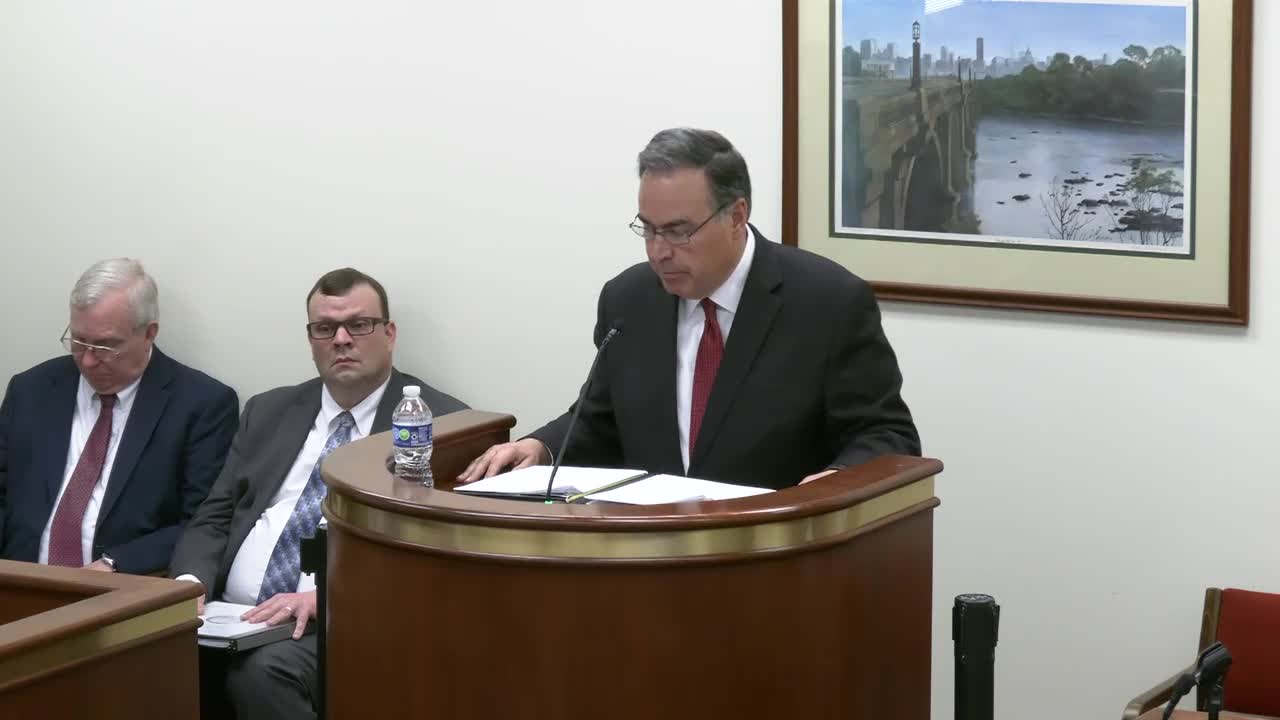
Chief Justice Kitridge told the Constitutional Subcommittee of the House Ways and Means Committee on Oct. 12, 2025, that the South Carolina judicial branch is requesting $8,900,000 in recurring state funds and $45,000,000 in nonrecurring funds to address rising caseloads, retain staff and complete a long-delayed case management modernization.
Kitridge said the recurring request includes four “judicial enhancements” — three targeted family court judgeships, a revised pay structure to encourage retired judges to serve, a monthly allowance for chief administrative judges, and an increase in each judge’s office-expense allotment — totaling $4,225,000; additional recurring requests include $1,000,000 for attorney and staff retention, $725,000 for the Office of Disciplinary Counsel and $3,000,000 tied to family-court case management. The $45,000,000 nonrecurring request would complete a projected minimum $100,000,000 modernization of the statewide case-management system.
Why it matters: Kitridge framed the request as a response to population growth and expanding court workloads. “Operating the state judicial branch… for less than 1% of the total state budget is worth noting,” he said, noting filings and hearings have grown with South Carolina’s population. He told the committee the court has identified immediate needs in family courts, in interpreter staffing and in technology that, if not addressed, will widen existing backlogs.
Most significant items
- Family court judgeships: The branch asked for three new family court judgeships targeted to the 9th, 11th and 14th circuits to serve Berkeley, Lexington and Beaufort counties. Kitridge said those three positions would cost about $1,800,000 in recurring funds and become effective July 1, 2026, if funded. “Family courts are in crisis,” Kitridge said, citing increases in Department of Social Services (DSS) and Department of Juvenile Justice (DJJ) hearings and multi-day private family trials.
- Retired-judge pay proposal: To relieve backlogs while new judgeships are phased in, the branch requested $1,000,000 recurring to pay active retired judges $400 per day (about $2,000 for a five-day term), a proposal Kitridge described as “modest” and likely to encourage retired judges to accept assignments. He compared the cost to a full new judgeship (estimated at roughly $600,000–$700,000 depending on court type) and said retired judges require no learning curve for complex cases.
- Chief administrative judges and office expenses: The branch seeks $625,000 recurring to provide a $1,000 monthly allowance to chief administrative judges in circuit and family courts, and $800,000 recurring to increase each judge’s office-expense allotment from $1,000 to $1,500 per month.
- Staffing and disciplinary counsel: Kitridge requested $1,000,000 recurring to raise starting salaries and retain law clerks, staff attorneys and court reporters, and $725,000 recurring to recruit and retain experienced attorneys in the Office of Disciplinary Counsel, which the chief justice said has an increasing backlog and difficult recruiting environment.
- Interpreters and FTEs: The branch asked to make permanent five interim FTE court interpreter positions to meet growing language-interpretation demands, including Spanish.
- Case management modernization: Kitridge requested $45,000,000 in nonrecurring funds to finish a statewide trial court case-management modernization. He said roughly $25,000,000 of prior appropriations remain from an earlier multi-year award and the branch has identified $30–$35 million in internal reallocations, bringing available funds to about $60,000,000; the requested $45,000,000 would bring the branch to a $100,000,000 minimum estimated cost. Kitridge said the current system “was built in the early 2000s” and uses outdated code with a shrinking pool of IT specialists able to support it. He said the branch is in litigation with the previous vendor and is seeking a transparent procurement and implementation path.
Committee discussion and clarifications
Representatives asked about scope, timing and risks. Representative Kaske said he “support[ed] the request for the family court judges” and pressed Kitridge about the pilot nature of the retired-judge pay plan and whether a short-term program could later be reduced without harming morale; Kitridge replied that he is asking for recurring funds because he expects the plan to work and pledged to “pivot” if an approach does not prove effective. On the modernization funding, a committee member asked whether a partial award would allow the branch to begin contracting; staff said roughly three-quarters of the total project budget (about $75,000,000) would likely be needed before the branch could execute a major vendor contract and begin the RFP/implementation process.
Kitridge also described plans to improve criminal-justice data collection and interoperability across agencies and cited the need to better track routine events — for example, he said the system does not count probation-violation hearings and that courts logged approximately 7,500 such hearings last year that were not reflected in administration data.
Votes at a glance
The subcommittee adopted the base package of provisos (voice vote), adopted the packet with updated provisos as presented (voice vote) and granted staff the technical authority to make conforming changes to proviso language (voice vote). Each motion was moved, seconded and carried by voice vote; no recorded roll-call tallies were provided in the transcript.
What’s next
Kitridge said the branch will continue to work with Department of Social Services during the pending operational transition of the family-court system and that the branch will provide the committee with follow-up statutory citations and additional data on county courthouse readiness and case filings if requested. Representative Kaske indicated he would file a bill to increase magistrate-court filing fees after receiving statutory references from the chief justice.
Ending
The subcommittee concluded by adopting provisos and giving staff technical authority to finalize language; the chief justice and his staff thanked committee members for the opportunity to present and for staff collaboration during the review process.