Get Full Government Meeting Transcripts, Videos, & Alerts Forever!
Get email alerts on the Election Administration topic
No spam. Unsubscribe anytime.
Election Commission seeks $32 million for statewide scanner upgrade and recurring funds to cover rising election costs
Summary
Executive Director Howie Knapp briefed the subcommittee on Jan. 28 about a $32.9 million nonrecurring request to replace precinct ballot scanners and multiple recurring requests including $4.5 million to cover rising election costs, $4 million to raise poll worker pay, and $423,346 to fund five new FTEs.
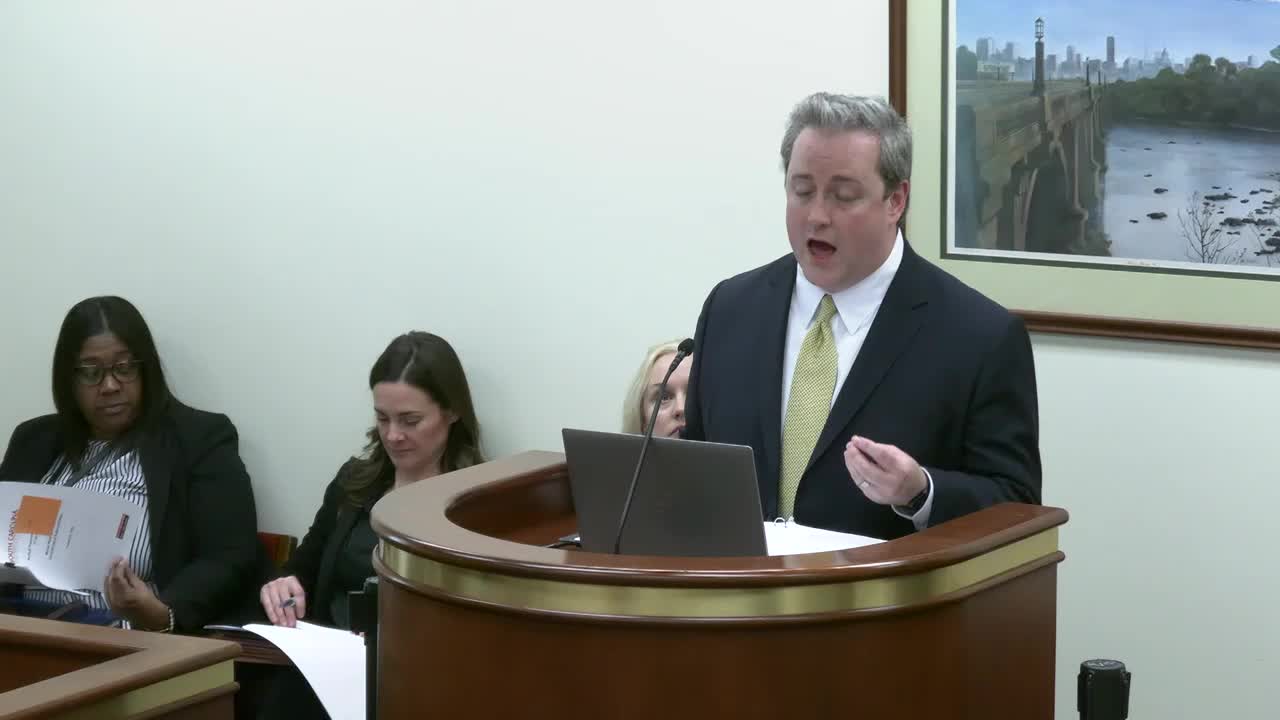
Howie Knapp, executive director of the South Carolina Election Commission, told the Constitutional Subcommittee on Jan. 28 that the agency needs a major, nonrecurring appropriation to fund a statewide precinct‑level voting system upgrade and several recurring increases to cover rising election administration costs.
Knapp said the largest single request is for a nonrecurring $32 million (the agency used a master lease of about $32.9 million in the prior cycle including interest and payments) to replace precinct ballot scanners after an unanticipated need surfaced when Beaufort County created multiple new precincts and the vendor no longer manufactured the legacy scanner model. Knapp reported that the Commission had not received timely notice of the local precinct changes and that the late change necessitated a uniform statewide upgrade rather than a mixed‑system approach.
Why it matters: The commission emphasized election security and audit improvements. Knapp described the agency’s participation in a vulnerability disclosure program and regular risk and vulnerability assessments with Homeland Security and SLED. He said the state’s audit division now conducts hand‑count audits at a higher rate than national standards, typically auditing 4–5% of ballots per election, and that all 2024 audit results are posted on the commission’s website.
Other top requests and details
- Recurring costs: $4.5 million to cover rising operational costs tied to printing, postage, ballot supplies, secure absentee ballot bins, and voter education materials. Knapp said South Carolina runs about 300 elections a year and the cost of conducting elections has increased.
- Polling Location Technician (PLT) program: $500,000 recurring to create a statewide Polling Location Technician certification program and provide stipends for trained PLTs; currently counties only get mileage reimbursement for PLT travel.
- Risk‑limiting audits (RLAs): $500,000 recurring to buy equipment add‑ons and supplies needed to implement RLAs, described by the agency as the “gold standard” for audits.
- Staff and legal costs: $423,346 recurring to fund five new FTEs (including a second GIS manager and four additional auditors) and $500,000 recurring to cover the agency’s legal defense costs, which Knapp said average about $500,000 per year.
- Poll worker and board stipends: The commission proposed increasing state reimbursement for poll worker pay and county board stipends (examples cited: increasing poll worker pay from current combined levels to higher per‑person rates and increasing the county board stipend from $1,500 to $2,500). The agency also proposed raising state reimbursement for the five‑member state board of canvassers.
- HAVA match: The final request is $200,000 nonrecurring as the required 20% state match for a $1 million Help America Vote Act federal grant.
Quotes and audit figures
Knapp said the commission’s vulnerability disclosure participation has produced no successful penetrations to date: “Thus far, nothing has been found.” He also noted audit performance: “We audit between 4 and 5 percent every election,” exceeding the common national benchmark of 3%.
What was not decided
No formal votes were recorded on the budget requests. Committee members asked clarifying questions about timelines and county practices for supplementing stipends; Knapp noted state reimbursements are what the commission controls and counties may supplement locally.
Ending
Knapp said the agency will provide further documentation as the subcommittee continues budget deliberations.