Get Full Government Meeting Transcripts, Videos, & Alerts Forever!
Get email alerts on the Councils Of Governments Funding Request topic
No spam. Unsubscribe anytime.
Councils of governments request $2 million a year to fund staff who would support small local governments
Summary
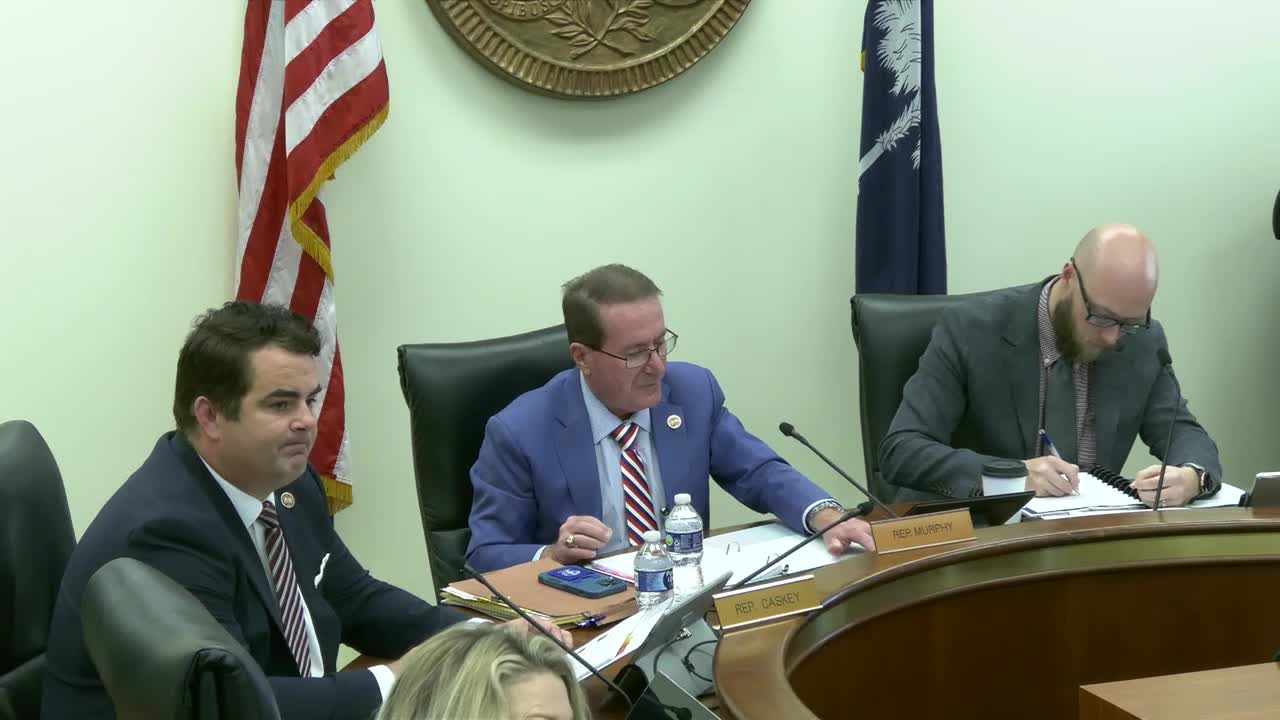
Trish Hartung, executive director of the Upper Savannah Council of Governments, asked the Constitutional Subcommittee on Jan. 14 for $2 million a year for three years to place a full‑time administrative staff member in each of South Carolina’s 10 councils of governments to assist small local governments.
Trish Hartung, executive director of the Upper Savannah Council of Governments, asked the Constitutional Subcommittee of the House Ways and Means Committee on Jan. 14 for a recurring three‑year appropriation of $2 million per year to place dedicated staff in South Carolina’s 10 councils of governments (COGs) to help small, under‑resourced local governments with routine administration.
"We are requesting $2,000,000 per year divided equally among the 10 councils of governments for an initial 3 year period," Hartung said, proposing a $200,000 annual allocation per COG that would fund one full‑time equivalent staff member (salary and benefits) in each council. Hartung said the funds would create a government services program to provide hands‑on assistance — including budgeting, grant reporting, payroll and benefit remittances, FOIA compliance, procurement guidance, and short‑term expertise for zoning or community development — to municipalities and counties lacking professional administrative capacity.
Hartung told the subcommittee the current recurring allocation for COGs is about $1.5 million divided under a legislated formula and said the proposed program would not supplant existing COG work but would add a direct service component targeted to underserved governments. She noted the program has the support of the Municipal Association of South Carolina and the South Carolina Association of Counties.
Members pressed Hartung on sustainability and whether local governments would later agree to pay for services. Hartung recounted past roving administration programs funded by the Economic Development Administration and a prior state program (named in testimony) that operated for roughly a decade, and she said many local governments lacked revenue or staff to contract for services now. When asked what the state's obligation would be after three years, Hartung said, "There is no obligation that I can envision at this time."
Hartung and colleagues said the program would help address common, recurring compliance problems: she cited a recent legislative remediation that involved municipalities that failed to submit financial audits and said "that list this year is 114 municipalities long." The commission of COG directors argued that having a funded staff person in each COG would allow timely technical assistance and, in some cases, allow municipalities to later contract for services or otherwise sustain positions locally.
Committee members raised concerns about whether all COGs need equal funding or whether funds should be targeted, whether there is a sufficient pool of qualified professionals, and whether the state should first ask local governments to fund pilot services. Hartung responded that rural regions with the least state funding often contain municipalities that cannot afford contracted services and that COGs serve as a training ground for public-administration graduates.
Ending: The subcommittee received the request and engaged in extended questioning; members asked for more detail on county‑by‑county need, historical program performance, and potential federal funding sources. No formal action or vote was taken during the hearing.