Get Full Government Meeting Transcripts, Videos, & Alerts Forever!
Get email alerts on the Affirmative Action Reform topic
No spam. Unsubscribe anytime.
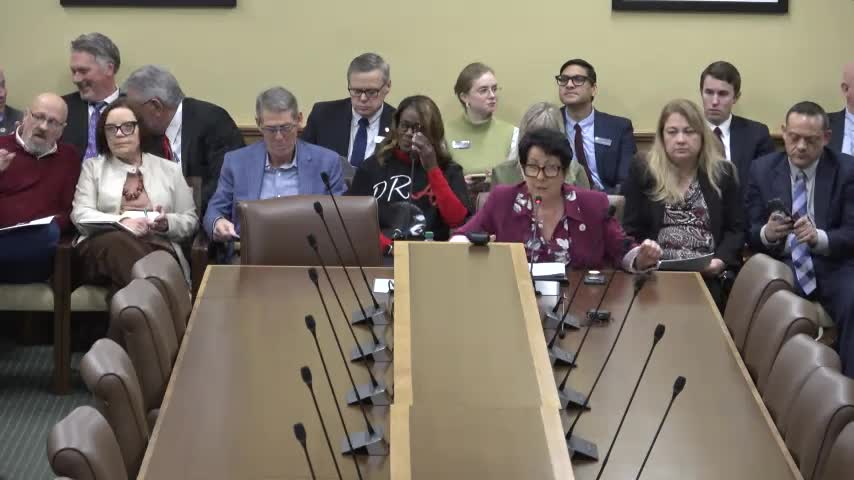
Arkansas committee approves bill to prohibit race- and sex-based preferences in state hiring, education and procurement
Summary
The House State Agencies & Governmental Affairs Committee advanced SB3, a measure its sponsor said aligns state policy with federal rulings and an executive order ending race-based affirmative action; opponents warned the measure would roll back targeted recruitment, scholarships and programs and could expose local governments to litigation.
Representative Bentley, sponsor of Senate Bill 3, told the House State Agencies & Governmental Affairs Committee on the bill’s introduction that SB3 would prohibit state entities from granting "preferential treatment to an individual or a group on the basis of race, [gender], color, ethnicity, or national origin" and that the measure was intended to align Arkansas law with recent federal developments.
The bill would remove language and programs that use minority-based terminology and replace many references to "minority" with a new formulation focused on "critical needs." Bentley said the change is meant to preserve programs that serve need while ending what she called race‑based preferences. During the hearing she read from President Trump’s Jan. 21, 2025, executive order and cited the U.S. Supreme Court decisions that found race‑based admissions practices unlawful.
Why it matters: SB3 would affect state hiring, public education and state procurement, and it would strike or rewrite several existing reporting and recruitment provisions for schools and higher education. Supporters say the bill brings Arkansas into conformity with federal law and prevents what they describe as long‑running, race‑based preferences. Opponents say the bill would dismantle targeted recruitment and retention programs, reduce minority representation in schools and colleges, remove specific programs that supporters view as essential to addressing disparities (including maternal health supports and minority retention efforts), and create litigation risks for local governments and state agencies.
What the bill does: Committee discussion and testimony identified specific provisions that would be changed or removed. The sponsor said SB3:
- Prohibits state entities (defined to include the state, cities, counties, public school districts and institutions of higher education) from discriminating or granting preferential treatment on listed protected characteristics for actions taken after the law’s effective date. Bentley emphasized the prohibition "applies only to an action taken after the effective date of this act."
- Replaces references to "minority" programs (for example, a higher education minority retention program and a minority teacher scholarship) with language tied to "critical needs," and eliminates an annual higher education report tied to prior minority-focused requirements.
- Includes language stating the measure would not invalidate existing court orders or consent decrees in force at the effective date and would not bar actions necessary to maintain federal program eligibility if loss of federal funds would demonstrably occur.
- Adds a private right of action allowing individuals to sue in circuit court for alleged violations and provides for court costs and attorney fees procedures referenced in the bill.
Committee debate and public testimony: Committee members pressed the sponsor on likely effects in schools and districts. Several members asked whether the bill would prevent school districts from creating recruitment or retention plans that consider national origin or whether clubs and gender‑specific extracurricular programs would be affected. Bentley replied repeatedly that the bill would not "stop girls sports" or community clubs, and that local communities could fund or mentor such programs; she said the bill is intended to ensure equal treatment and to focus resources on "critical needs."
A long list of witnesses testified for and against the measure. Opponents included pastors, educators, nonprofit leaders and students who argued the bill would remove programs that create pathways for underrepresented students, weaken minority recruitment and retention efforts in K‑12 and colleges, and worsen health and economic disparities. Pastor Preston Clegg of Second Baptist Church said, "DEI work helps us move forward, not just move on." Representatives of the Women’s Foundation of Arkansas, Arkansas Advocates for Children and Families, Delta Sigma Theta and others urged the committee to reject the bill.
Supporters included constitutional and administrative law advocates and a law professor who argued preference systems can harm intended beneficiaries in some settings. Professor Robert Steinbach testified about research he said shows mismatches in higher‑education admissions can lead to higher failure rates on professional exams; he told the committee he supported the bill’s approach to prohibiting preferences in hiring, contracting and admissions.
A separate point of contention: section 2 of the bill (moved from an earlier senate filing) amends language in state law on alcoholic beverage permitting. Several liquor retailers and trade representatives said that change was not explained in the Senate and raised concerns that the amendment could alter how permits are evaluated. The sponsor said she had discussed the language with the Alcoholic Beverage Control counsel and that it would not remove protections for small businesses.
Legal and procedural concerns: Several witnesses and committee members warned that the bill’s private‑right‑of‑action language and broad definition of "state" could increase litigation risk and costs for cities, counties, school districts and state agencies. Opponents also pointed to specific state acts and programs — for example, the Arkansas Minority Health Commission and the Mosaic Templars Cultural Center — that they said could be put at risk by the bill.
Committee action and outcome: The committee took a voice vote after debate. The chairman called for ayes and nos; the committee recorded that the measure received a favorable report and the chairman said, "The ayes have it." The committee announced it would reconvene later in the day to consider additional bills on the agenda.
What’s next: SB3 advanced from the committee on a favorable recommendation; the committee record did not include a roll‑call tally in the transcript. If sent to the full House, the bill would still face floor debate and potential amendment. Opponents said they will press for additional review of drafting (including the liquor permit language) and to clarify how the measure would interact with federal obligations, special education protections and existing state programs.