Get Full Government Meeting Transcripts, Videos, & Alerts Forever!
Get email alerts on the Lottery Funding Debit Card topic
No spam. Unsubscribe anytime.
Lottery officials say transfers to education have risen but seek debit-card sales to shore up future revenue
Summary
South Carolina Education Lottery officials told the Constitutional Subcommittee on Jan. 14 that transfers to education have averaged roughly $500–$550 million annually and asked the legislature to lift a statutory ban on debit-card purchases, saying doing so could add an estimated $52 million a year in transfers.
The South Carolina Education Lottery Commission told the Constitutional Subcommittee of the House Ways and Means Committee on Jan. 14 that lottery revenue has returned to a more normal trend after COVID-era spikes and that allowing debit-card sales could increase transfers to education by roughly $52 million a year.
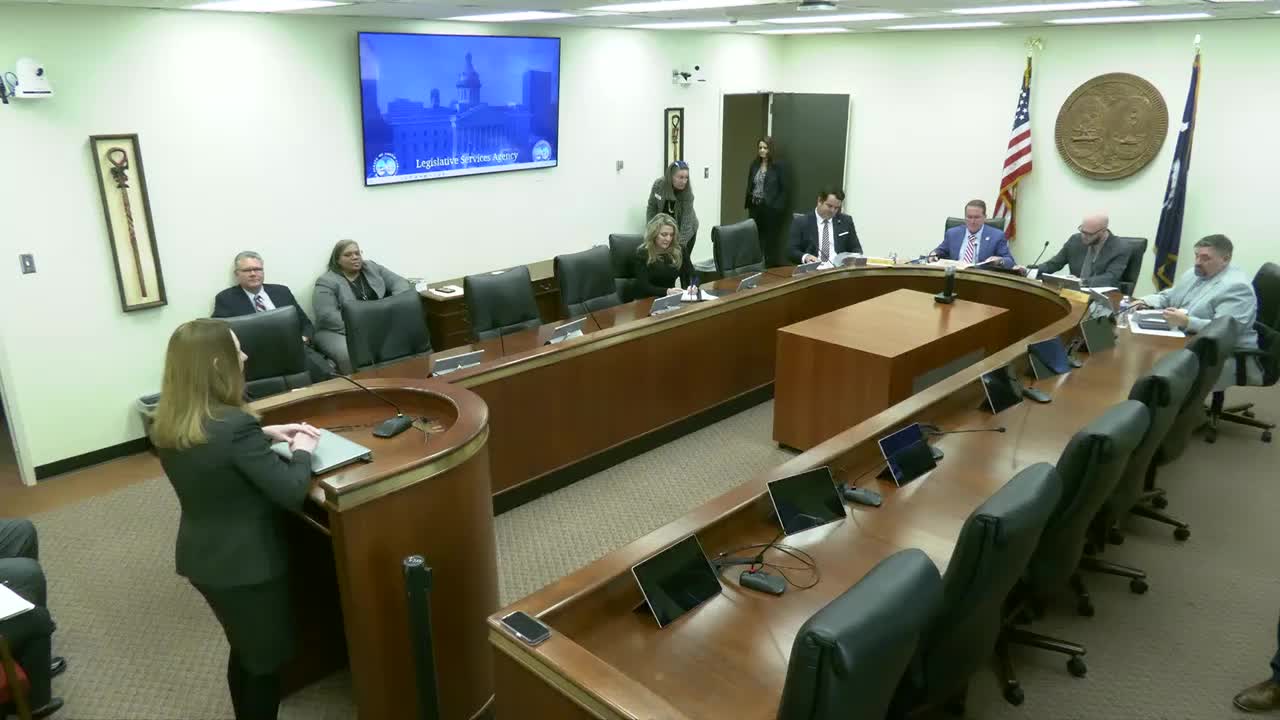
The presentation was led by Dolly Garfield, executive director of the South Carolina Education Lottery Commission, who introduced Brian Ford, the lottery’s chief financial officer, to review recent revenue and transfer trends. Garfield and Ford said the commission is again asking the Legislature to lift a statutory prohibition that prevents lottery retailers from accepting debit cards to buy tickets.
"We transfer around 500 to $550,000,000 a year," CFO Brian Ford told the subcommittee while summarizing seven years of historical results and three-year projections. Ford said revenue has been roughly $2.3 billion a year and that transfers to education rose sharply in FY21–FY22 because of pandemic-related market effects and unusually large jackpot runs in FY23–FY24. He described those years as "noise" that skewed the longer-term trend back toward a lower baseline.
Ford and Garfield described the lottery’s planning assumptions and statistical variability in game outcomes (for example, large prize payouts on pick-3 and pick-4 games). Ford said the commission assumes modest jackpot activity in its baseline transfer estimates. When asked by Representative Kaske whether the lottery faces a danger of not funding scholarships, Ford replied, "I do not know. I do not know that." The commission did not offer a quantified gap between projected transfers and scholarship demand.
Garfield told the subcommittee that the commission believes younger potential players increasingly use cashless retail venues and that South Carolina is one of three states (the commission named Tennessee and Wyoming) that still bar debit-card sales for lottery tickets. "Our players have to pay more tickets with cash. That's by statute," Garfield said, adding that higher numbers of venues are becoming cashless (she cited college-venue examples such as Colonial Life Arena and Williams-Brice Stadium).
Ford described an outside survey the lottery used to estimate the potential impact of debit-card sales: about 11% of surveyed respondents who do not currently play said they would play if debit cards were allowed. Using the state adult population figure of 3.9 million, Ford said that implies roughly 430,000 potential new players and, by extrapolation from current weekly per-capita sales, about $186 million in additional annual sales and roughly $52 million in additional annual transfers to education. Ford called the estimate conservative and said it assumes other current trends (for example, a 5% year-to-date decline in instant-ticket sales) continue.
On implementation questions, Garfield said debit-card acceptance would be discretionary for retailers. When Representative Cromer asked whether projected gains were net of transaction fees, lottery staff said transaction fees would be the retailer’s responsibility and the commission's transfer estimate already treats retailer costs as separate.
The commission offered to provide county-level sales data to the committee to help with further analysis.
The commission did not propose specific new appropriations in the subcommittee meeting; rather, it requested the statutory change to permit debit-card sales and provided the revenue impact estimate for legislators to consider.
Ending: Lottery officials urged the subcommittee to consider the change this session and supplied the committee with contact points and follow-up data offers; committee members asked for county-level sales breakdowns and pressed the commission on scholarship funding uncertainty and the assumptions behind its projections.