Get Full Government Meeting Transcripts, Videos, & Alerts Forever!
Get email alerts on the Wells And Septic topic
No spam. Unsubscribe anytime.
Panel advances bill to bar forced hookup to public water or sewer; adds protection for private irrigation wells
Summary
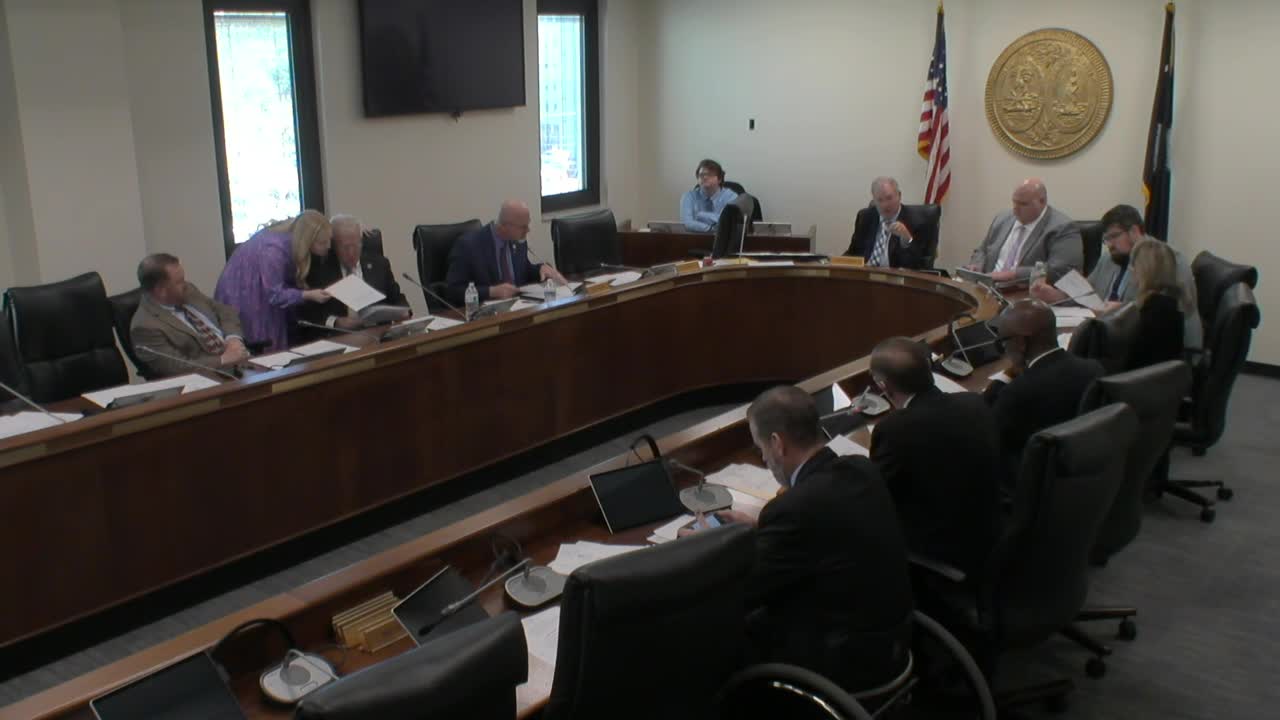
The Agriculture, Natural Resources and Environmental Affairs subcommittee advanced legislation that would bar authorities from forcing property owners to sign on to public water or sewer when repairing or replacing existing wells or septic systems, and it adopted an amendment to protect private irrigation wells.
The Agriculture, Natural Resources and Environmental Affairs subcommittee advanced legislation on private wells and septic systems and adopted an amendment that protects private irrigation wells.
Representative Ligon presented the bill, saying: “the Department of Environmental Services shall not deny a property owner the right to repair and replace any well or septic tank existing on the effective date of this act solely because of any other available water or sewer service or both.” He told the panel the measure would protect property owners from being forced to connect to newly installed water or sewer lines and would preserve the option to repair functioning wells or septic systems rather than pay for mandatory tap-on costs.
Supporters said the change addresses a statewide pattern in which residents faced large costs when authorities required connection to municipal water or sewer after lines were extended. Jay Swearingen, president of the South Carolina Groundwater Association, testified in favor: “One of our objectives is to protect the public’s right to use and have a water well, a private water well.” Rick Caldwell of the South Carolina Farm Bureau said DES already regulates private and irrigation wells under Regulation 61-44 and that the bureau was comfortable with the department’s permitting framework.
Opponents and local officials urged more time and narrower language. John Winges of the South Carolina Association of Counties said Amendment 1 removes language that preserved local setback requirements and asked for more input from county officials, noting Dorchester County and others could be affected by removing local ordinance authority. Dana Phillips of the Municipal Association of South Carolina said her members submitted “overwhelmingly negative feedback” on the amendment and that the Municipal Association opposed the change as drafted; she noted many municipalities operate water systems and worried about unintended consequences.
The committee adopted Amendment 1, which (1) bars a county, municipality or water authority from denying installation of a private irrigation well regardless of whether the property is connected to public water, provided the irrigation well is not interconnected to plumbing on the public system and is used only for nonpotable uses; and (2) bars denial or prohibition of a septic installation on a parcel that meets Department of Environmental Services guidelines regardless of whether the parcel is connected to a public sewer system. The amendment text was read into the record as amendment 1 to bill number 3656.
Formal action: the subcommittee voted to adopt Amendment 1 (roll call recorded as Representatives Kremer, Harris, Morgan and Burns; Representative May not present). The clerk announced the adopt vote as “four-zero with one not present.” After adoption, the committee voted to advance the underlying bill with the amendment; the roll call recorded four ayes, zero nays, one not present (Representative May).
Committee members and witnesses noted several unresolved points for full committee review: how local setback ordinances and county sewer-connection ordinances interact with the state-level language; the narrowness of Amendment 1 (it addresses irrigation wells, not new potable well installations); and the Municipal Association’s formal opposition. Representatives on the panel encouraged staff and interested parties to work together before full committee consideration.
Ending: The subcommittee moved the amended bill forward to the next stage. Committee staff and members said they will coordinate with county and municipal stakeholders ahead of the full committee meeting so that outstanding concerns about local ordinances and setback language can be addressed.