EPW committee favorably reports Brownfield Reauthorization Act (S.347) after debate over funding freeze and Alaska provisions
Get AI-powered insights, summaries, and transcripts
SubscribeSummary
The Senate Environment and Public Works Committee voted to favorably report S.347, the Brownfield Reauthorization Act of 2025, after members discussed streamlining grants, the federal funding freeze affecting EPA programs, and proposed amendments addressing Alaska Native lands.
The Senate Environment and Public Works Committee on Thursday voted to favorably report S.347, the Brownfield Reauthorization Act of 2025, the panel’s chair said, moving the bill toward consideration by the full Senate.
The bill would reauthorize the Environmental Protection Agency’s Brownfields Program, streamline the grant application process, and update grant amounts to reflect current construction costs, Chair Capito said. Supporters argued the program advances economic redevelopment in rural and underserved communities by funding cleanup of contaminated parcels.
Why it matters: The Brownfields Program funds remediation of contaminated and abandoned properties, which proponents say can unlock economic development, new jobs and tax revenue for communities. Committee members also linked the bill to a wider concern about an administration pause on disbursements of previously appropriated funds, which several senators said is already delaying projects funded under EPA programs.
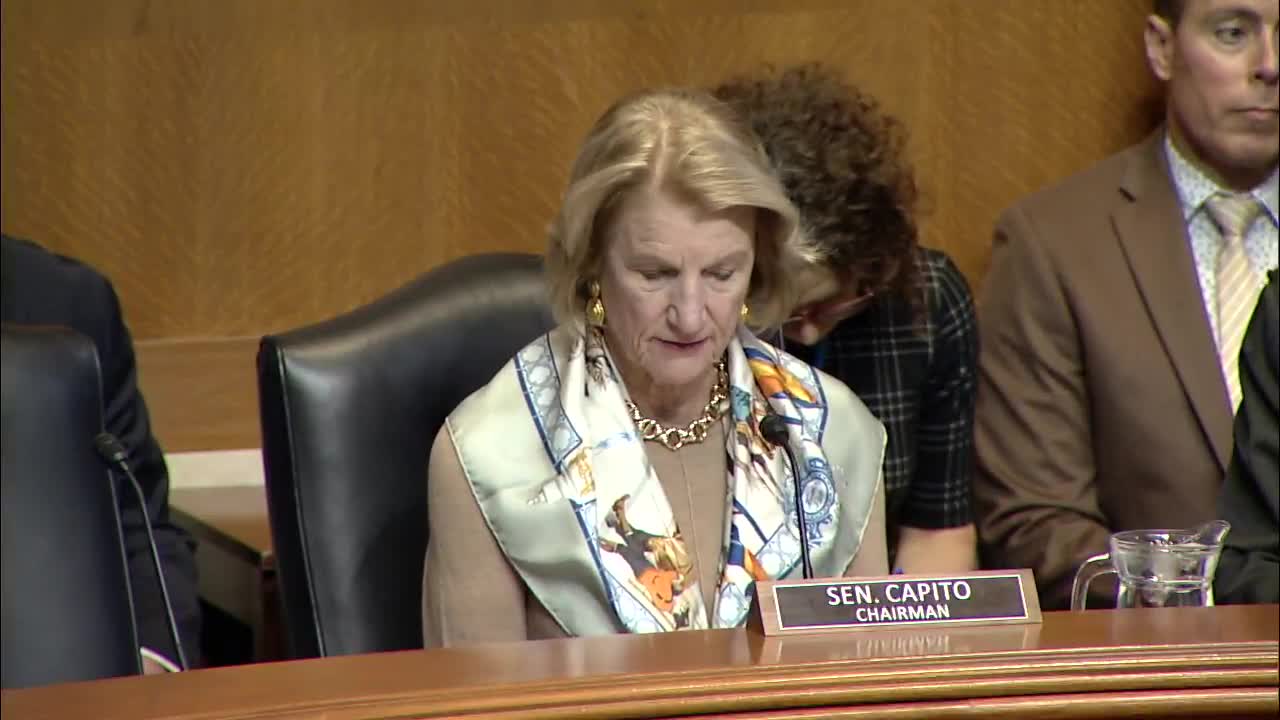
Chair Capito, speaking at the start of the business meeting, said the bill “streamlines the application process to level that playing field” and modernizes grant amounts to match current construction costs and project sizes. Ranking Member Whitehouse and other Democrats urged support but raised alarm about an administration funding freeze that has affected EPA programs. "In Massachusetts, grant money awarded under an EPA brownfields program... remains frozen," Ranking Member Whitehouse said, noting courts have issued orders in some cases but uncertainty remains.
Senator Markey offered a “sense of Congress” amendment that would state the president must fully follow the law and that funding cannot be withheld once authorized and appropriated by Congress; he later withdrew the amendment. Markey said the amendment was a response to what he described as “chaos in the executive branch” and cited recent court orders and the effect on local cleanups and workers' pay. "Brownfields money was shut off unilaterally by the Trump administration last week," Markey said during his remarks, and he pressed the committee on whether congressional laws will be executed.
Senator Sullivan pressed for two amendments focused on Alaska Native lands, saying that federal transfers had left some Native-owned lands contaminated and that those lands should be eligible to receive brownfields funds, including for petroleum contamination. Sullivan also proposed a change to allow cleanup to proceed without a separate National Environmental Policy Act (NEPA) process in certain circumstances. Chair Capito said she would work with Sullivan and Ranking Member Whitehouse to address the issues.
Committee action: Chair Capito moved that the committee report the bill; the motion was seconded and the chair announced, "the ayes have it." The committee’s public record shows the bill was favorably reported to the Senate. The committee also noted for the record that a quorum was present at the time of the vote.
Background and context: The Brownfields Program was first authorized in 2002. Committee discussion during the business meeting focused on application complexity for smaller and rural applicants and on aligning grant amounts with present-day costs. Members from both parties emphasized bipartisan support for the program but expressed frustration that execution of appropriations can be delayed by actions from the executive branch.
Looking ahead: Committee members said they will continue to work with EPA and administration officials to ensure obligations are disbursed and to refine statutory language addressing Alaska Native lands and potential industry liability where appropriate.