Get Full Government Meeting Transcripts, Videos, & Alerts Forever!
Get email alerts on the Nomination Howard Lutnick topic
No spam. Unsubscribe anytime.
Senate Commerce Committee questions Howard Lutnick on spectrum, chips, broadband, AI, crypto and conflicts as he seeks confirmation
Summary
Howard Lutnick appeared before the Senate Committee on Commerce, Science and Transportation for a confirmation hearing to be secretary of commerce, telling the panel he would divest his business interests and work to deliver several administration and congressional priorities.
Howard Lutnick appeared before the Senate Committee on Commerce, Science and Transportation for a confirmation hearing to be secretary of commerce, telling the panel he would divest his business interests and work to deliver several administration and congressional priorities.
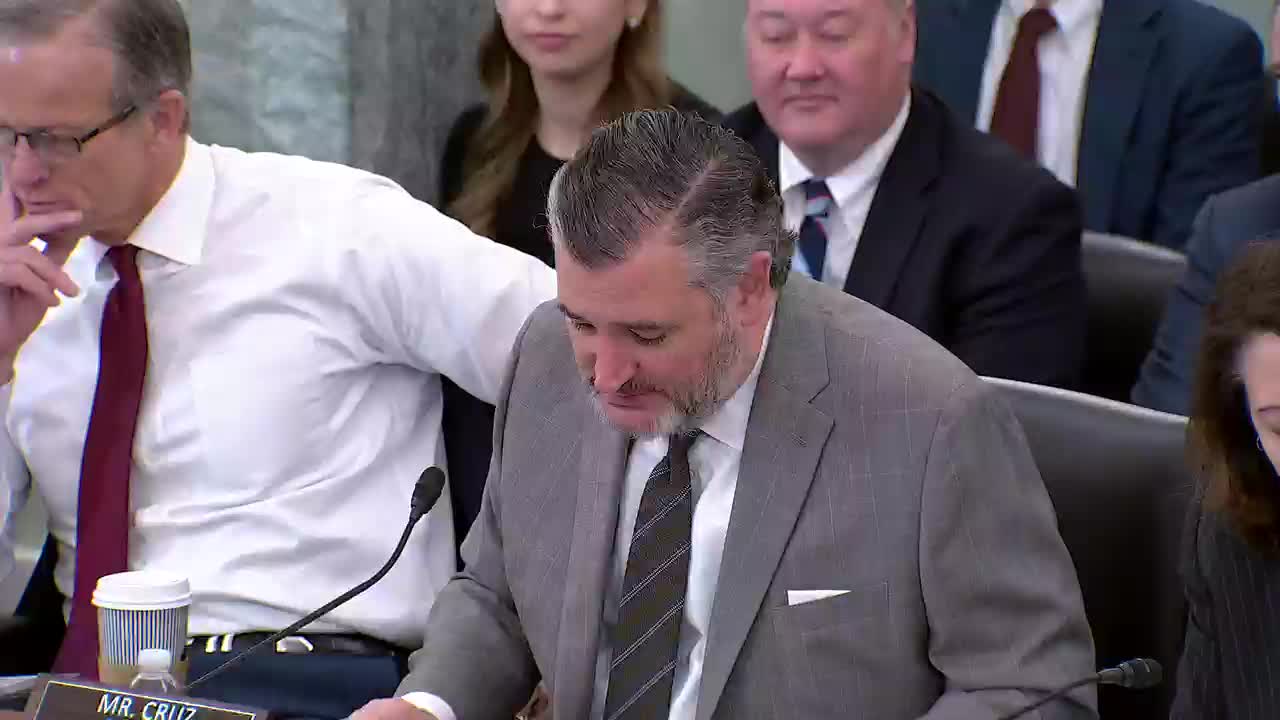
The hearing, chaired by Sen. Ted Cruz, focused on a broad portfolio Lutnick would lead if confirmed: managing spectrum policy through the National Telecommunications and Information Administration (NTIA), executing CHIPS & Science Act grants and tech-hub programs, speeding BEAD (Broadband Equity, Access and Deployment) grant implementation, overseeing export controls through the Bureau of Industry and Security (BIS), developing U.S.-led artificial intelligence standards, and addressing cryptocurrency and stablecoin risks.
Why it matters: The Commerce Department oversees NOAA and NIST, large grant programs and regulatory tools that touch manufacturing, trade, telecommunications, fisheries and coastal economies. Senators on both sides framed the nominee’s role as central to industrial policy, national security and delivery of multi‑billion‑dollar programs that Congress funded.
Lutnick's background and ethics pledge
Howard Lutnick, the nominee and long‑time Cantor Fitzgerald executive, recounted rebuilding his firm after the 9/11 attacks and described his decision to serve in government. He told the committee, “I will divest, meaning I will sell all of my interests, all of my business interests, all of my assets, everything… and I will be divesting within 90 days, upon my confirmation.” He added he has signed an agreement with the Office of Government Ethics and will consult department ethics staff.
Vice President J.D. Vance introduced Lutnick and called him “a force of nature,” and senators from both parties praised his personal story while pressing him on conflicts and how he would separate private interests from public duties.
Spectrum, NTIA and mid‑band access
Senators including John Thune and Amy Klobuchar pressed Lutnick on NTIA’s role in freeing up mid‑band spectrum for commercial 5G/6G use while protecting Department of Defense and national security needs. Thune referenced the $42,000,000,000 BEAD program while urging faster broadband rollout and asked Lutnick to work with states and industry. Lutnick said he would “work closely with the Department of Defense” and that, where national security allows, he would lean toward commercial access to support U.S. leadership in next‑generation wireless.
CHIPS, tech hubs and manufacturing
Committee members repeatedly asked whether Lutnick would execute CHIPS grants and preserve the CHIPS & Science Act’s objectives. Lutnick called CHIPS “an excellent down payment” and said he would work to get awards out of the department quickly and “give you the benefit of the bargain” the law envisioned. Senators flagged unresolved grant commitments and tech‑hub funding (statements in the hearing cited a $10,000,000,000 authorization for regional tech hubs and $220,000,000 appropriated in the NDAA for a first round), requesting that the department enforce community‑impact commitments in finalized grant documents.
Broadband BEAD program and administration pause
Multiple senators pressed Lutnick on BEAD, saying the program had not connected households despite the appropriation. Lutnick said he supported deploying broadband “efficiently and swiftly,” and pledged to work with states to execute approved plans, but told senators he would review applications and “make sure the outcome that you appropriated for… is the most efficient use to get broadband to your constituents.” Several senators expressed concern about an OMB direction to pause or review funding that had created uncertainty; later in the hearing senators noted an OMB memo had been withdrawn.
Export controls, AI and China
Senators emphasized BIS and export controls on semiconductors, AI tools and other dual‑use technologies as top priorities. Ranking Member Maria Cantwell described export controls and BIS as “a very big issue” and asked for commitments to preserve CHIPS‑era consensus building on export policy. Lutnick said he would coordinate with BIS, the State Department and allies to protect national security and U.S. technology leadership.
On artificial intelligence, Lutnick told the committee he favors an American‑led approach centered on standards, pointing to NIST’s voluntary standards work as a model. He said Commerce should issue technical standards and practices similar to U.S. cybersecurity models to encourage private‑sector leadership without “onerous regulations.” Senators across the panel asked him to work on bipartisan solutions for high‑risk AI models.
Cryptocurrency and stablecoins
Senators, led by Maria Cantwell and others, pressed Lutnick about stablecoins and the company Tether. Lutnick described Cantor Fitzgerald’s due diligence and said his view was that most illicit uses occur in secondary markets; he recommended stronger know‑your‑customer controls and argued that AI tools applied to blockchain analysis could reduce illicit activity. He said he would require U.S.‑backed stablecoin issuers to cooperate with federal law enforcement and compliance tools.
NOAA, fisheries and Gulf timing
Senators from coastal states asked Lutnick about NOAA priorities and deadlines. Lawmakers pressed him to ensure NOAA meets a May 21 biological‑opinion deadline for offshore Gulf work and to consult with regional delegations on fisheries management. Lutnick said he would work to make NOAA timely and would not seek to separate NOAA components.
Trade, tariffs and supply chains
Lutnick described a country‑by‑country, reciprocity‑focused stance on tariffs intended to bring manufacturing back to the United States and shore up supply chains for semiconductors, pharmaceuticals and other sectors. Senators warned tariffs can raise costs for consumers and small businesses; Lutnick said detailed studies directed by the president and coordinated with USTR would guide policy design and that he would consider carve‑outs or longer runways for small businesses during implementation.
Other commitments and legal obligations
On the census and constitutional duties, Lutnick told Sen. Brian Schatz he would “hew to the Fourteenth Amendment” and ensure the Census Bureau acts apolitically. In response to repeated questions about any instruction from the president to withhold or pause appropriated funds, Lutnick said he would consult department lawyers and the committee’s legal expectations but repeatedly expressed his objective to “give you the benefit of the bargain” for funds Congress appropriated. He also pledged to comply with court orders.
Ending
The hearing produced no committee votes; senators gave Lutnick until the end of the record period to answer written questions. The committee asked for timely follow‑up on ethics divestment plans and program implementation timelines for CHIPS and BEAD. The record shows extensive, bipartisan focus on the nominee’s ability to execute complex grant programs, protect U.S. technology from strategic rivals, and manage longstanding Commerce Department responsibilities such as NOAA and NIST.