Get AI Briefings, Transcripts & Alerts on Local & National Government Meetings — Forever.
Democrats push OMB nominee on Medicaid cuts and work‑requirement proposals
Loading...
Summary
Senators raised concerns that policies supported by Russell Vought or his affiliated think tank would cut Medicaid, affect nursing‑home care and low‑income families, and promote work requirements that critics say have failed in trials.
Russell Vought, the president’s nominee for director of the Office of Management and Budget, was pressed repeatedly by Democrats at the Senate Budget Committee hearing over proposals that would shrink Medicaid, impose work requirements and reduce other social-safety programs.
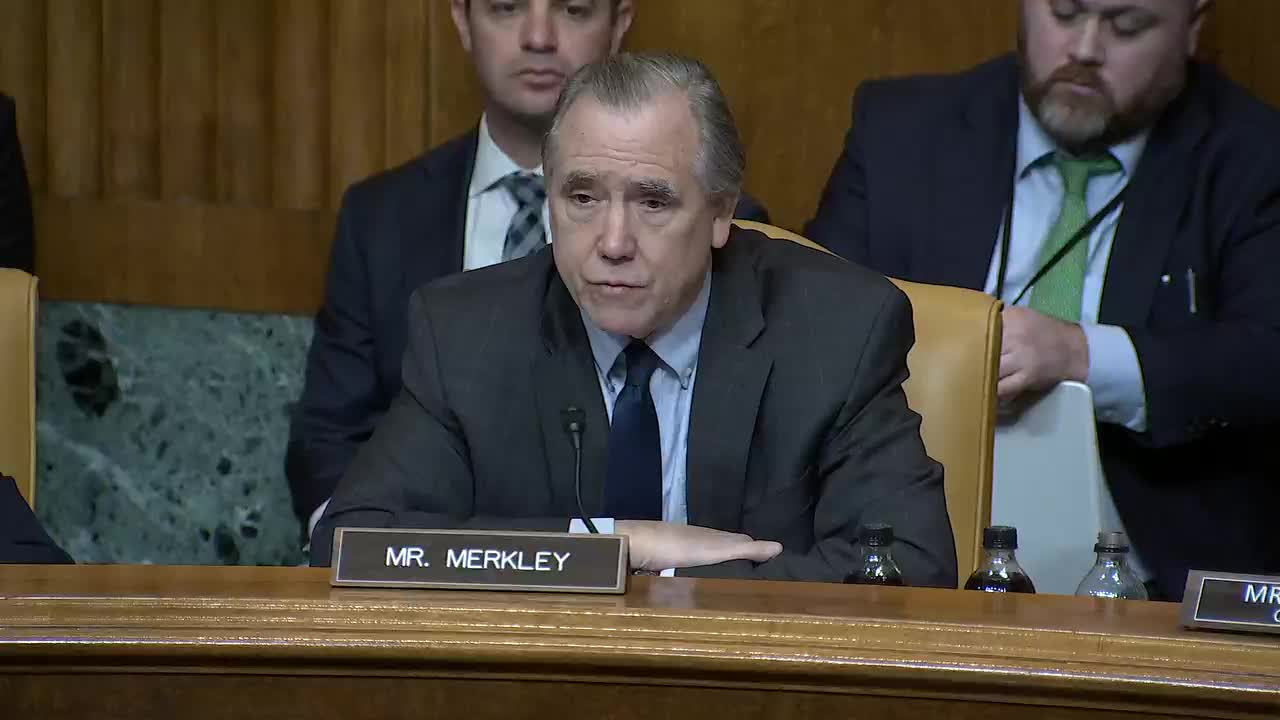
Senator Jeff Merkley accused Vought of continuing to advocate work requirements and policies that Merkley said previously produced no increase in employment. “You’ve been a big advocate of work requirements,” Merkley said, citing Arkansas as an unsuccessful experiment and asking whether Vought would press for the approach again.
Vought defended the concept by referring to welfare‑reform-era policies of the 1990s, saying those reforms “led to caseload reductions, people getting off of welfare, going back into the workforce” and that similar thinking could be applied to other federal programs to “encourage people to get back into the workforce.”
Senator Bernie Sanders sharply contested the proposal’s effects on vulnerable people. “Will you tell the president that it is immoral, that it is wrong to cut Medicaid, cut health care for low income Americans, for children, and for the elderly, and give tax breaks to the very richest people in our society?” Sanders asked. Vought replied that Medicaid has expanded beyond its original populations and that states, he said, had in some cases pursued higher federal matching funds in ways he called problematic.
Senator Ron Wyden, ranking Democrat on the Finance Committee, pressed Vought on the program’s efficiency and on the consequences of proposed cuts. Wyden said Medicaid is an “efficient program that helps vulnerable people” and that reductions would hurt the people the program serves. Vought said he sought reforms that would better align incentives to improve outcomes and reduce waste, but did not endorse a specific package of programmatic changes at the hearing.
Senators also cited numbers presented in committee debate: Merkley and others referenced the Trump administration budget that included large proposed cuts to social programs during the prior OMB tenure — close to $1 trillion in health‑care cuts and $300 billion in social safety programs in the fiscal 2021 budget, as described during the hearing — and noted a think‑tank plan linked to Vought that proposed about $3.6 trillion in tax giveaways to wealthier Americans in one formulation.
Committee Democrats said they would continue to press for more detail on what specific Medicaid provisions the nominee would support or oppose and asked for assurances that core services — including long‑term care and maternal and child health coverage — would be protected. Vought said he supports policies that he said would improve outcomes and better target taxpayer funds but declined to offer binding commitments about future budget proposals before any formal administration fiscal goal is set.
Senators left the record open for further materials and said they will follow up with written questions and requests for policy details and analyses.