Get Full Government Meeting Transcripts, Videos, & Alerts Forever!
Get email alerts on the Motor Vehicle Warranty Compensation topic
No spam. Unsubscribe anytime.
Dealers, technicians urge lawmakers to close warranty reimbursement loopholes in House Bill 1515; manufacturers oppose
Summary
Rep. Dan Ruby introduced House Bill 1515, and dealers and technicians testified that manufacturers underpay warranty labor and parts by relying on proprietary time guides and shipping 'exchange' parts, leaving dealers and technicians shortchanged.
Rep. Dan Ruby introduced House Bill 1515 on behalf of dealers and technicians seeking changes to how manufacturers reimburse dealers for warranty labor and parts. Supporters told the House Transportation Committee that current practices leave dealers, their parts departments and technicians underpaid for work manufacturers require them to perform.
The bill would require manufacturers to reimburse dealers for warranty labor and parts at the dealer’s normal retail (free-market) rates and close what supporters described as loopholes manufacturers use to reduce payment — including unilateral changes to labor times, shipping replacement parts at no cost so dealers cannot collect a parts markup, and changing part numbers (for example, during recalls) to lower reimbursed part values.
Matthew Larsgaard, appearing on behalf of the Automobile Dealers Association of North Dakota, told the committee the state’s 87 franchised new-car dealerships collectively sold about $3.3 billion in retail vehicles in 2023, employ nearly 3,900 people and have an annual payroll of roughly $275 million. Larsgaard said the 2013 law (introduced as House Bill 1192) that required manufacturers to reimburse dealers at their retail labor and parts rates helped, “but since that time manufacturers have found several loopholes… and they are not fully compensating dealers at their normal free market rate.”
Technicians and fixed-operations managers gave detailed examples. Ryan Elsey, fixed operations director for ID Automotive Group, said manufacturers often reimburse labor at rates “40% less or more than the average retail rate as determined by third-party labor time guides,” and that manufacturers sometimes ship exchange parts for warranty jobs, which prevents dealers from collecting the customary parts markup that funds parts-department operations. Triple-master Chrysler technician Larry McDonald and other technicians described how real-world conditions — rusted or seized bolts, gravel-country wear and other local factors — routinely make repairs take longer than manufacturer time allowances.
Dealers and technicians argued those shortfalls hurt technician pay (many are paid under flat-rate or commission systems), the service departments that sustain dealership economics, and technician recruitment and retention. Bernard Bergstrom, owner of a multi-franchise family dealership in Devil’s Lake, testified that training costs, tooling and mandated manufacturer certifications are substantial dealer expenses that the current warranty-reimbursement system does not adequately offset.
Automakers and their trade association raised counterarguments. Josh Fisher of the Alliance for Automotive Innovation said manufacturers time warranty repairs using OEM time studies and guides; he described third-party time guides (AllData, Mitchell/ProDemand, Snap-on/ShopKey) as intended for independent aftermarket shops and said those guides estimate time and “round up” OEM times. Fisher and other witness representatives warned that forcing manufacturers to adopt third-party guides would inflate warranty costs and ultimately raise consumer prices. Christopher Wolf, Volkswagen Group of America’s manager of warranty compliance, said Volkswagen uses time studies, allows dealers to request extra time for unusual circumstances and has systems (electronic portals and advisory councils) for dealers to challenge or request revisions to manufacturer time allowances.
Manufacturers also argued the bill removes a check that protects consumers: current law allows a manufacturer to contest dealer labor rates if a dealer’s retail rate is unreasonable relative to other franchised dealers in a similar economic area. Several manufacturer witnesses said that “economically similar area” language was an important guard against arbitrary increases that would be passed through to consumers.
Committee members asked about the practical effects of the proposed changes and about dealers’ remedies under current practice. Dealers and technicians described limited or cumbersome processes to seek additional time and recoup costs, while manufacturers said those portals exist and are used when necessary. Supporters cited examples from Montana and Minnesota, and said more than 20 states have adopted provisions like those proposed in HB 1515. Opponents said only a small number of states have adopted the precise third-party-time-guide approach and warned of higher costs if it were made mandatory.
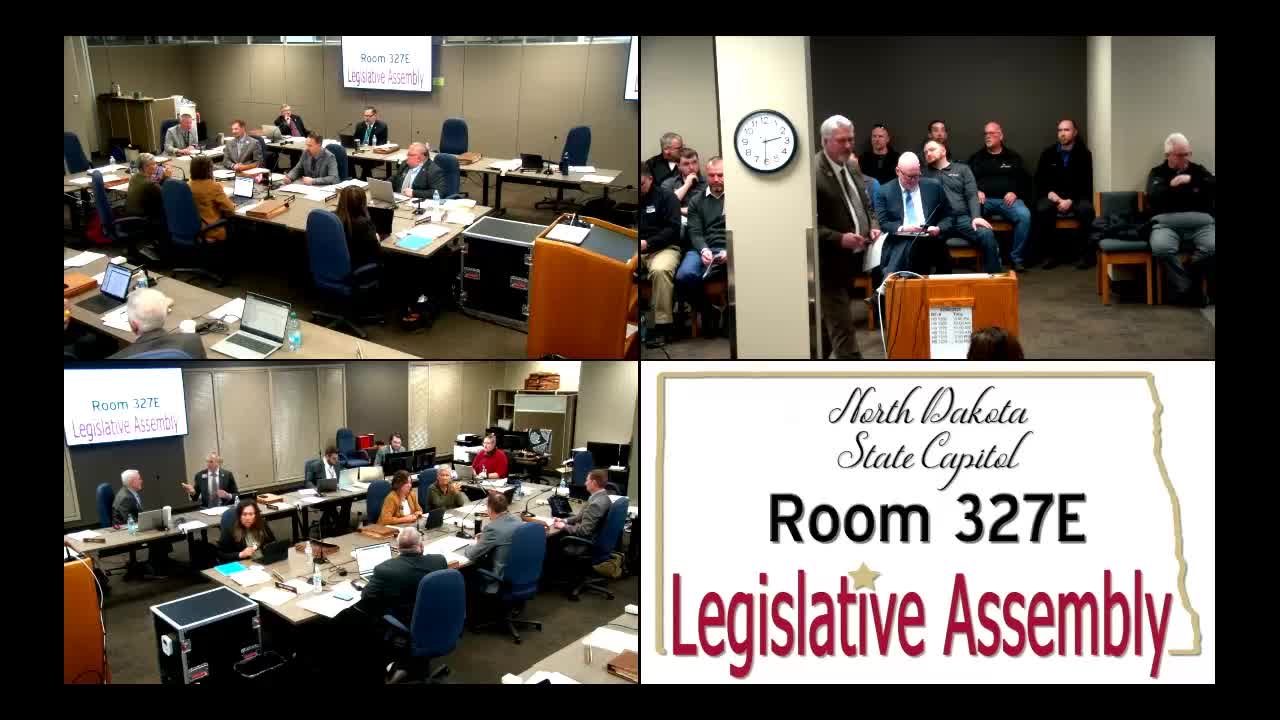
The committee held a public hearing; no committee vote or formal amendment was recorded in the transcript for HB 1515 during the session captured here. The hearing included extended questioning of both sides and multiple requests from both dealer and manufacturer witnesses for the committee to consider compromise language.
Why it matters: The bill would change how warranty work — work dealers are contractually required to perform for manufacturers — is compensated. Backers say the change fixes persistent underpayment and protects dealer businesses and technician jobs; manufacturers say the change risks higher costs for consumers and removes needed validation processes. If lawmakers act, the outcome could affect dealership revenue, technician pay and the cost of vehicle ownership in North Dakota.
Quotes
“Manufacturers have continued to cut labor reimbursement times so much over the years that currently they are paying 40% less or more than the average retail rate,” said Ryan Elsey, fixed operations director for ID Automotive Group.
“Dealerships are not asking for special treatment. We are only asking for what is fair,” said Kathleen Gaddy (read into the record by Chris Gaddy), on behalf of Ryan Family Dealerships.
“We have mechanisms in place today for dealers to request more time… This is where a best solution for the bill is,” said Josh Fisher of the Alliance for Automotive Innovation.
Ending
Committee discussion closed the day’s testimony without a recorded vote. Several witnesses asked the committee for additional negotiation time; manufacturer representatives said they would try to draft compromise amendments and dealers urged lawmakers to act to protect local service capacity and technician pay.