Get Full Government Meeting Transcripts, Videos, & Alerts Forever!
Get email alerts on the Dui topic
No spam. Unsubscribe anytime.
Committee backs bill to set minimum sentences for DUI cases with minors in vehicle
Summary
The House Transportation Committee recommended a "due pass" for House Bill 1206, which clarifies mandatory minimum sentences when a person drives under the influence with a minor in the vehicle. Supporters said the change fixes a sentencing interpretation that reduced some felony cases to misdemeanor punishment.
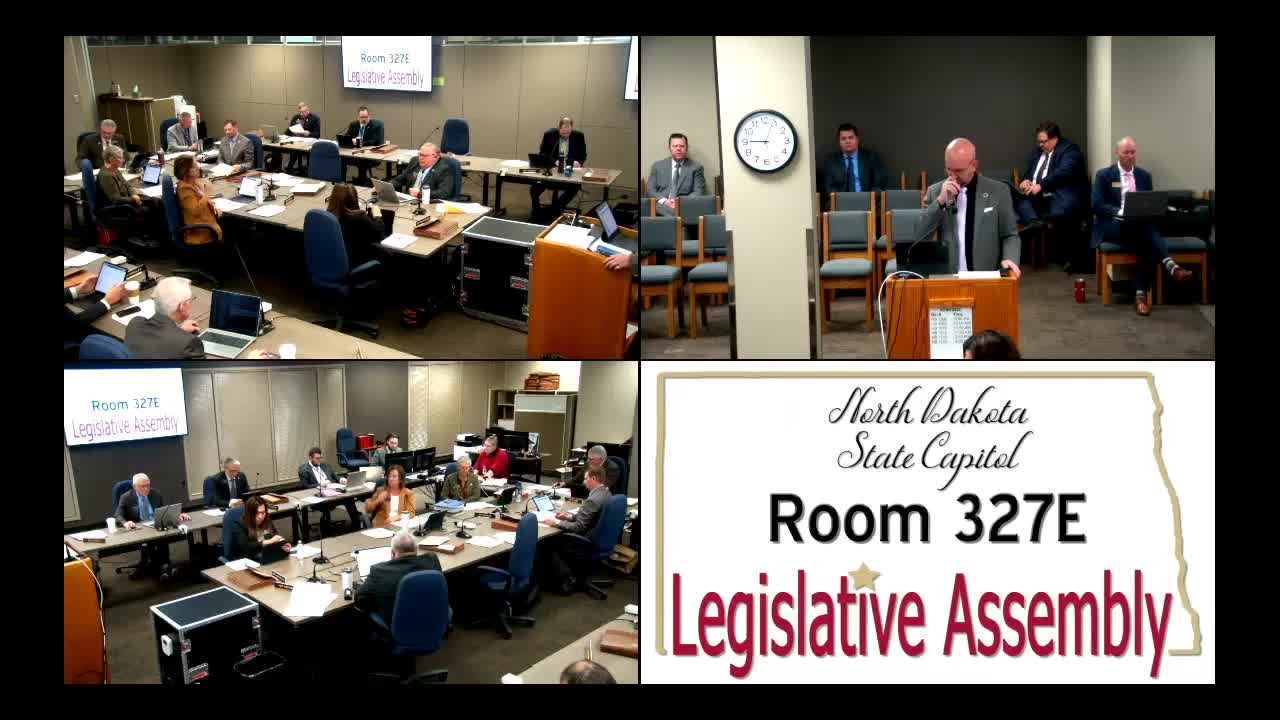
BISMARCK — The House Transportation Committee on Thursday recommended a due pass for House Bill 1206, which clarifies mandatory minimum sentences when a person is convicted of driving under the influence while a minor is in the vehicle.
Supporters said the bill closes a loophole that has allowed some aggravated DUI charges to be treated as misdemeanors. Representative Scott Lauser, R‑Minot, told the committee the language matches what the committee approved previously and that courts had interpreted existing language in ways that reduced expected felony sentences.
"When the DUI is aggravated, which is a minor in the vehicle, what the minimum sentence must be" is made explicit in the bill, Lauser said. He described factual circumstances that prompted the bill—an example where an individual with a reported blood alcohol content of 0.36 was arrested with a 6‑year‑old and an unrestrained 9‑month‑old in the vehicle.
Aaron Burst of the Association of Counties testified in support and reviewed how the bill aligns with existing DUI law. "If you are driving DUI, you are over the age of 21 and there is a minor in the vehicle, that is an enhanced crime in North Dakota," Burst said, and the bill "clarifies what the minimum mandatories would be." He explained the bill specifies jail minimums and elevates repeat aggravating conduct to a higher felony level under existing code references.
Committee members asked whether the age threshold in current statutory policy — 21 and older — was a compromise. Burst said the 21‑and‑older threshold was a prior compromise intended to avoid capturing some younger adults in particular circumstances; he also noted that the 1‑year‑and‑1‑day minimum moves some offenders to state penitentiary terms and prevents felony dispositions from being reduced to misdemeanor status.
The committee voted to recommend the bill. The clerk recorded a 9‑3 vote in favor, with two members absent. The motion for a due pass was made by Representative Greenheck and seconded by Representative Martin, and committee members who voted yes included Chairman Dan Ruby, Vice Chair Greenheck, Representatives Freilich, Hendricks, Johnston, Mackey, Morton, Osowski and Schatz. Representatives Christiansen, Dressler and Finley DeVille voted no.
The bill will proceed to the House for further consideration.
Sources: Testimony and exchanges on the House Transportation Committee record; bill text referenced section 39‑08‑01.