Get Full Government Meeting Transcripts, Videos, & Alerts Forever!
Get email alerts on the Game And Fish License Fees topic
No spam. Unsubscribe anytime.
Committee hears support for Game and Fish license fee increases to shore up fund balance
Summary
Witnesses testified in favor of House Bill 14‑70, which would raise hunting and fishing license fees to stabilize the Game and Fish Fund; testimony estimated roughly $5.5 million in additional revenue by the end of the biennium and highlighted habitat and access priorities.
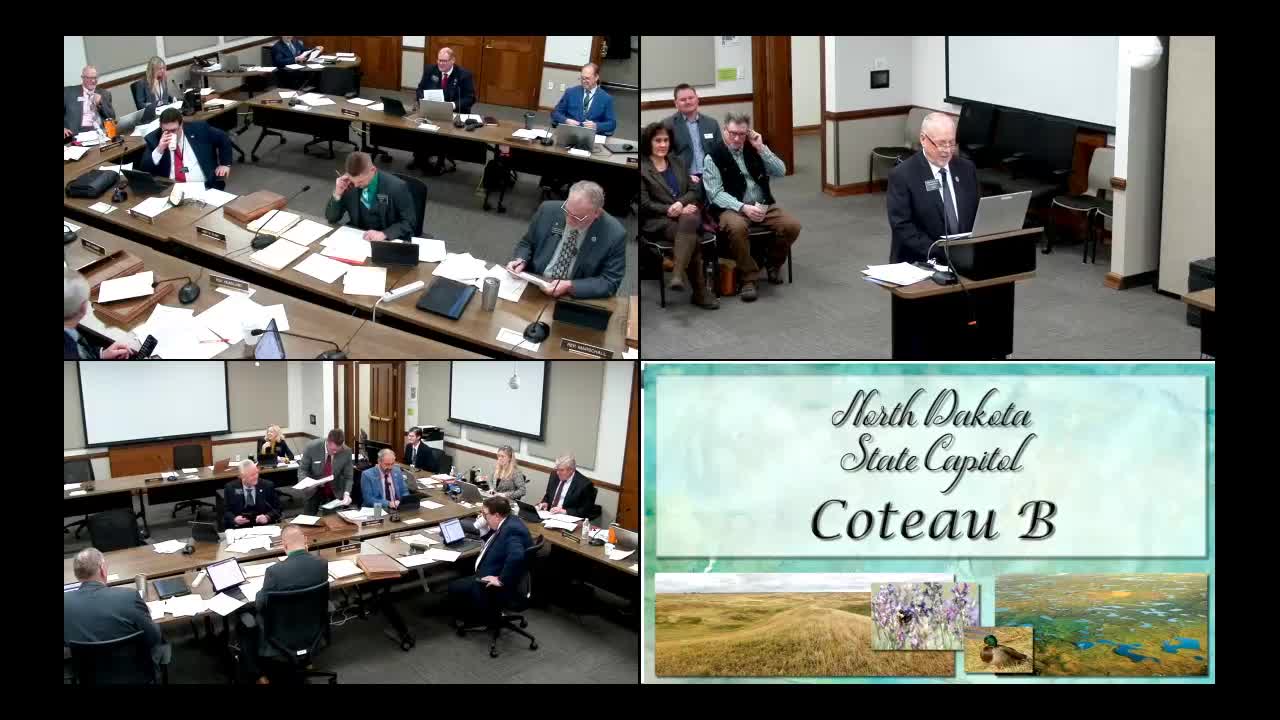
BISMARCK — Lawmakers in the House Energy and Natural Resources Committee heard broad stakeholder support for House Bill 14‑70, which proposes increases to hunting and fishing license fees intended to shore up the North Dakota Game and Fish Fund.
Representative Glenn Bosch, sponsor of the bill and a representative from Bismarck's District 30, told the committee that Game and Fish Department projections showed the fund balance could fall below $13 million by the end of the 2025‑27 biennium. He cited North Dakota Century Code 20.1‑02‑16.1 and said the fund must stay above $15 million without budget section approval.
Bosch said license fees last changed in 2013 and that, according to the fiscal note, the proposed fee changes would increase Game and Fish revenues by about $5.5 million by the end of the biennium, helping to stabilize the reserve and restore the fund toward historic levels between $25 million and $35 million.
Testimony in support came from a range of hunting and conservation groups. Brock Wall, chairman of the North Dakota chapter of Backcountry Hunters and Anglers, said the increases are “not only expected, but they are needed,” and urged a due‑pass recommendation so the department can expand habitat and access programs. John Bradley, executive director of the North Dakota Wildlife Federation, said the increases will not solve all habitat funding needs but will provide “needed resources to keep up with the times.”
Several witnesses stressed that habitat and access are priorities for sportsmen and that the rising cost of enrolling private land in conservation programs — driven by higher rental rates and reduced CRP acreage — makes additional revenue necessary.
Game and Fish Director Jeb Williams described the discussion as “humbling.” He explained the department’s revenue mix — about half from federal excise taxes (Pittman‑Robertson and Dingell‑Johnson funds) and the remainder from state license fees — and said the department must balance raising revenue with keeping hunting and fishing accessible. He said the department had not asked for additional full‑time positions in the current biennium but had received five FTEs in the previous session for core divisions.
Committee members asked technical questions about the fiscal note and the composition of staff. The committee closed the hearing; no committee vote on the bill was recorded during this meeting.
Ending: The hearing produced unanimous stakeholder support but also questions about whether the proposed increases go far enough to meet long‑term habitat goals.