Get Full Government Meeting Transcripts, Videos, & Alerts Forever!
Get email alerts on the Lignite Research Council topic
No spam. Unsubscribe anytime.
Committee advances bill to modernize Lignite Research Council
Summary
The House Energy and Natural Resources Committee heard testimony and voted to give House Bill 15‑92 a due‑pass recommendation; the measure would update membership, quorum, consultation, and confidentiality rules for the Lignite Research Council.
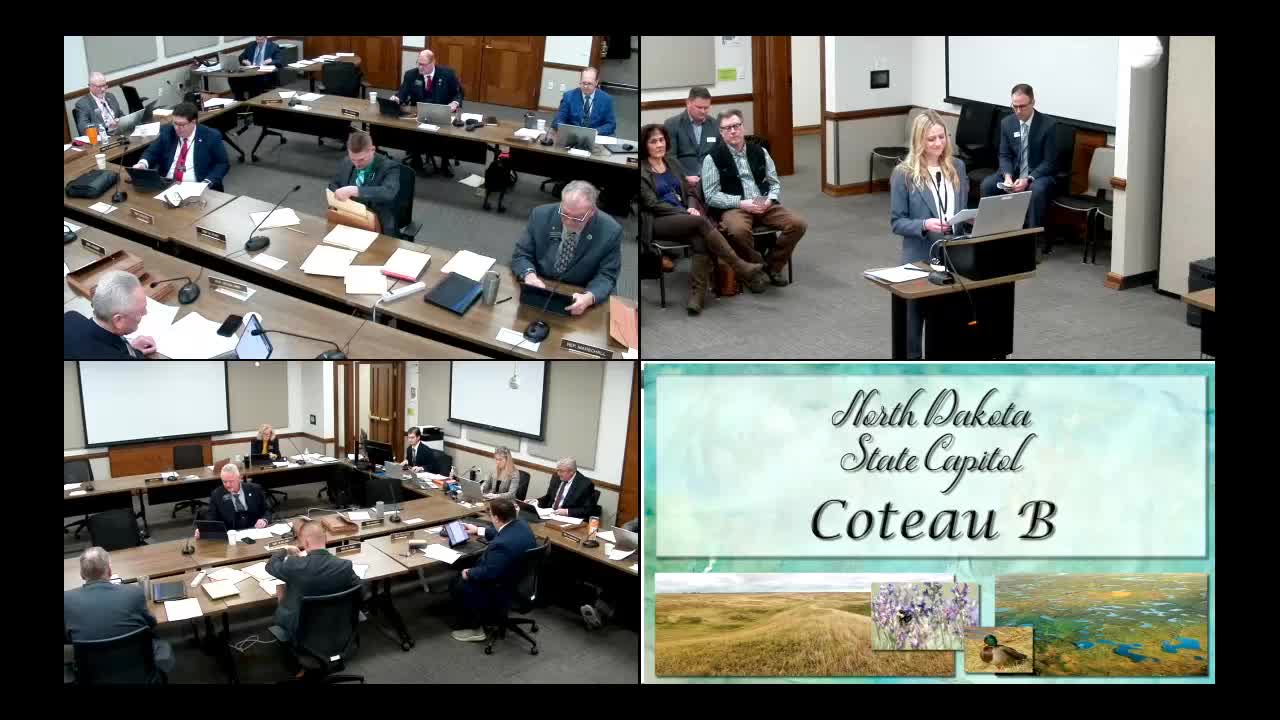
BISMARCK — The House Energy and Natural Resources Committee gave House Bill 15‑92 a due‑pass recommendation after a short hearing and testimony from industry representatives.
Representative Anna Novak, sponsor of the bill and a representative from District 33, told the committee the measure “modernizes the Lignite Research Council to align with the oil and gas research council and the renewable energy council.” She asked for a due‑pass recommendation so the council “can effectively support industry advancements.”
The bill, Novak said, updates the council’s findings and purpose language, clarifies member appointment procedures (bringing statutory language into line with an existing executive order), and identifies processes for the council’s consultation with the North Dakota Industrial Commission. Jonathan Fortner of the Lignite Energy Council added technical detail, telling the committee the council was created in 1987 and “we're just trying to modernize.”
Fortner described provisions in the draft that would: define membership composition consistent with the most recent executive order; allow the council to operate when some appointed seats are vacant so long as active members constitute a quorum; add per diem language for legislative appointees; provide clearer expectations for regular, substantive consultation between the council and the Industrial Commission; require subject‑expert blind reviews of grant proposals; and expand statutory exemptions for commercially sensitive records.
Fortner said the confidentiality language is intended to protect commercially sensitive work such as emissions control or carbon capture technologies, while improving the council’s ability to review proposals and advise NDIC staff. He also cited North Dakota Constitution language that gives public data requestors broad access, noting that the bill seeks to align council practice with other research councils.
The committee recorded a motion to give the bill a due pass. Representative Doctor moved the due‑pass motion; the roll call recorded the following affirmative responses: Chairman Porter; Vice Chair Anderson; Vice Chair Novak; Representative Conmee; Representative Doctor; Representative Hedlund; Representative Johnson; Representative Marshall; Representative Olsen; Representative Ruby. The clerk announced the motion carried. The committee then voted to place the bill on the consent calendar on a motion by Representative Novak, seconded by Representative Doctor; that motion also carried.
The bill will proceed with the committee’s due‑pass recommendation and an assignment of a bill carrier.
Ending: The hearing generated no opposition testimony. Committee documents and the bill draft circulated at the hearing will determine final statutory language and any conforming edits before the measure moves on.