Get Full Government Meeting Transcripts, Videos, & Alerts Forever!
Get email alerts on the Elections Voter Data topic
No spam. Unsubscribe anytime.
Committee hears bill to open North Dakota voter lists to broader public access
Summary
Supporters said the bill would increase transparency and let voters check their records; the secretary of state warned it would expose personal data and create anonymity for requesters, urging a do‑not‑pass recommendation.
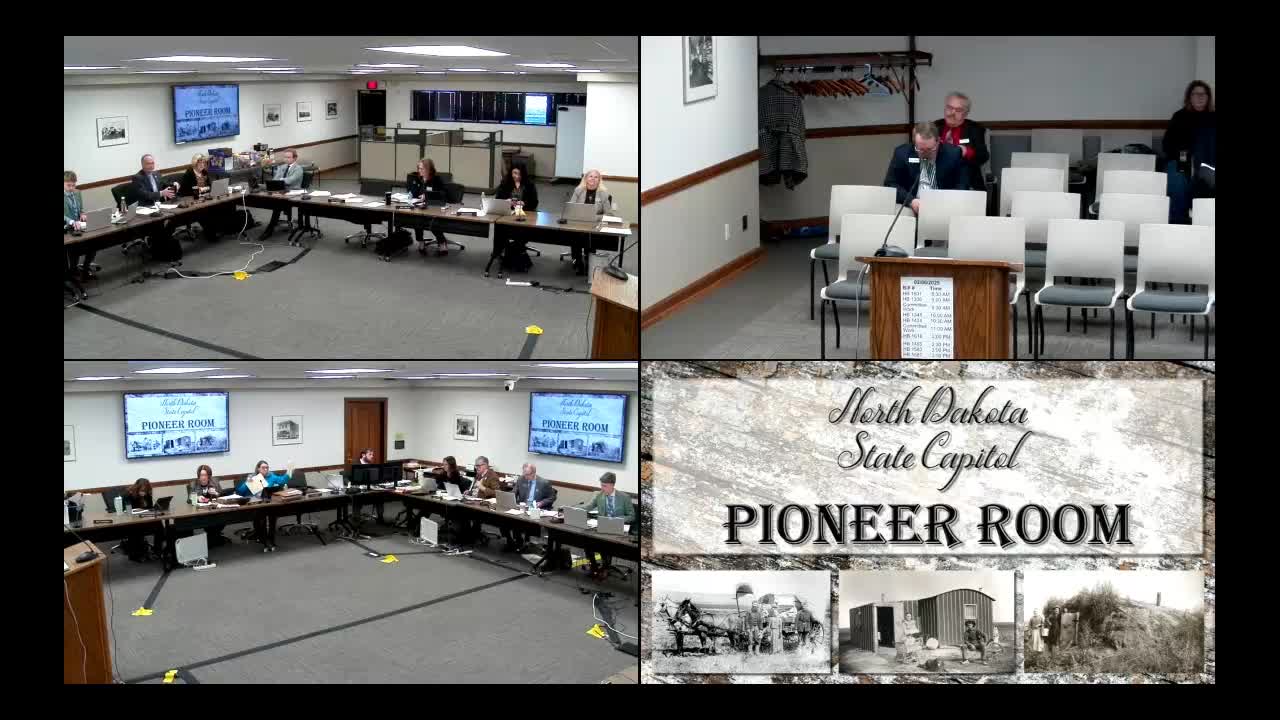
The House Government and Veterans Affairs Committee heard testimony on House Bill 1616, a measure that would allow voter lists generated from the central voter file to be obtained by people inside or outside North Dakota for election‑related purposes.
Representative Andrew Marshall, who introduced the bill, said the measure was intended to "provide public access to official government data pertaining to electronic elections" and to encourage greater voter participation. "What this bill does is it makes public information available to the public, not just political leaders," Marshall said.
Supporters said the change would let voters verify their own registration and voting history. Michael Bowman, who said he leads a public policy affairs firm and works with the Voter Reference Foundation, said the project already includes 32 states and lets individuals review voting history much like a credit report. "This is a fundamental change where this is an opportunity for the voter to start taking control of the ballot and their own voting history," Bowman said.
Secretary of State Michael Howe testified in opposition, saying the bill would remove current restrictions that limit access to voter lists to candidates, political parties and political committees. "This bill seeks to make borderless available to anyone ... all while providing their quest for complete anonymity in this process," Howe said, urging the committee to give the bill a "do not pass" recommendation.
Howe told the committee the lists currently produced by the secretary of state's office include a voter's name, residential address, the district where the voter resides and whether the voter cast a primary or general election ballot in the last four years. He warned the bill's language would: (1) remove the restriction on who may request lists, (2) create an open‑records exemption that would keep the identity of requesters private, and (3) require that names and addresses of certain protected active voters be released, which he said would defeat protections for those individuals.
Representatives on both sides raised privacy and misuse concerns. Some members asked whether the bill could be amended to limit shared fields to only whether a person voted and not include addresses or contact information; Marshall said that limitation could be considered. Questions also focused on whether opening the files would lead to unwanted marketing or public shaming of nonvoters.
The committee took testimony from supporters and opponents and then closed the hearing on House Bill 1616; no committee recommendation or floor vote was recorded in the transcript.
Ending: The hearing was closed after public and official testimony. The committee did not record a vote on HB 1616 in the excerpted proceedings.