Get Full Government Meeting Transcripts, Videos, & Alerts Forever!
Get email alerts on the School Meals topic
No spam. Unsubscribe anytime.
House bill would use leftover school-meal money to pay districts' unpaid lunch debt
Summary
House Appropriations members debated a proposal to use unspent money from last session’s $6 million school‑meal appropriation to cover unpaid student meal debt at districts across the state.
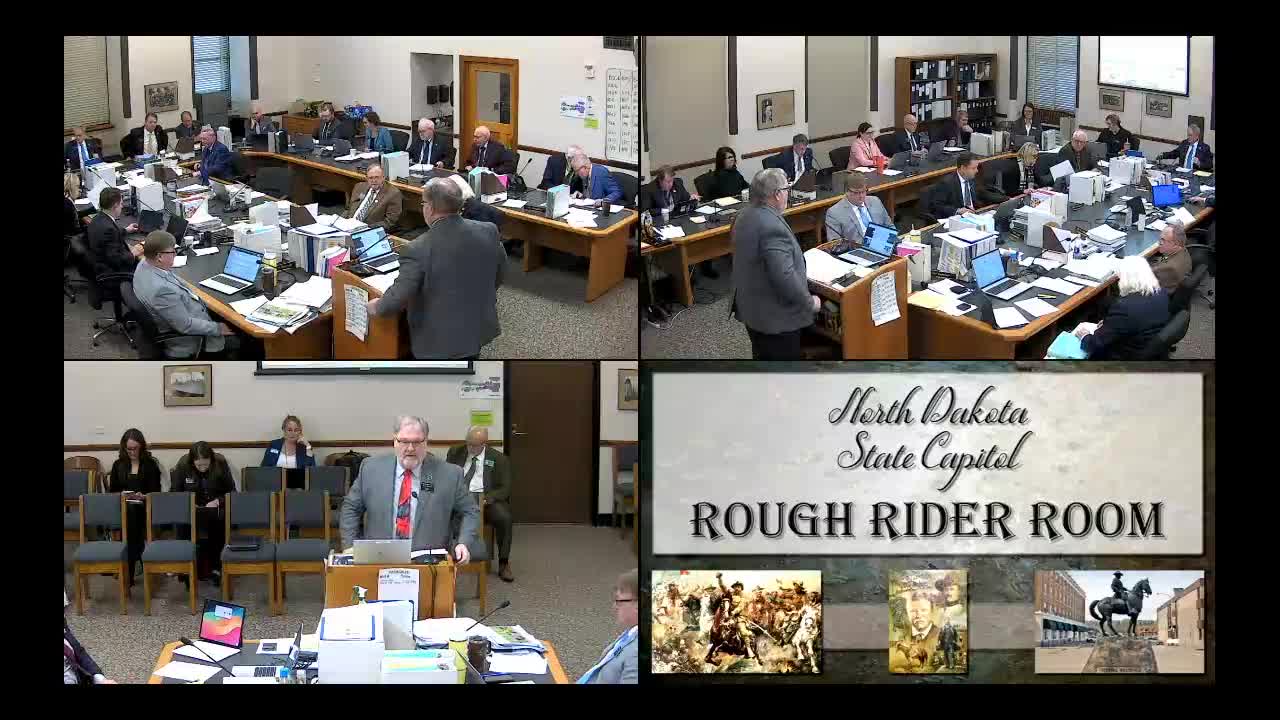
House Appropriations members spent more than an hour Wednesday debating House Bill 1100, a re-referral from Representative Pat Heinert that would direct any unspent portion of a $6 million state appropriation for expanded school meal eligibility toward unpaid school meal debt. Heinert told the committee the original appropriation was intended to expand eligibility and that “we have people who aren't paying for their meals” and that what remains of the appropriation should be used to “divide that up between the schools that had…school lunch debt.”
The bill would rely on the balance remaining at the end of the fiscal cycle; Representative Heinert said the committee expects roughly $2 million to $2.2 million could remain. Department of Public Instruction child nutrition director Lynelle Johnson told members the state’s school-meal population numbers and reimbursement context. “Statewide there’s about 31,000 students that qualify for free, about 7,700 students that qualify for reduced and around currently 1,800 students that qualify for the state 200,” Johnson said, adding there are “about 125,000 students that participate” in the National School Lunch Program and “193 schools that participate in NSLP in North Dakota.”
Why it matters: Committee members debated whether using leftover state funds to pay districts’ meal debt is appropriate and whether it creates an incentive for families not to pay. Opponents argued the bill would relieve families of responsibility and reduce districts’ incentive to collect, while supporters and some district representatives pointed to rising lunch debt since the pandemic and to testimony showing large local debts in some districts.
Key points of discussion - Eligibility and program rules: Witnesses and members discussed federal and state eligibility tiers, including the state-expanded “200% of poverty” category that was created previously. Johnson said students in the state 200 category are part of a state eligibility expansion and that those counts are not reported to the federal government for Title I census eligibility. “Those state 200 numbers…do not qualify for anything federal. They don't use them to use for Title,” Johnson said. - Source and scale of unpaid debt: Members pressed for numbers. Johnson gave statewide counts (see above). Members shared district-level figures in committee comment: Grand Forks reported roughly $69,223 current debt after donations, while West Fargo reported debt on the order of the hundreds of thousands (district-supplied figures were circulated in committee testimony). - Incentives and collection: Several members, including Representatives Steeman and Lausser, warned that using state funds to erase unpaid meal debt could encourage nonpayment. Representative Munson and others asked whether districts fully pursue collection options (for example, contacting parents, donation drives, foundation support or limited administrative remedies). Johnson confirmed schools may administratively complete applications in narrowly authorized circumstances for students the school determines qualify.
Amendment and limit requested in committee discussion Committee members pressed to limit any repayment to recent debt tied to the current biennium rather than allowing the appropriation to be applied to long-accumulated balances. During debate members proposed and the committee adopted an amendment to limit application to debt incurred within the current 2023–25 biennium (the amendment text limits covered debt to that period). That change was discussed as a way to limit ongoing moral‑hazard concerns while directing one-time leftover funds at debt most directly tied to the post‑pandemic period.
Outcome and next steps The committee debated motions later in the session. Members raised both administrative and policy concerns and discussed alternatives (for example, expanded universal meal proposals and pending ESA language that could affect school meal funding). As of the end of the transcript excerpt the bill had been debated and the committee considered motions; committee action and final disposition were recorded later in the hearing record.
Ending Members left the core policy questions unresolved: whether a targeted one‑time use of carryover funds for recent meal debt best balances the schools’ fiscal stress and personal responsibility concerns, and whether a broader policy (universal meals, ESA allowances for meals) would be a preferable, more durable solution.