Get Full Government Meeting Transcripts, Videos, & Alerts Forever!
Get email alerts on the Wetlands topic
No spam. Unsubscribe anytime.
Senator Lewick’s bill would require high-water determinations for wetlands; conservation groups and utilities raise concerns
Summary
Senate Bill 23-25 would direct the Department of Water Resources to determine ordinary high-water marks for wetlands and tie those elevations to easements; supporters say it clarifies wetland boundaries, opponents warn of regulatory cost, delays for mitigation banks and transmission projects.
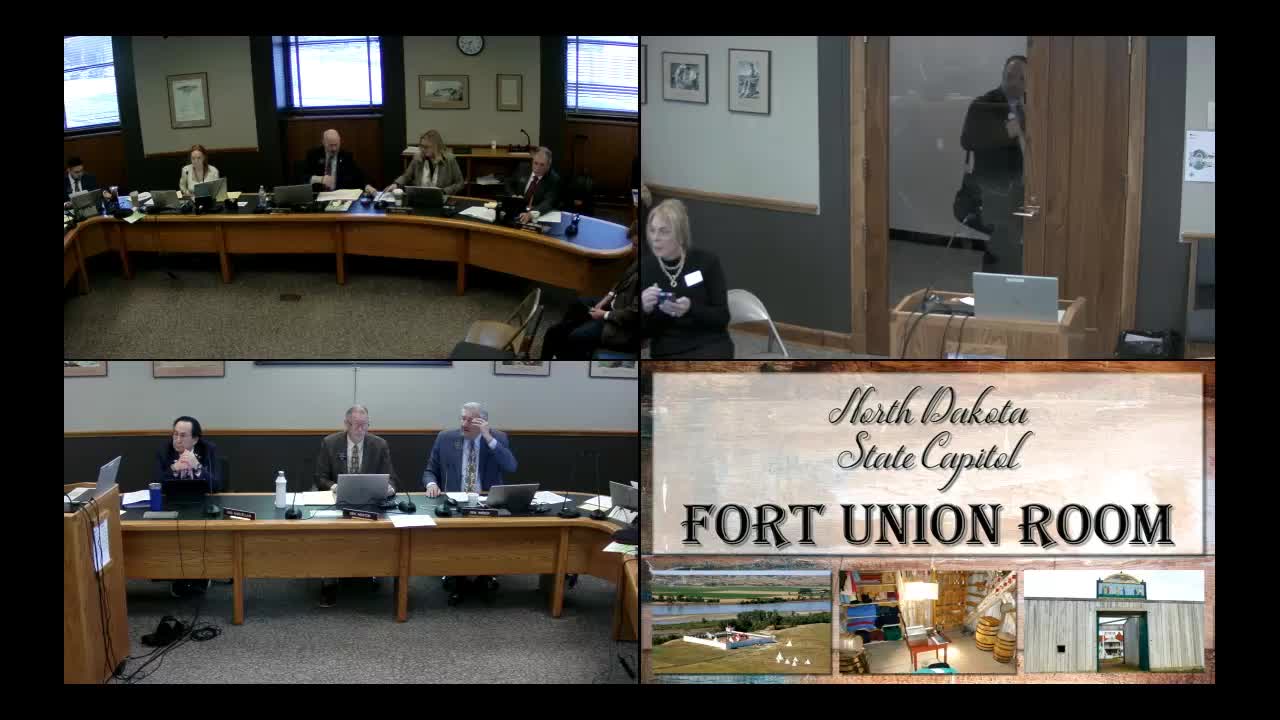
Senator Larry Lewick introduced Senate Bill 23-25 to the Senate Agriculture and Veterans Affairs Committee, saying the bill would enable a reliable method to determine and record high-water marks for wetlands so property owners and easement holders know the proper elevation for management and avoid damages to roads, railroads and farmsteads.
The bill’s sponsor said his intent is not to remove protections for wetlands but to identify “the high water marks on these established wetlands” using modern aerial imagery and rainfall data to establish averaged high-water elevations. “If there is the ability to maybe even throw out a pilot program to work on something like this in a county or an area…to try it out,” Lewick said.
Why it matters: proponents say clearer, documented elevations could reduce disputes and prevent “nuisance holes” from growing and causing infrastructure damage. Opponents — including a farmer-led wetland mitigation bank, electric utilities and the Department of Water Resources — warned the bill as written could create new delays, liabilities and costs.
North Dakota Corn Growers Association representatives said they share the bill’s goals but worry the language could unintentionally harm the North Dakota Ag Mitigation Bank (NDAM), a farmer-led nonprofit that develops mitigation bank sites and records easements. “We definitely appreciate the intent of Senator Lewick’s bill. The one concern…is that it may impact this organization that we worked with for trying to get established for three years,” Drew Courtney testified for the Corn Growers.
NDAM’s technical consultant, Matt Rek, told the committee NDAM already documents “maximum pool elevations and maximum water depth with outlets and plugs through our engineering process that get recorded in the easement and go to the county.” Rek warned the bill’s requirement that a holder request “the Department of Water Resources or another federal agency to work on an ordinary high water mark” could add substantial time and cost to mitigation-bank approvals and that the term “ordinary high watermark” is typically an Army Corps of Engineers term not routinely used in wetland mitigation bank engineering.
Utilities raised separate concerns. Ryan Norell of Basin Electric Power Cooperative said the bill could slow and add cost to electric transmission siting: “To do a delineation…before the easement is offered…would setback transmission line projects, weeks, months, possibly years,” and could add roughly $10,000 per parcel for surveying on some projects. He also asked whether retroactive application could affect existing transmission lines.
The Department of Water Resources provided neutral testimony and flagged resource gaps. Director Aaron Carranza told the committee the department does not currently perform ordinary high-water watermark delineations for wetlands and lacks certified wetland delineators or wetland scientists on staff. He estimated the bill would substantially increase regulatory responsibilities and said a fiscal note would be reasonable; contracting or three or more FTEs could be necessary. The department also noted the U.S. Fish and Wildlife Service’s National Wetlands Inventory documents millions of wetlands in the state and that not every wetland would receive an easement under the bill.
Committee outcome and next steps: the hearing closed with members saying the bill needs additional work and conversations with stakeholders. Several committee members suggested a pilot or study could help define a practical, limited approach before statewide implementation.
Sources and attribution: statements are taken from testimony in the Senate Agriculture and Veterans Affairs Committee hearing on SB 23-25, including Senator Larry Lewick (bill sponsor), Drew Courtney (North Dakota Corn Growers Association), Matt Rek (NDAM technical consultant), Ryan Norell (Basin Electric) and Aaron Carranza (ND Department of Water Resources).
Ending note: The committee did not take final action on SB 23-25; members signaled interest in edits and a possible pilot program to reduce unintended consequences for mitigation banks and utilities.