Telepsychiatry contractor says it has onboarded all county jails, asks legislature for continued support
Loading...
Summary
Integrated Telehealth Partners told the House Appropriations Human Resources Division it has contracted with North Dakota HHS and onboarded telebehavioral-health services in all 18 county jails in eight months, is serving more than 150 inmates a month and is seeking ongoing funding and support for expansion, staff training and substance-use care.
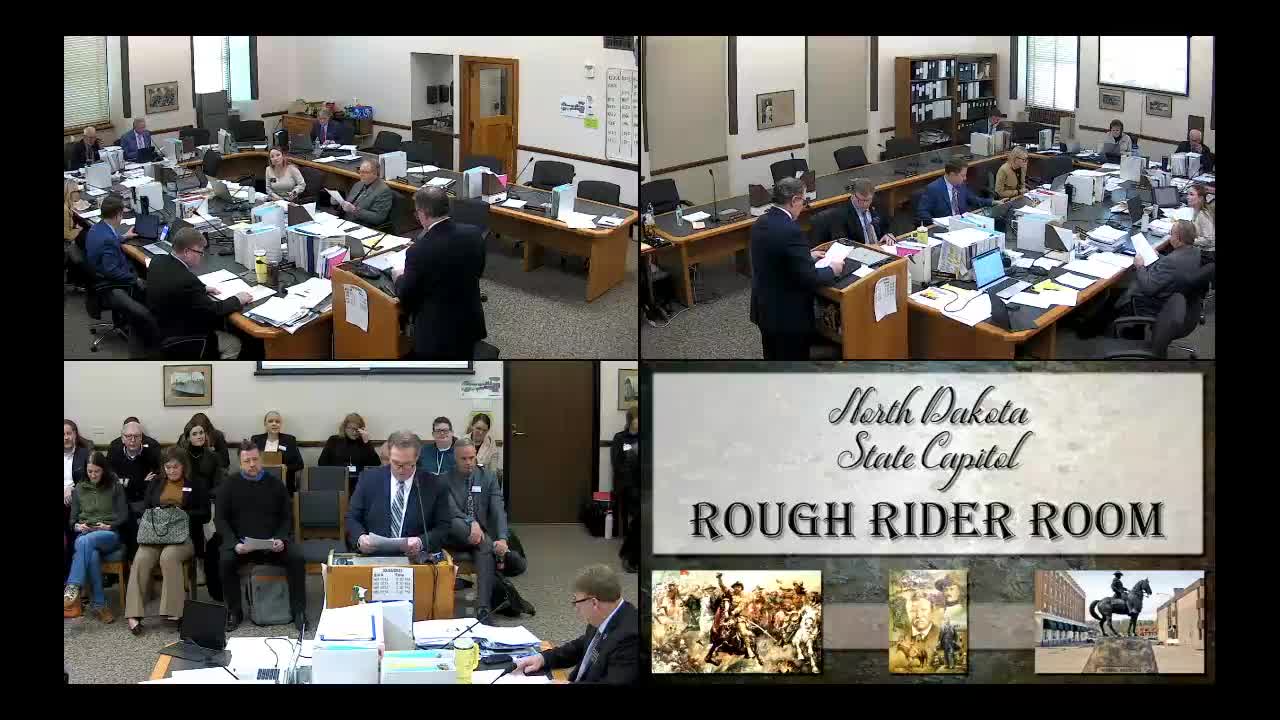
Doug Wilson, president of Integrated Telehealth Partners, told the House Appropriations Human Resources Division the company has a state contract and has quickly rolled telebehavioral-health services into county jails and is seeking continued legislative support.
Wilson said the company entered an agreement with the North Dakota Department of Health and Human Services in February and "we were able to onboard all 18 jails in just 8 months. We are serving more than 150 inmates a month," adding the rollout exceeded initial expectations.
The request matters because committee members heard that jails lack uniform suicide-risk screening and are seeing rising prevalence of substance-use disorders among inmates. Wilson told legislators ITP is preparing training videos and materials to help jail staff on evidence-based suicide-risk processes and is working to make substance-use providers available to supplement existing services.
Wilson read letters of support into the record from local jail staff and public-health workers. A letter from Victoria Church, behavioral-health case manager at the Lake Region Correctional Facility, urged lawmakers to "consider expanding funding for telepsychiatry services so that incarcerated individuals across our state can continue to connect with healthcare professionals and receive the mental healthcare they urgently need and deserve." Joelle Schmuck, a public-health and correctional nurse at Walsh County, wrote that telepsychiatry "made it possible to have direct access to psychiatric specialists through telehealth" and that it had substantially improved medication management and outcomes.
During questioning, Representative Steeman asked about prescribing and whether there had been problems after providers prescribed medication. Wilson said there were "just a few hiccups" relating to getting prescriptions to the correct pharmacy but no systemic barrier to prescribing. Representative O'Brien asked whether any jails had refused the program; Wilson replied, "There have not been any jails that have opted out."
Wilson also told the committee ITP will continue follow-up visits with resource centers and jails and is meeting with the Southeast Resource Center and Cass County Jail next week to discuss the commitment process.
The company asked legislators for continued support to expand services, train jail staff on suicide-risk assessment, and increase access to substance-use treatment in correctional settings. Committee members did not take a vote during the hearing; the presentation concluded with committee discussion and routine questions.
For now, ITP will continue onsite visits, training-material rollout and periodic coordination with HHS and regional resource centers while seeking funding and legislative support to expand capacity.