Get Full Government Meeting Transcripts, Videos, & Alerts Forever!
Get email alerts on the Co2 Pipeline Taxation topic
No spam. Unsubscribe anytime.
Senate rejects amendment to narrow CO2 pipeline property-tax exemption
Summary
The North Dakota Senate defeated an amendment to Senate Bill 23-20 that would have limited a long-standing property-tax exemption for CO2 pipelines to exclude enhanced oil and gas recovery, voting 11–34 with 2 absent.
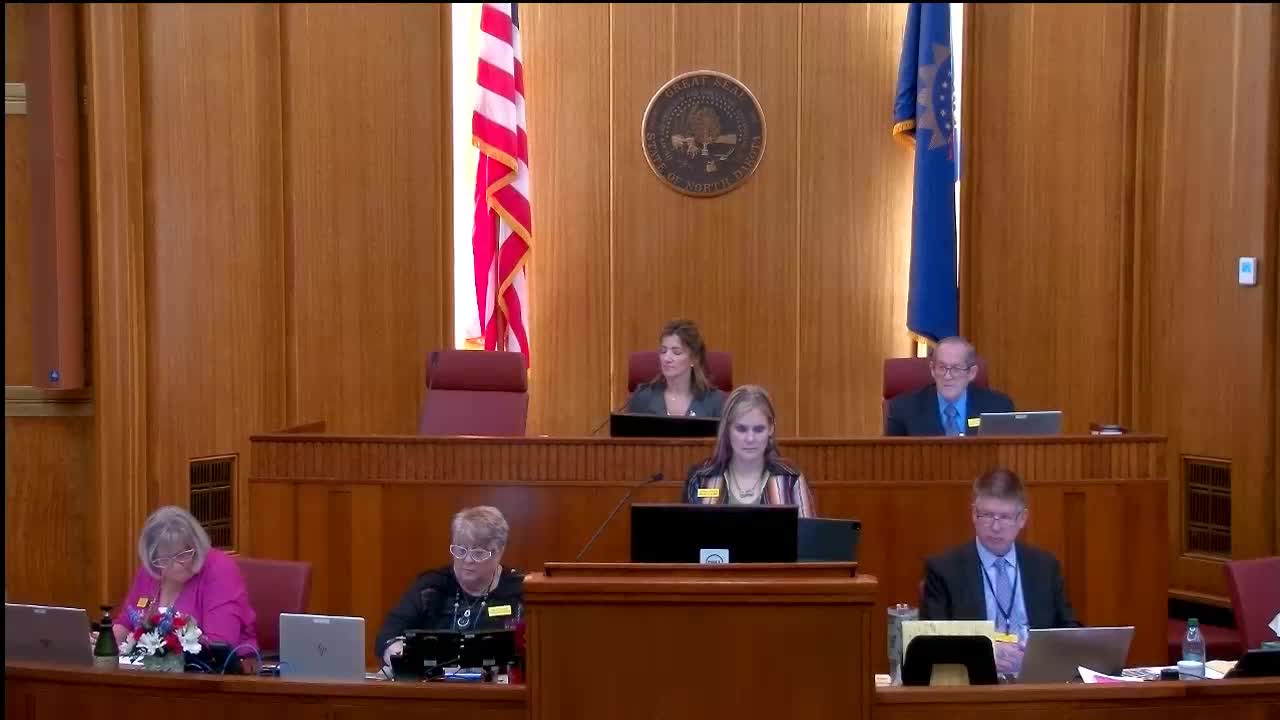
The North Dakota Senate on Feb. 6 rejected a proposed amendment to Senate Bill 23-20 that would have narrowed a property-tax exemption for carbon-dioxide (CO2) pipelines, a roll call showed 11 ayes, 34 nays and 2 absent.
Senator Jim Patton, sponsor of Senate Bill 23-20, told colleagues the bill would remove the property-tax exemption as it relates to secure geologic storage of CO2; the amendment under consideration would have left the exemption intact for CO2 used for enhanced oil and natural-gas recovery and removed the exemption only for storage. "The amendment removes the language 'or use and enhanced recovery of oil and natural gas' and that component of this would remain exempt," Patton said during the committee amendment presentation.
The amendment drew sharply divided remarks on the Senate floor. Senator Megram argued the state should not extend exemptions to what he described as large foreign investors in an interstate pipeline permitted to store CO2 in North Dakota. "Why are we giving them a property tax exemption when all the citizens in the state pay for property tax?" Megram asked, adding his committee work showed the project’s investors include foreign entities and that the pipeline would store CO2 for about 12 years while the exemption period is 10 years.
Senator Wanzek urged colleagues to oppose the amendment on economic grounds, saying it would "pick winners and losers" and single out ethanol producers. He cited U.S. Department of Agriculture production figures to argue ethanol is critical to the state’s corn market and local economy. Other supporters of the amendment echoed concerns about state taxpayers assuming long-term liability for injected CO2 after federal credits and private investments expire.
A recorded roll call was requested before the vote. The secretary announced 11 ayes, 34 nays, 2 absent; the amendment failed.
The amendment vote does not by itself enact or kill the underlying bill; the transcript records only the amendment debate and its defeat. The bill’s next procedural status or any subsequent floor action on Senate Bill 23-20 is not specified in the transcript.
Ending: The amendment’s defeat leaves the underlying language described by Patton intact as of the recorded vote; Senate Bill 23-20’s future steps were not recorded in the provided transcript segment.