Get Full Government Meeting Transcripts, Videos, & Alerts Forever!
Get email alerts on the Council Governance topic
No spam. Unsubscribe anytime.
Milwaukie council weighs replacing 'swim lanes' with goal-focused accountability
Summary
At a Feb. 4 work session, Milwaukie councilors debated moving from the prior 'swim lanes' structure to a smaller set of council goals with named accountability, discussed risks of serial deliberation, and agreed to begin goal-focused sessions and follow-up work this spring.
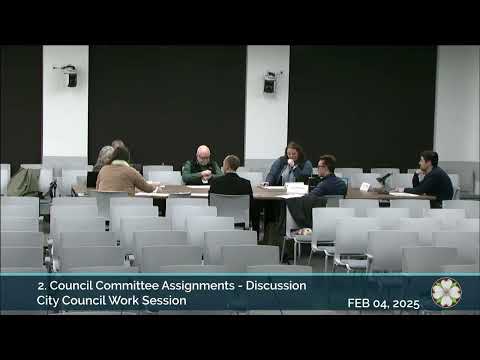
Milwaukie — The Milwaukie City Council spent a sizable portion of its Feb. 4 work session discussing how to organize council responsibilities and oversight after a recent council retreat, considering proposals to replace the existing “swim lanes” structure with three prioritized goals and clearer accountability for implementation.
The proposal outlined two options: assign two councilors per goal who would jointly develop a council action plan with staff, or assign one councilor per goal who would coordinate more broadly and delegate tasks to colleagues and advisory bodies. Councilor Will (who led the proposal) said the intent is to create clarity and follow-through: “My goal is in 30 minutes when we walk away…that we have some clarity on how we’re gonna actually implement our goals and, like, some measure of accountability baked in,” he said.
Why this matters: Council organization affects how priorities are advanced, how staff are asked to prepare work, and how the council avoids prohibited serial deliberations. Councilors expressed support for accountability but also voiced concerns about adding layers of work or unintentionally creating multiple off-dais conversations that could violate public‑meeting laws.
Main points of debate and staff role
- Two models proposed: (1) Two councilors per goal who create an initial action plan with the city manager and bring it to full council for deliberation; (2) One councilor per goal who acts as the primary organizer and delegates sub‑tasks to other councilors or advisory committees. Both options keep final decisions and formal deliberations on the dais.
- Public‑meeting and staff workload concerns: Several councilors and the city attorney cautioned about the risk of serial deliberations if councilors meet separately and repeatedly outside public sessions. Some councilors said staff capacity (the city manager’s workload was discussed) should not be overburdened by additional ad‑hoc staff work driven by council coordination.
- Use of advisory bodies: Councilors suggested leveraging existing advisory boards (MercAC, PARB, QUAC and others) as regular touchpoints to develop action plans and provide public-facing accountability without creating extra informal decision forums.
Next steps and timeline
The mayor and staff agreed to begin a monthly rotation of goal discussions in public session beginning in April, with the first quarter to be used to scope action plans and define measurable outcomes. Councilors were asked to review the committee/representation matrix in their packets and to provide additions (for example, boards or partnerships that councilors participate in personally versus those where they are the city’s official representative).
Ending
Councilors directed staff to circulate an updated assignments matrix before a planned April work session and to coordinate one‑on‑one meetings between the mayor, the city manager (Emma), and the councilors who will shepherd the three goals. The council left the work session planning to return to an executive session on unrelated real‑estate and personnel matters.