Get Full Government Meeting Transcripts, Videos, & Alerts Forever!
Get email alerts on the Streets And Infrastructure topic
No spam. Unsubscribe anytime.
Milwaukie staff: street-repair goals remain; PCI data outdated and funding gaps persist
Summary
City staff told the Milwaukie City Council on Feb. 4 that the SAFE and SSMP street programs still target arterials and collectors but now include more residential work, that pavement-condition data are out of date, and that funding and grant awards leave several projects unfunded or delayed.
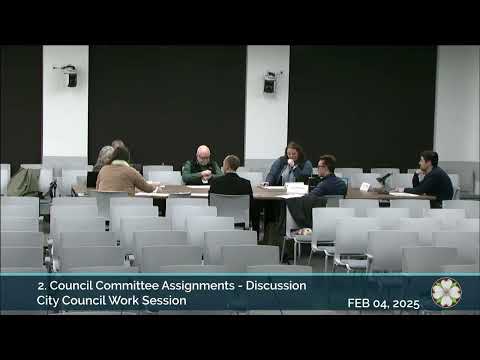
Milwaukie — City staff presented an annual update on the SAFE and SSMP street-maintenance programs at the Milwaukie City Council work session on Feb. 4, saying the original program goals remain focused on arterials and collectors but that residential streets are now being folded into the work plan and funding remains uncertain.
The update said the SSMP (Sidewalk and Street Maintenance Program) was established in February 2007 and the SAFE program was adopted around 2018; both target priority corridors but staff reported they have begun adding residential pavement work and preventative maintenance to avoid full reconstruction. Jen, the city engineer, told councilors the original SSMP target was to raise material and collector streets to a pavement condition index (PCI) of 75% within a 20-year horizon, but she and staff called that target “ambitious” and said the program goals and funding levels need review.
Why this matters: Many residential streets in Milwaukie are now at or past the reconstruction threshold, and choices about whether to rebuild or apply less‑invasive treatments (geomats, fiber additives, grind-and-inlay, slurry seals) will determine how far limited dollars stretch.
Key details from the presentation
- Program history and targets: Staff said SSMP was intended to cover arterials and collectors; residential streets were added as a funding item after staff recognized they could no longer be ignored. The SAFE program and the SSMP lists have been integrated in project delivery in several places so sidewalk, ADA and roadway work are delivered together.
- PCI data and reassessment: Staff said the city’s PCI dataset is nearly six years old (last full assessment noted as about 2019) and that the street-management software trends downward automatically, overstating deterioration. A staff member said, “This data is lower than what we’re actually seeing,” and the city plans a re-assessment this spring to get an updated PCI baseline.
- Cost and contracting for PCI assessment: Staff reported they plan to use an on-call geotechnical firm under contract to perform the street-condition re-evaluation; staff estimated it will cost roughly in the tens of thousands of dollars for the full city assessment (the presentation referenced a contractor estimate of about $40,000). The city will also evaluate whether purchasing equipment (ride-quality or automated survey attachment) is worthwhile in the medium term.
- Funding and grants: The most recent residential repair tranche used bond funds, with $1,500,000 identified for residential surface repair. The city applied for a Safe Routes to School grant seeking $3,000,000 (staff said the city would have accepted a lower award) but did not receive an award this round; staff plan to resubmit in the next cycle. Staff also reported an informal notice of an additional $1,500,000 in federal funds for one Washington Monroe Greenway segment (the amount is subject to final award). Stanley and other projects remain at least partly unfunded; staff said Stanley would need roughly $2,000,000 to move forward with construction funding.
- Project updates: Washington area improvements (including water work and ADA elements) are expected to be substantially complete by June; Arden Wells North is under contract and will begin soon; Harvey Street is set to go to bid (March) and staff said the engineer’s estimate is close to current cost estimates and should attract competitive bids; King Road design is nearing 100% and the estimate was revised after the engineering team found an error, reducing a larger projected overrun to about $500,000 above budget.
- Utility and water work: Staff described additional water-system work uncovered on Washington and elsewhere, including aged valves that must be replaced or augmented with pressure‑reducing valves (PRVs) to create reliable zone breaks. Project descriptions included upsizing or replacement of older mains (staff cited a forthcoming 16-inch installation for one major run) and pipe-burst repairs completed at the end of the prior month.
Discussion and next steps
Councilors and staff discussed tradeoffs between reconstruction and preservation treatments; staff emphasized they have been testing alternatives (geomats, additives, grind/inlay) to stretch limited dollars and delay full-depth reconstructions where appropriate. Staff plan to complete the updated PCI assessment this spring, incorporate revised PCI and ADA transition-plan data into the Transportation System Plan update, and return with a clearer set of cost estimates and program recommendations at the next annual update and as part of the upcoming biennial budget process.
Ending
Staff told councilors they will continue seeking grants and will prepare projects to be shelf‑ready for construction, then return to the council to discuss funding options (grants, debt, or further phasing) in the next budget cycle.