Get Full Government Meeting Transcripts, Videos, & Alerts Forever!
Get email alerts on the Reentry Programs Housing Id Medicaid Native topic
No spam. Unsubscribe anytime.
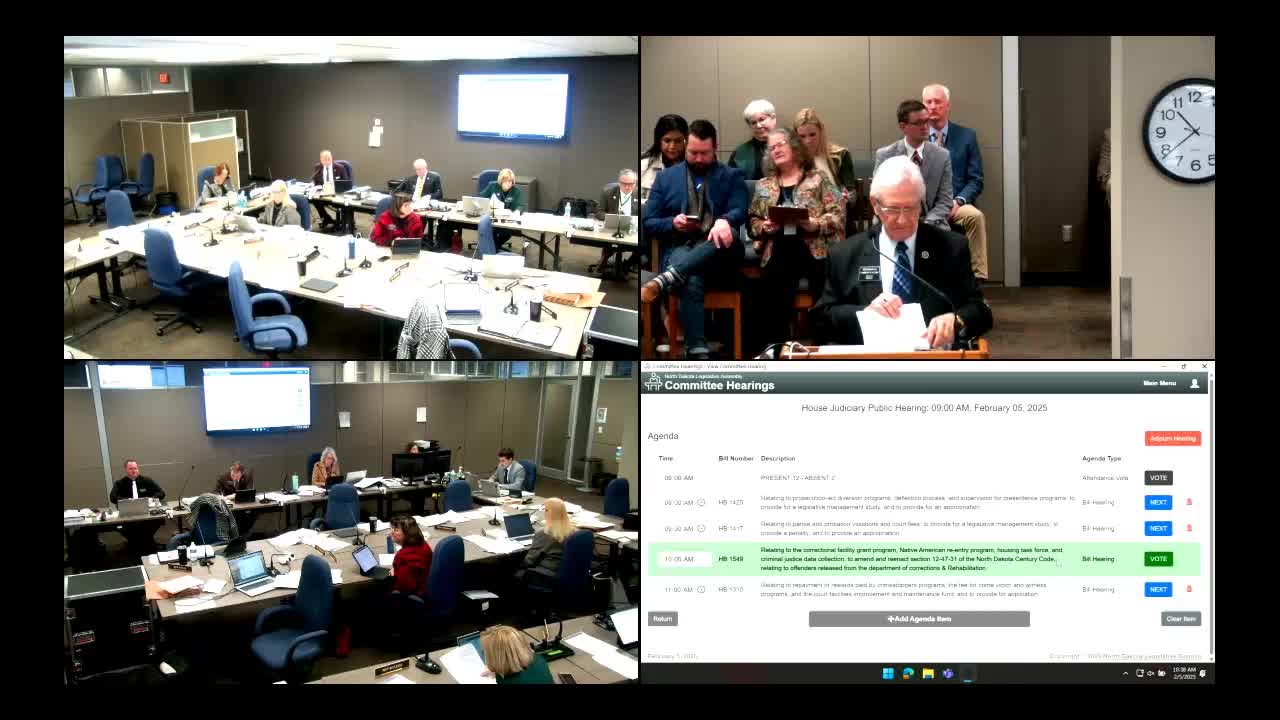
Judiciary committee hears bill to expand reentry grants, ID access, tribal reentry program and housing study
Summary
House Bill 15‑49 would create a correctional‑facility reentry grant program, fund a Native‑focused in‑custody reentry initiative, require coordination for state IDs and Medicaid prior to release, and create a housing task force; supporters said the bill seeks to reduce recidivism through upstream supports.
BISMARCK — House Bill 15‑49, the third bill in a three‑bill reentry package, drew testimony from corrections, human service zones, workforce and tribal service providers who told the House Judiciary Committee the bill would strengthen programming inside jails and prisons, improve cross‑agency coordination at release and examine housing barriers for people leaving custody.
Representative Lawrence Clameen, sponsor of HB 15‑49, said the bill “aims to better prepare justice involved people for a smooth transition back to the community” by expanding evidence‑based reentry programming, facilitating state identification and Medicaid connections prior to release, and creating an annual reporting structure on racial disparities and reentry outcomes.
Key provisions include: a correctional facility reentry programming grant administered by DOCR with an initial appropriation of $1.5 million; codifying a partnership with the Department of Transportation so incarcerated individuals can apply for state identification prior to release; directing DOCR and DHHS to coordinate Medicaid reenrollment or other benefits before discharge; establishing a Native reentry program in partnership with North Dakota’s five tribes and the Indian Affairs Commission with an initial appropriation of $25,000; a requirement that DOCR and the Supreme Court report annually on racial disparities and mitigation efforts; and creating a housing task force to report on housing assistance options for people leaving incarceration, including sober and low‑barrier housing.
Supporters said these steps respond to findings in the reentry work‑group report showing rising admissions for drug/alcohol offenses and revocations, and the disproportionate growth in prison admissions among Native and Black residents. Coby Braun of DOCR and representatives from Job Service North Dakota, Ministry on the Margins, Native Inc. and reentry programs testified in support. Job Service said its workforce reentry pilot has an 81% employment rate among active participants and low re‑incarceration among referrals.
Several witnesses urged stronger tribal and urban‑Native representation in program design and grant administration. Native service providers said culturally responsive services such as traditional healing and dedicated tribal‑community partnerships are critical to reduce recidivism and support reentry success.
The committee closed the hearing after receiving both oral testimony and a request from the State Court Administrator’s Office to adjust a reporting requirement tied to a specific internal Supreme Court committee; that office asked the committee to accept a more general reporting mechanism to avoid mandating a particular committee structure.
Ending: The bill remains in committee pending further work on appropriations, committee reporting language, and possible amendments to ensure tribal participation and adequate funding for the proposed programs.