Get Full Government Meeting Transcripts, Videos, & Alerts Forever!
Get email alerts on the Infrastructure Smart Meters topic
No spam. Unsubscribe anytime.
Committee hears extensive testimony on HB 14-86, an opt-out for smart meters; no vote taken
Summary
Supporters testified about health and privacy concerns; utilities and cities testified about costs, operational impacts and low opt-out rates. Committee closed the hearing for further consideration but took no immediate vote.
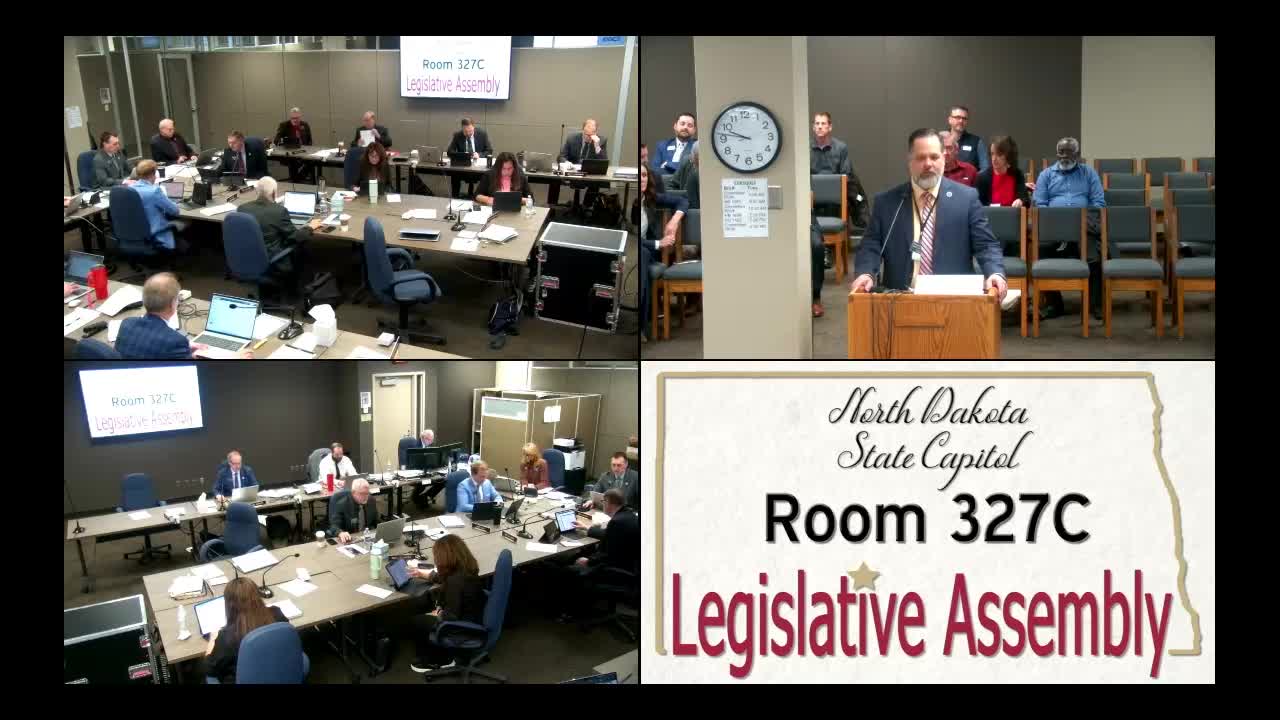
The House Industry, Business and Labor Committee heard over an hour of public and industry testimony on House Bill 14-86, a bill that would require utilities to provide a written opt-out form and allow customers to have a smart meter removed and replaced with a traditional electromechanical meter.
Representative Dan Johnston, sponsor of the bill, said the measure is not a ban but would provide an opt-out option for customers who have health or privacy concerns. Multiple residents told the committee they experienced new or worsened symptoms after meters were installed; Don Eaton, who said his property is served by Otter Tail, described sleep disruption and alleged health effects and said his company had installed smart meters at his property despite his objections.
Utilities and municipal staff opposed or urged caution on the bill. Tom Hrdlicka, manager of system operations for Otter Tail Power Company, described the company's advanced metering infrastructure (AMI) program, said AMI enables outage response and customer energy-management options, and noted his company offered customers an opt-out that, to date, only about 10 customers had chosen. Hrdlicka said an opt-out requires operational costs (he cited a $20 monthly opt-out fee the company charges) and raised drafting concerns about the bill's definition of "smart meter gateway device," which he said could inadvertently cover load-management devices and other equipment.
Representatives from electric cooperatives, a municipal public-works director, and other utilities echoed concerns about drafting, uncertainty over which devices the bill would cover, the operational cost of replacing meters, and the potential for increased rates if utilities must deploy trucks for monthly reads. Bismarck Public Works Director Michelle Clossey told the committee the city replaced all meters with remote-read devices in 2015 and that returning to a manual or legacy process would add staff time and costs; she said some legacy meters are no longer manufactured.
Witnesses on both sides asked for clarity: resident witnesses pointed to reports and independent studies they said show higher radio-frequency pulsing from smart meters than consumer devices; utilities said the devices and their transmissions are well-understood, that AMI yields system savings, and that privacy protections are applied to aggregated data.
Chairman Warrie closed the public hearing, said the committee had heard substantial testimony in opposition, and recessed for committee business; no committee vote on the bill was taken at the hearing.