Get Full Government Meeting Transcripts, Videos, & Alerts Forever!
Get email alerts on the Personhood Legislation topic
No spam. Unsubscribe anytime.
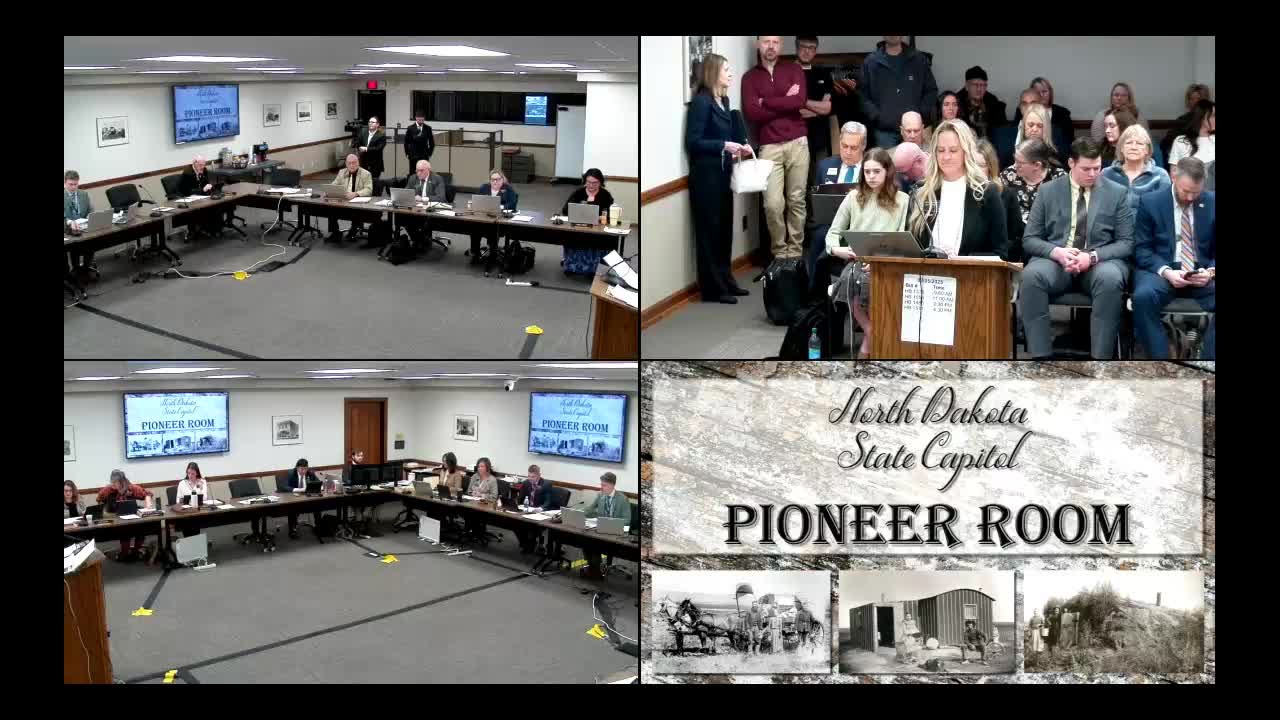
House committee hears hours of testimony on personhood bill that would define human life from fertilization
Summary
Representative Laurie Van Winkle, sponsor: “HB 13 73 seeks to make it clear in our law that preborn children are human and shall be provided all the same protections, provisions, and rights as all other born people.”
Representative Laurie Van Winkle, sponsor: “HB 13 73 seeks to make it clear in our law that preborn children are human and shall be provided all the same protections, provisions, and rights as all other born people.”
The House Human Services Committee on Wednesday heard more than an hour of testimony for and against House Bill 1373, a measure that would add definitions of “human being” and “unborn child” to North Dakota’s criminal homicide and assault statutes and to the wrongful-death civil statute. Supporters framed the proposal as granting equal legal protection to preborn children from the moment of fertilization; opponents warned the language is legally vague and would jeopardize medical care, in vitro fertilization and emergency treatment.
Nut graf: Proponents said HB 1373 would close a perceived legal loophole that allows abortion by defining a preborn child as a human being for the purposes of homicide, assault and wrongful-death law. Opponents — including physicians, patient advocates and the North Dakota Catholic Conference — said the bill’s wording is unclear about exceptions, could criminalize patients and providers, and would almost certainly prompt costly litigation.
Representative Laurie Van Winkle (sponsor) opened testimony by describing the bill’s intent and structure, saying it would add definitions into North Dakota Century Code chapters that address homicide (12.1‑16), assault (12.1‑17) and wrongful death (32‑21), and would include limited exceptions for spontaneous miscarriage and for life‑saving care. Van Winkle repeatedly characterized legal recognition of personhood from fertilization as “common sense” and said the measure would “close a loophole” she described as permitting the “murder of innocent lives.”
Registered nurse Jenna Cross, who said she co‑directs Alliance Family Services, recounted the organization’s experience after the U.S. Supreme Court’s Dobbs decision and argued that restrictions on clinic‑based abortion had not lowered abortions because patients shifted to medication abortion. “Restrictions on abortion pills in the United States are useless when there are multiple international organizations standing by to immediately ship abortion pills to any state,” Cross said.
Several witnesses described personal histories. Jody Clemons testified about a past abortion and said the bill would deter other women from similar decisions. Bradley Pierce, an attorney and president of the Foundation to Abolish Abortion, argued the bill simply applies existing homicide and wrongful‑death protections to preborn children and appealed to equal‑protection principles in the U.S. Constitution.
Opponents of HB 1373 included Representative Carla Rose Hansen, who testified that the bill — often called a personhood measure — “would have broad and negative ramifications related to health care, taxpayer‑funded litigation, religious liberty and legal consistency.” Hansen said the measure lacks clear exceptions for clinical scenarios such as ectopic pregnancy or incomplete miscarriage and predicted doctors would hesitate to provide emergency care if the law were ambiguous.
Christopher Dodson, co‑director and general counsel of the North Dakota Catholic Conference, also urged a do‑not‑pass recommendation. Dodson said the conference opposes criminal penalties for women who obtain abortions and described numerous legal vulnerabilities in the bill, including conflicts with existing statutes and likely constitutional challenges. He said past litigation over the state’s trigger and near‑total bans has already cost the state hundreds of thousands of dollars and that HB 1373 would invite further suits.
Medical providers and fertility specialists were consistently cited in opposition. Reproductive endocrinologist Christina Bridal (practicing in Fargo) and allied clinicians told the committee they fear the bill’s definition — which begins protection at fertilization — would subject normal, biologic failures in fertilization and early embryo development to criminal or civil liability and likely end IVF care in the state. Bridal testified the clinic where she works has produced roughly 150–180 births per year over the last five years and said ‘‘if this bill were to pass, medical professionals like me…could be charged with homicide or be civilly liable’’ for natural failures in early development.
Obstetrician and maternal‑fetal medicine specialist Dr. Anna Tobias said the state funds pregnancy resource centers and should require minimum clinical and reporting standards if taxpayer dollars are used. Tobias warned that non‑medical volunteers performing ultrasounds or providing pregnancy dating can give inaccurate information that delays appropriate prenatal care: “When individuals seek care at a pregnancy resource center, they are unaware of the lack of training of the individuals who volunteer or work there,” she said.
Throughout the hearing, witnesses on both sides referenced prior court rulings and the Dobbs decision. Opponents highlighted a March 2023 North Dakota Supreme Court ruling that found a constitutional right to obtain abortion to preserve life or health, and they said HB 1373 would raise new legal conflicts. Supporters emphasized deterrence and the ability of the state’s criminal‑justice system to weigh circumstances case by case.
The committee did not take a vote during the hearing; members asked a series of technical and policy questions of witnesses. Several representatives pressed proponents on enforcement practicalities, cross‑border medication abortions, and whether the bill’s language would affect only the three referenced code sections or apply more broadly.
Ending: The committee heard dozens of in‑person witnesses and more written testimony; lawmakers did not immediately announce next steps. The hearing closed after prolonged public comment, with no floor or committee action recorded during the session.