Get Full Government Meeting Transcripts, Videos, & Alerts Forever!
Get email alerts on the State Fleet Motor Pool topic
No spam. Unsubscribe anytime.
Appropriations panel hears Ag Department warn new motor‑pool rates would sharply raise inspection costs
Summary
Department of Agriculture staff told the Appropriations — Government Operations Division that a new state motor‑pool mileage rate would more than double costs for some inspector travel, and department staff said $7.50 per mile in the budget would be sufficient for their needs during peak quarters.
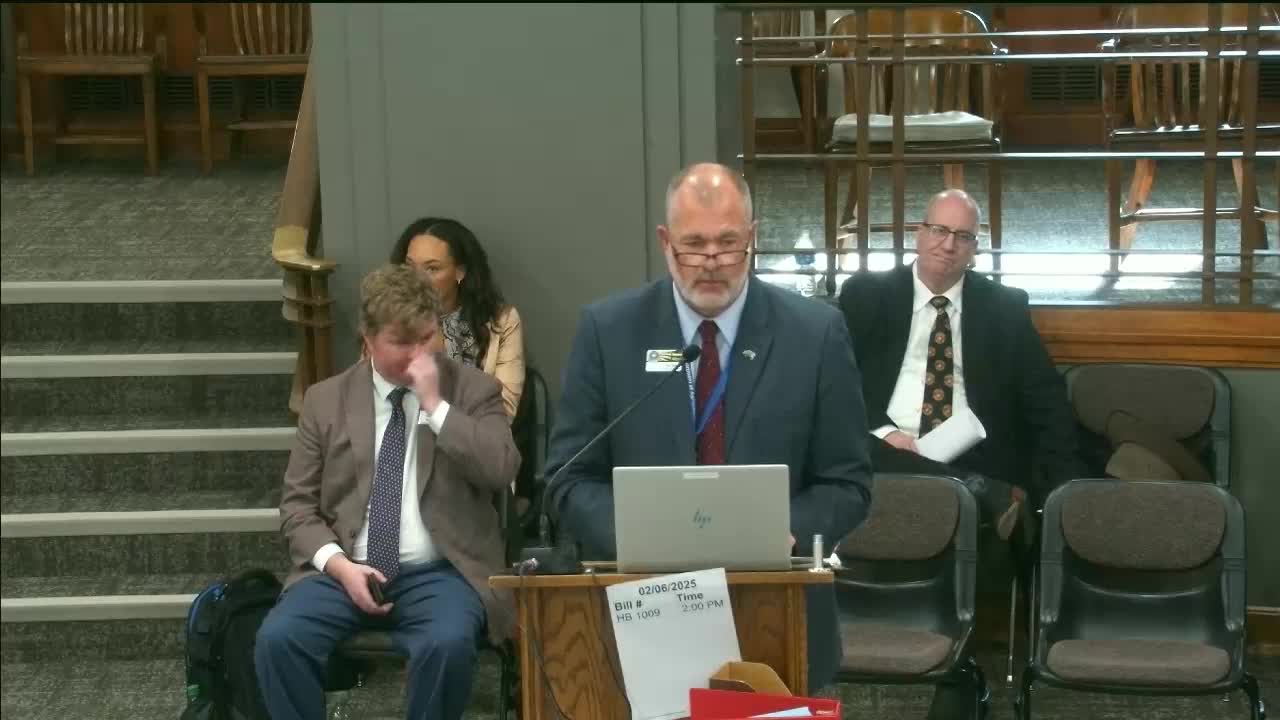
Tom Bodine, speaking on behalf of Agriculture Commissioner Doug Goehring, told the Appropriations — Government Operations Division that a change in the state motor‑pool mileage rate prompted a $750,000 request in the department’s budget.
Bodine said the department analyzed April–June actual miles and found that, for assigned and seasonal vehicles, “the actual cost for us on our assigned vehicles plus seasonal vehicles was 91,000. If you applied the new rate, it would have been 192,000, which would be a $100,000 increase in operations just for the same mileage that we drove during that timeframe.”
Why it matters: department staff said the quarter analyzed is one of their busiest because of seasonal hires and field inspections, especially for apiary and meat inspection work that requires frequent travel across the state. Bodine told the committee that if the higher rate applied uniformly it could translate to larger increases when projected statewide.
The department described program details that drive mileage: meat inspectors may visit multiple plants in one day and “one inspector might hit three plants in one day,” Bodine said, and the agency also has seasonal staff assisting apiary work. He said the agency averaged more than 700,000 miles on assigned vehicles in one year and that colony counts have grown from “around 500,000 colonies…10 years ago” to “over 830,000 colonies today,” increasing travel demand.
Committee discussion centered on whether the governor’s $750,000 figure and the department’s requested $7.50 per mile would be sufficient. Bodine said the department requested the $7.50 rate and that the quarter analyzed represented a high‑usage period; “in the wintertime, some of our seasonal help aren't there…so we feel that the $7.50 is sufficient.” He also noted some costs split between state and federal funds: “A lot of our programs are 50/50. And so if it's a meat inspector, then it's split between a federal rate and a state rate.”
No formal motion or roll‑call vote on the motor‑pool lines is recorded in the transcript. Committee members asked clarifying questions about how much of the projected increase would be federal versus state dollars and whether the $7.50 rate plus available carryover would cover the department’s needs during peak periods. Bodine said some federal dollars would cover portions of the increase and that the department would be comfortable if the committee restored both the state and federal portions the department identified.
The committee did not adopt a separate amendment on the motor‑pool rate during the recorded portion of this hearing; members moved on after asking staff for worksheet clarifications.