Get Full Government Meeting Transcripts, Videos, & Alerts Forever!
Get email alerts on the Charter Review topic
No spam. Unsubscribe anytime.
Mount Vernon charter review commission outlines possible governance changes, launches public survey
Summary
Tamela Boyd, chair of the Mount Vernon Charter Review Commission, and a National Civic League adviser outlined proposed charter amendments, said a public survey is under way and that the commission will vote March 19 on recommendations for the November 2025 ballot.
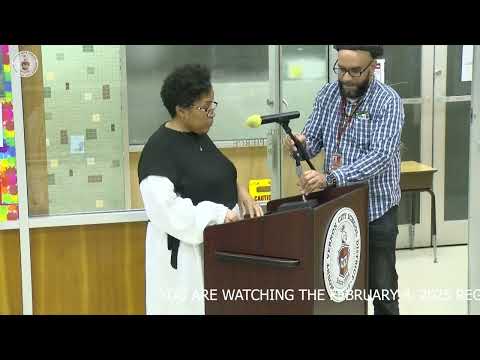
Tamela Boyd, chair of the Mount Vernon Charter Review Commission, told the school board Feb. 4 that the commission is collecting public input on possible changes to the city charter and plans to vote March 19 on which proposals to send to the ballot in November 2025.
Boyd, who said she was appointed to the 15-member commission after moving to Mount Vernon in 2023, described the charter as "the constitution for the city" and said the commission has split into four subcommittees looking at finance, governance and elections, human services, and public works. She named possible recommendations under consideration including moving to a city manager or chief administrative officer form of government, replacing the elected comptroller with an appointed finance professional, requiring a mandatory referendum for tax increases above the 2% state cap, formalizing planning department input in rezoning, and electing council members by wards rather than at-large.
Matt Leininger of the National Civic League, which is advising the commission, said the league helped design a short online survey the commission is using to gauge residents' priorities. Leininger reported that 35 people had taken the survey so far and that roughly two-thirds completed it; the early results show transparency and earlier resident engagement are priorities and that respondents favor regular events to talk with council members and city staff. "There's a fair amount of...motivation for change in the charter that will make it easier for people to engage in local decision making," he said.
Boyd asked the board to help by publicizing the survey, hosting hearings or meetings, and encouraging residents, parents and staff to participate. She said the commission will hold public hearings after the March 19 vote, prepare a report explaining its recommendations, and — if voters approve any measures — those changes would take effect following the normal ballot and certification process. Boyd said she has not set a final survey close date but expects the commission will allow responses until roughly a week before the March 19 vote so results can be analyzed.
The presentation included a QR code and a link to the survey; Boyd said the commission is working to reach residents who lack internet access by asking the city about mailing hard-copy surveys and said she will bring printed forms to community meetings. She also said the commission has interviewed city officials and officials from other cities to inform its proposals.
Why it matters: Charter changes can alter how the city is governed, how officials are selected, and how power and accountability are distributed between residents and government. Because city decisions affect school funding and operations, Boyd told the school board the commission welcomes the district's input.
The commission contact information and the survey link will be shared on the commission's website, Boyd said.