Get Full Government Meeting Transcripts, Videos, & Alerts Forever!
Get email alerts on the School Finance topic
No spam. Unsubscribe anytime.
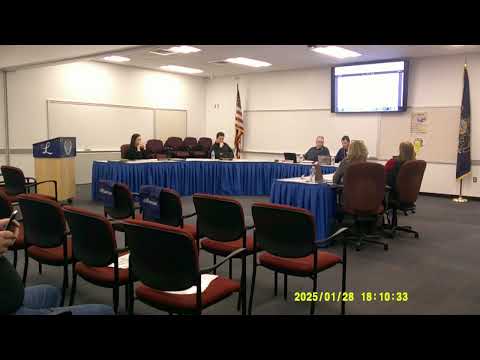
Littlestown Area SD board debates 1% tax increase, seeks clearer plan for ACTI debt and operations
Summary
Board members discussed whether a proposed 1% tax increase should be earmarked for ACTI debt service, operations, or split; several members said the district lacks a concrete plan and up-to-date numbers to justify the increase.
Board members at a meeting of the Littlestown Area SD discussed whether a proposed 1% local tax increase should be dedicated to debt service for ACTI and how much should be directed to ongoing operational needs, but members expressed that the district lacks a clear plan and precise revenue projections to support the increase.
The discussion centered on how incremental percentage increases compound over time, projected revenue amounts and shortfalls for ACTI debt service, and competing priorities — including custodial and maintenance staffing for recently completed facilities. Several board members said they would be more willing to support a tax increase only after seeing a concrete plan and clearer numbers.
Board members pressed staff for details about how a 1% increase would flow into the district’s fund balance and when the ACTI debt service would be payable. One board member described the compounding effect of staged increases and warned of a shortfall without a multi-year ramp-up plan. “We don't even have a plan or a start date or anything,” the board member said during the discussion.
An unnamed administrator told the board the final allocation would be decided by the board, and that budget figures would remain fluid as the administration develops the full budget packet over the coming months. “We need to prioritize as a committee and as a board which we want to prioritize,” the administrator said, framing the decision as a trade-off between directing revenue to ACTI debt service versus operational needs such as staffing and maintenance.
Board members and staff discussed several numeric estimates offered in the meeting: one speaker said the district could collect about $360,000 per year under one scenario and referenced a $180,000 shortfall for particular payments; another warned that an immediate 1% raise without a multi‑year plan could still leave the district unable to meet debt obligations. A board member said she typically pays taxes at year‑end “because I don't give the government an interest free loan,” using that as a rhetorical point about timing and reserves.
Several participants emphasized timing: staff said final budget decisions are made in June and that the administration will refine figures between now and then; board members asked for an initial year of operational data after recent consolidations before assuming efficiency savings. One administrator said potential efficiency gains might not be realized until the 2027–28 school year and urged caution about assuming immediate savings.
Members also raised concerns about maintaining new facilities. Speakers said two custodial staff cannot keep pace with maintenance needs for recently completed middle and high school facilities and that deferred maintenance could erode the value of recent capital investments. That concern was offered as part of the argument for considering operational funding in addition to debt service.
No formal vote on a tax increase was recorded in the transcript. The meeting concluded shortly after the budget discussion and a motion to adjourn was made.