Get Full Government Meeting Transcripts, Videos, & Alerts Forever!
Get email alerts on the School Finance topic
No spam. Unsubscribe anytime.
Littlestown Area SD discusses tax increments, land purchase and timeline for regional ACTI site
Summary
School district staff and board members debated whether to phase in 1 percent tax increases to build and site a proposed centralized ACTI facility, with questions about land acquisition, an EITN filing requirement and rising project costs.
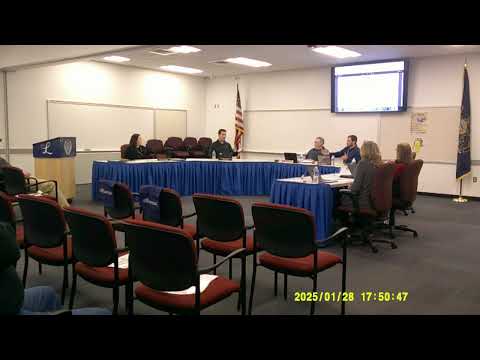
At a meeting of the Littlestown Area School District (date not specified), district staff and board members debated how to fund a proposed centralized facility for the regional ACTI program and whether to use a series of 1 percent tax increases to accumulate cash before buying land.
The discussion matters because speakers said the project cannot proceed — including filing for required federal/state identifiers and buying land — until an advisory board approves an EITN/ATIN filing and funding is committed, while several participants warned taxpayers could face years of incremental tax increases before the district has a site or final cost estimate.
District staff and members summarized technical, financial and logistical constraints. Speaker 1, a district staff member, said the committee is trying to align priorities but that funding choices would change the scope: “But if you guys tell me that we don't want to go digital, then that just cuts that conversation out.” Speaker 1 also described the levy strategy discussed at the meeting, saying a 1 percent levy produced about $180,000 a year and that the district had proposed ramping those 1 percent increases over multiple years to build a cash balance toward project costs. “We needed a total amount of between 34% to fund the ACTI based off their initial preliminary feasibility here,” Speaker 1 said (phraseology in the transcript was unclear on whether this was intended as “3–4 percent” or another figure).
Other participants stressed prerequisites and timing. Speaker 4, a community member, summarized procedural limits: “You can't purchase anything until you have the ATIN number. You couldn't even do get the EITN number until you had the advisory board. So until the advisory board said that that you could file for the EITN number, then you can now start getting the funds and getting the grant to go buy the land.” Several speakers said the earliest realistic timeline to buy land and complete a building would be multiple years. One speaker said the project was “easily gonna be 5 years plus” before it became a reality.
Speakers reviewed a feasibility study recommending a single, centrally located site to avoid duplicative transportation and administrative costs. As one participant put it, centralization reduces the need for “every school district then has to run a bus there to that location. Then run a bus somewhere else, which costs money,” and avoids double administration. Gettysburg was mentioned repeatedly: participants said Gettysburg has expressed an interest in regaining its building, which could affect timing and space arrangements.
Cost estimates and funding strategy drew the sharpest pushback. Multiple speakers said the project estimate had grown from about $40 million to “at least 60 pushing 7” (transcript wording), while others cautioned that collecting incremental levies and banking the revenues risks collecting years of taxpayer funds before the district has land, final plans or outside grant commitments. “We are collecting interest every year. Money that could be in taxpayers' pockets,” Speaker 3 said, arguing the district may be accumulating funds long before spending them on land or construction.
No formal vote or binding action was recorded in the transcript excerpt. Participants described two broad financing strategies discussed at the meeting: (1) a slow ramp of 1 percent increases over multiple years to build a cash balance and (2) a larger, immediate increase (examples discussed included a hypothetical 3 percent) to cover early payments. Speakers disagreed about which approach minimized cost or tax impact over time. Several speakers also noted that some partner districts, including Gettysburg, matched a 1 percent increase last year while others had not, and that full district participation affects per‑district cost and feasibility.
The meeting recorded procedural clarifications and next steps rather than final decisions: advisory board approval, filing for an EITN/ATIN identifier, land acquisition and the availability of outside grant or state funding were all cited as contingencies to any construction timeline. Participants emphasized the need for further analysis, transparency about the final cost and clearer communication to taxpayers before committing to additional levies.
No formal motions or votes on levies, land purchases or construction contracts were documented in the provided transcript excerpt.