Get Full Government Meeting Transcripts, Videos, & Alerts Forever!
Get email alerts on the School Budget topic
No spam. Unsubscribe anytime.
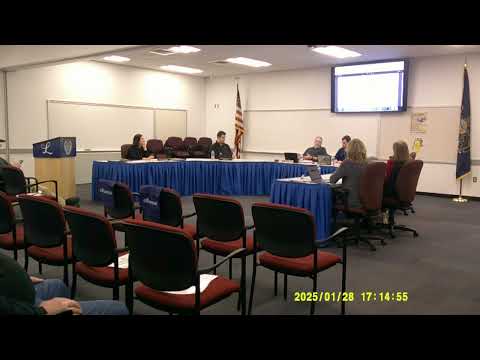
Littlestown Area SD previews possible tax increase as district plans middle/high-school consolidation
Summary
District staff presented preliminary budget scenarios showing potential property-tax (millage) increases to pay priorities tied to a planned consolidation of the middle and high schools; board members questioned raising taxes before projected consolidation savings materialize. No formal vote was taken.
District staff presented preliminary budget scenarios at a board meeting that included potential increases to the local real-estate tax rate to pay for priorities tied to a planned consolidation of the middle and high schools.
The discussion centered on projection tools such as the Act 1 index, examples of homeowner tax impacts, and staffing proposals that would support a combined campus. Speaker 2, a district staff member, said the presentation was intended to “put[] it out in the open,” describing what the millage rate would look like under different assumptions. The board did not take a formal vote.
The administration said its early modeling shows the district’s allowable tax-index trends returning toward levels seen in earlier years before recent spikes tied to building projects. Staff noted that homestead and farmstead exclusion figures — which affect taxable assessed values for eligible owner-occupied homes and farms — are not available until late April or early May and said the district typically waits for that data before finalizing a proposed millage.
As an illustration for the board, presenters used a roughly $280,000 home as an example and showed how changes in assessed value and millage translate into dollar changes for homeowners. Staff also described one near-term staffing proposal: converting a current part-time administrative assistant position into a full-time administrative assistant to support athletics, central enrollment and front-office duties at the restructured middle/high campus. The district said the exact job description was still in development.
Several board members voiced concern about timing. Speaker 3 questioned whether the district should present a tax-increase scenario now when the promised efficiencies from consolidation “won’t be realized for multiple years.” Speaker 3 added, “But you raise taxes now… it’s always there,” expressing unease about asking taxpayers to support ongoing costs before savings from consolidation are achieved.
District staff acknowledged that many contractual and salary costs typically rise year to year and said local tax rate is one of the few levers available to cover recurring cost increases. Staff also described clerical responsibilities tied to the district’s cyber program (referred to in the discussion as the cyber academy), noting some after-school clerical functions currently handled by teaching staff could shift to a full-time administrative employee.
No motions or votes were recorded during the presentation; the conversation was described repeatedly as preliminary. Board members asked for further detail on cost estimates, timing for recognizing consolidation savings and the final homestead/farmstead numbers before the board considers any formal proposed millage change. The district indicated it will return with more detailed budget figures and job descriptions in subsequent meetings.