Get Full Government Meeting Transcripts, Videos, & Alerts Forever!
Get email alerts on the Fire Staffing And Apparatus topic
No spam. Unsubscribe anytime.
Lancaster County fire commission backs 24/7 pilot at McDonough Green and asks council for multiyear funding plan
Summary
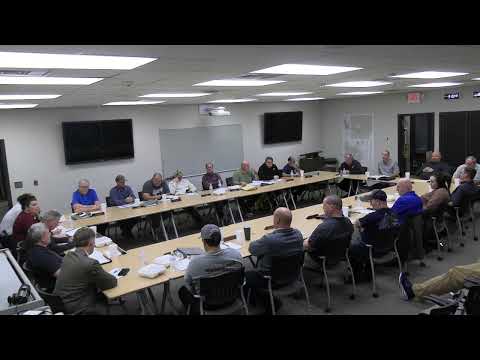
The Lancaster County Fire Commission voted to send its proposed multiyear staffing plan — starting with 24‑hour coverage at the McDonough Green station — back to individual volunteer stations for review and a roll‑call vote before formally presenting the proposal to County Council on March 12.
The Lancaster County Fire Commission voted to send its proposed multiyear staffing plan — starting with 24-hour coverage at the McDonough Green station — back to individual volunteer stations for review and a roll-call vote before formally presenting the proposal to County Council on March 12.
The plan, which the commission says is a recommendation to council, would create a phased three-region staffing model that begins with a single full‑time staffed station at McDonough Green and adds additional staffed stations in later budget years. The commission’s presenter said the first four‑month pilot would cost an estimated $108,418.52 to add a captain-level position and related engineering conversions, with larger recurring costs in subsequent years if the full multiyear model is adopted.
Commissioners said the proposal matters because it addresses daytime coverage gaps caused by volunteers’ daytime work schedules and aims to preserve volunteers’ role while adding paid staff where needed. Commissioners and staff also stressed that apparatus funding — a long-running county priority — must be considered alongside staffing because trucks and equipment remain aged and in high demand.
The Fire Commission presenter, identified in the meeting as a fire commission staff member, laid out the staffing model and budget math: a 24‑on/48‑off shift schedule (the same schedule used by the city of Lancaster), adding a captain position that would allow engineers and lieutenants to be reorganized into full‑time teams, and staging later phases in FY2026 and FY2027. The presenter said the first‑year, four‑month impact was calculated at $108,418.52 including benefits (noting benefit costs run roughly 20–22 percent), and that bringing city‑funded positions fully into the county budget would add larger sums later (the presenter cited a $505,433 gross cost in a later year and a net county budget impact of $351,643 for that scenario).
Stacy, chair of the fire commission, told commissioners she had not requested county control of volunteer stations but said, “if we’re gonna go for county investment, it has to be an ownership question. If we’re putting county resources into a facility, it has to have county in control, that’s how the state structured that.” Stacy urged a unified message from the commission when the plan is presented to council.
Commission discussion focused on three practical questions: (1) the cost and recurring budget impact of the staffing plan (commissioners repeatedly cited a rough $2,000,000‑per‑year figure if the full three‑station model is adopted), (2) how apparatus purchases would be funded alongside staffing, and (3) whether the commission and volunteer stations were prepared to present a single recommendation to council. Commissioners repeatedly emphasized they intended the model to remain volunteer‑based with supplemental full‑time staff rather than a conversion to a fully paid system.
County funding options were discussed in general terms: borrowing (debt), a separate millage dedicated to fire capital (stations and apparatus), and use of a portion of the county’s savings. A presenter said the county held roughly $52,000,000 in reserves and that financial policy required keeping an operating reserve large enough for about six months of operations (the presenter said roughly $30,000,000), which factored into whether reserves could be drawn for one‑time capital purchases. Several commissioners raised the capital projects sales tax and the possibility of dedicating parts of that revenue to apparatus purchases.
Apparatus funding remained a concurrent concern. Commissioners reiterated earlier work that prioritized a first purchase of nine apparatus as the initial tranche from a longer list of needs. Estimates discussed during the meeting ranged from $17,000,000 to $22,000,000 for larger purchases; the presenter said ordering fewer units up front reduced the immediate millage impact but would extend the replacement cycle. Commissioners and volunteer chiefs described aging apparatus in service and expressed urgency about catching up on purchases while preserving the staffing plan.
Several commissioners asked for clarity about consequences if council approved only a partial plan. The presenter said the proposal was purposefully phased — the McDonough Green pilot is the only fully specified station in the near term — to give council flexibility in scheduling and funding.
The commission approved a motion to take the proposal back to each station for discussion and a roll‑call vote before the March presentation. The motion passed on a voice vote; the meeting packet and presentation slides will be circulated to all stations so their boards or membership can return a firm recommendation before the commission appears before council.
Commissioners also discussed operational details raised during questions: volunteers qualifying to do part‑time shifts must meet minimum certification (firefighter I), county payroll and benefits implications if volunteers sign up for paid shifts, and the need to preserve volunteer recruitment and retention as stations add full‑time staff. Commissioners asked staff to brief council on all staffing and apparatus implications in the upcoming retreat and council presentation.
The commission did not set a final funding source; members discussed options and asked staff to present the multiyear plan to council with clear cost and funding alternatives so council can decide between debt, a fire capital millage, targeted use of reserves, or a blend of these options.
The commission’s action leaves next steps: station‑level roll‑call votes, circulation of the presentation slides to stations, and a planned appearance before County Council at the March meeting to present the proposal and answer council questions. The commission emphasized that a single, unified message from the commission will help avoid mixed information reaching council members from different volunteer leaders.
Ending: Commissioners scheduled follow‑up work in the coming weeks to finalize station feedback and prepare the March presentation to County Council; funding decisions will rest with council during the budget process scheduled to conclude in June.