
Littlestown Area SD outlines phased rollout of new state science standards; scheduling, assessments to change
Get AI-powered insights, summaries, and transcripts
Subscribe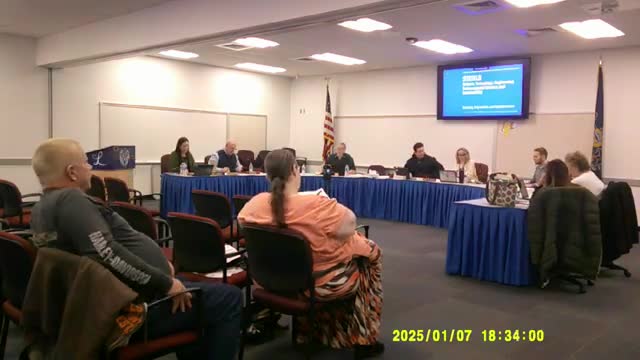
Summary
District presenters described a multi-year plan to rewrite curriculum and update assessments after Pennsylvania adopted new science standards; the PSSA testing window shifts and high school biology faces an immediate standards switch.
Dr. Berryman and Brett Powell presented the Littlestown Area School District's plan to implement Pennsylvania's new science standards and described effects on curriculum, scheduling and assessments across K'12.
The presentation focused on three implementation phases: planning (reviewing the new standards and mapping them into proficiency scales), preparation (teacher support and resources), and classroom implementation (new instructional practices, scheduling changes and updated common assessments). The presenters said the district is rewriting proficiency scales for each grade band and will phase in model-based, phenomenon-driven instruction rather than traditional lecture-and-memorization approaches.
District staff described grade-band planning that begins with grades 3—, with K' 2 work to follow. Presenters said the Pennsylvania System of School Assessment (PSSA) science test will move from fourth grade to fifth grade; because of that shift the district is reviewing elementary schedules so students receive adequate science instruction instead of a heavier social studies schedule in the tested grade band. At the middle- and high-school levels, staff are updating proficiency scales and common assessments; the district plans to use resources such as OpenSciEd and the Gizmos simulation library to support lessons and labs that cannot be run physically in a classroom.
Presenters warned that implementation requires substantial time and cannot be accomplished overnight: every unit must be realigned to the new standards and teachers will need staged support. The district noted a particular challenge for high school biology: the Keystone biology assessment will be administered on the new standards next year and, unlike grade 5 and grade 8 science tests that are being offered as pilots, biology will count, meaning teachers and students will face an immediate standards transition with limited overlap time. Staff described this as a 'quick flip' in curriculum timing that will require teachers to manage two sets of expectations during the transition year.
The district said it is using an internally written curriculum rather than adopting any single online curriculum wholesale; OpenSciEd was identified as a free resource for lesson plans and teacher guides but not as the district's adopted curriculum. Staff reported plans for common assessments and proficiency-scale updates across grade bands, and said Brett Powell, a high school physics teacher, volunteered additional instructional time to work with elementary teachers on proficiency writing and lesson planning on a date the district identified as the 17th of the month.
What comes next, presenters said, are updated common assessments and continued unit-by-unit curriculum rewrites, supported by department meetings, in-service days and targeted teacher coaching. No formal district action or vote was recorded during the presentation; staff described work already underway and next steps for the curriculum and assessment transition.
Details for district scheduling changes, staff training timelines and exact dates for rollout were discussed but not specified in the meeting record. Funding sources for implementation materials and professional development were not specified.