Get Full Government Meeting Transcripts, Videos, & Alerts Forever!
Get email alerts on the Municipal Budget Forecast topic
No spam. Unsubscribe anytime.
Plain City adopts five‑year general fund forecast tool, discusses tax and debt policies
Summary
Plain City leaders reviewed a newly developed five‑year general fund forecasting tool from municipal finance adviser David Connolly, agreed to semiannual updates and discussed tax policy, capital planning, and options to accelerate a pool bond payoff.
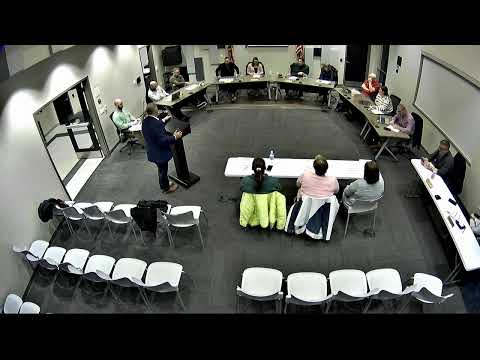
Plain City Council and the village personnel and finance committee reviewed a newly developed five‑year general fund forecasting tool at a joint work session Feb. 27, 2025, with municipal finance adviser David Connolly of Rock Mill Financial presenting the model and assumptions.
The forecast focuses on the village general fund and uses a 7% annual growth assumption for income tax receipts in the baseline scenario; Connolly described the model as a planning tool rather than a budget and recommended updates roughly every six months to track changes in housing, wages and development.
The tool groups hundreds of line items into larger categories to produce an available ending balance and a minimum ending balance, which Connolly said the village should watch closely as a “rainy day” target. Connolly told elected officials that Plain City’s general fund reserves are stronger than they have been in the village’s history and that the new forecasting tool will improve management and is likely to be viewed positively by rating agencies.
Connolly and village administration staff described how the model treats timing differences such as construction inspection fees, which can appear as revenue before related billing and expenditures are completed. The model is currently cash‑basis and scoped just to the general fund; staff said they plan to expand forecasting to other funds and to align the tool with the capital improvement plan after council feedback.
Councilmembers asked for clearer, line‑level assumptions to appear with the model—examples included the number of households or filers used to derive income tax growth, assumed headcount changes and wage assumptions for personnel costs, and which development projects are included in revenue projections. Connolly said typical practice is to avoid counting development revenue until occupancy closes a year, and recommended showing the statistical assumptions on the forecast’s notes page so users can quickly judge whether assumptions are conservative or aggressive.
Staff and Connolly discussed capital planning and financing options. Council heard that the village has created a capital acquisition fund and transferred $100,000 into it to build capacity for opportunistic land purchases. Connolly recommended documenting a taxation policy and a debt policy in the coming years so decisions about using operating revenue, general obligation debt or voter‑approved bonds for large nonessentials (for example, a recreation facility) are consistent and transparent.
Connolly also reported that the village is positioned to shorten the maturity on existing swimming pool bonds by seven years, accelerating payoff from 2039 to about 2032 and saving interest costs. He said the change is possible in part because of recent property and income tax growth and low overall debt levels; staff will continue work on that restructuring.
Operationally, the model allows staff to add or remove FTEs to see budgetary impact quickly; the current scenario in the demonstration showed roughly 1.5 additional full‑time equivalent positions in 2026. Connolly said the forum will be accompanied by notes and assumptions in later iterations and that the village should update the forecast about twice per year while growth conditions remain active.
Formal, routine motions during the meeting included approval of the work session agenda and approval of minutes from the Jan. 27, 2025 regular meeting; the council later moved to adjourn. No ordinances, resolutions or new debt authorizations were adopted at the session.
Why it matters: councilmembers can use the forecast to test staffing and capital choices before they become commitments, to monitor the village’s reserve position and to inform whether future projects require voter approval, grants or debt. The administration plans a follow‑up before the budget process to finalize forecast notes and begin development of a taxation policy and debt guidelines.