Get Full Government Meeting Transcripts, Videos, & Alerts Forever!
Louisiana lawmakers open study on how carbon-capture projects should share revenue with parishes
Summary
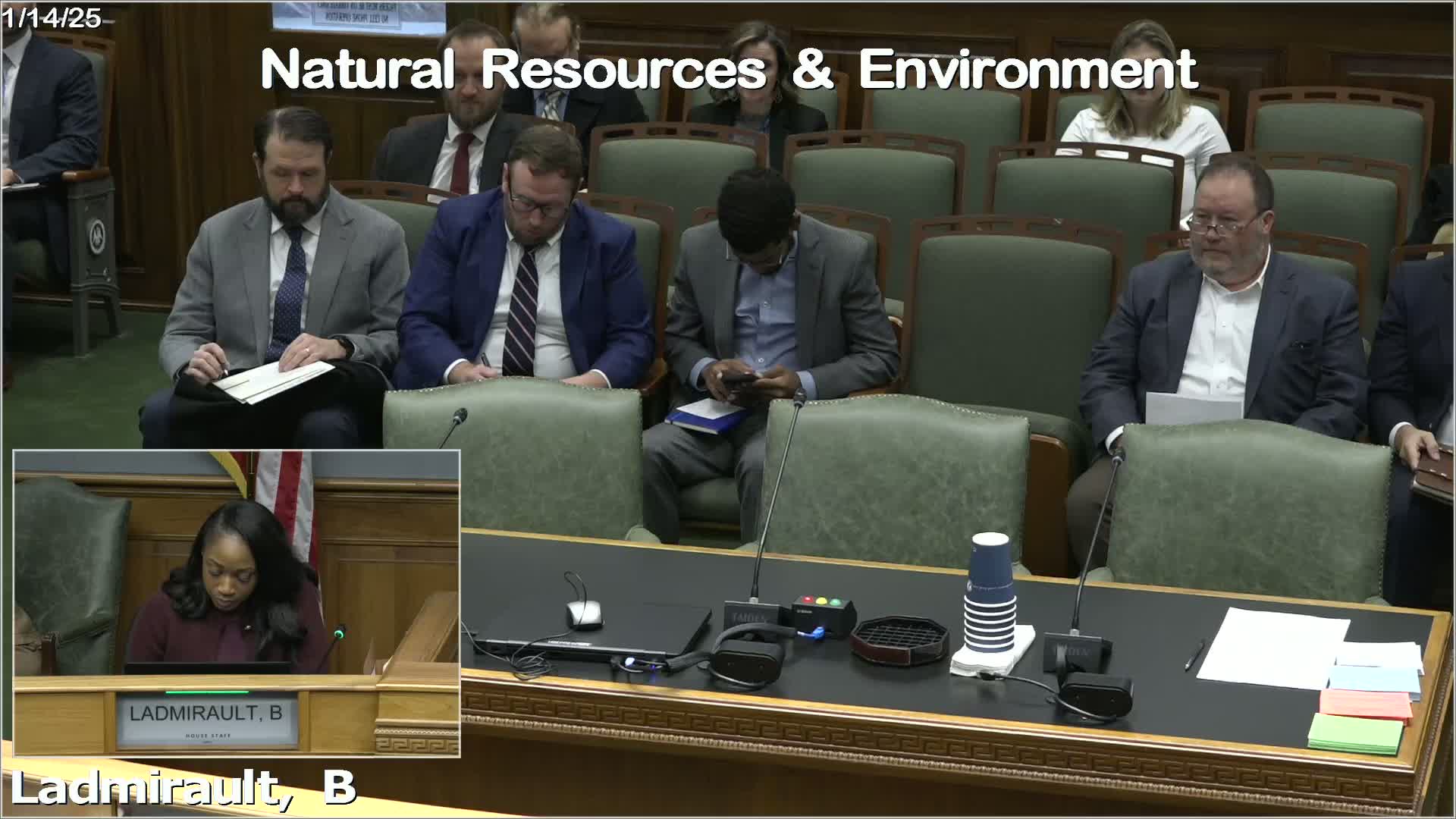
The House Natural Resources Committee held a Jan. 14 study hearing on how revenue from carbon capture and underground injection should be valued and shared with parishes, hearing testimony from the Department of Energy and Natural Resources, industry groups, parish officials and academic experts.
The House Natural Resources Committee met Jan. 14 for a study (HSR5) focused on local revenue from carbon capture, sequestration and related permits.
Department of Energy and Natural Resources (DENR) officials told the committee that the State Mineral and Energy Board, for which DENR provides staff, has authority under Title 30 to negotiate and collect payments for carbon capture and storage (CCS) on state property and water bottoms. Blake Canfield, executive counsel for the department, said the board has negotiated six agreements since October 2021 and has collected more than $58 million total so far, including more than $7 million distributed to parishes under Act 378 of 2023. Canfield described a typical payment structure in the most recent state agreements as an upfront bonus (example: $300 per acre), an annual acreage rent (example: $60 per acre annually) and an injection fee tied to tons of CO2 injected (example cited: $7.50 per ton) with guaranteed minimum annual payments once injection starts.
Tyler Gray, secretary of the Department of Energy and Natural Resources, and Canfield told lawmakers the board has asked staff to study a change to how projects are marketed (moving toward a public bidding model similar to oil and gas leasing), which could affect future valuations. Gray and Canfield also said DENR does not make recommendations about taxing privately owned projects; the department’s remit on state property is to negotiate leases and collect payments under existing law.
Committee members pressed DENR on permitting timelines and capacity. Canfield said Louisiana received primacy from EPA to run the Class VI underground injection control program in February 2024 and that no Class VI permits had been issued…
Already have an account? Log in
Subscribe to keep reading
Unlock the rest of this article — and every article on Citizen Portal.
- Unlimited articles
- AI-powered breakdowns of topics, speakers, decisions, and budgets
- Instant alerts when your location has a new meeting
- Follow topics and more locations
- 1,000 AI Insights / month, plus AI Chat