Get Full Government Meeting Transcripts, Videos, & Alerts Forever!
Get email alerts on the Public Safety Police Fleet topic
No spam. Unsubscribe anytime.
Bluff City board directs attorney to draft ordinance after police vehicles fail; options include repairs or five-car purchase
Summary
At a Bluff City workshop, officials were told the police fleet has multiple failing vehicles. Staff presented repair estimates and a five-vehicle purchase proposal; the board asked the town attorney to draft an ordinance for a first reading at the next regular meeting.
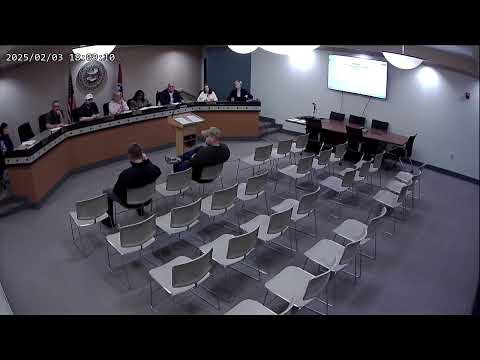
At a Bluff City workshop meeting, board members heard that multiple Bluff City Police Department vehicles are inoperable or nearing failure, and they directed the town attorney to draft an ordinance to place a possible five-vehicle purchase on the next meeting agenda for first reading.
The discussion focused on immediate reliability and safety concerns for officers. "Properly working vehicles are paramount in officers' ability to preserve order in the town, protect the inhabitants and property there in from violence, crime, and all criminal acts," Mayor said at the start of the item. Police leadership described recent breakdowns that left the department short on patrol vehicles and outlined repair estimates and replacement options.
Why it matters: Board members framed the dilemma as a public-safety and fiscal decision—repair aging vehicles now or buy new, fully outfitted SUVs on a multi-year payment plan. Staff and the police department presented cost estimates and timelines to let the board decide whether to repair several older cars or proceed with a bundled purchase that would include warranties and outfitting.
Police account and repair estimates
The Police Chief said the department has nine fleet vehicles, five currently in service and four needing work. The chief described one 2016 Ford Explorer with a failing water pump and transmission issues and a 2016 Ford Taurus with a damaged driver's seat that is out of service. "We're kind of at a critical point where...if we need to do something short term to just kinda get us over the hump," the chief said.
Staff reported itemized, vendor-provided estimates they received during the review: - Water-pump repairs quoted between about $2,500 and $5,000, depending on the shop and the extent of related repairs. - A replacement driver’s seat quoted at $1,830. - A recent tune-up cost the department about $600.
Replacement options and dealer proposal
Michelle, interim town manager, told the board police staff had located used, partially equipped vehicles from a local dealer (Chicago Motors) in the $25,000 range, but noted roughly $15,000 in upfitting would be required for lights, cages, radios and other police equipment, bringing a used-and-upfitted unit toward $40,000.
As an alternative, staff said a dealer offered a packaged purchase of five new, fully outfitted Dodge Durangos at a five-year payment plan totaling about $278,000. That breakdown equates to roughly $67,510 per year over five years, or about $13,502 per vehicle per year, and included a one-year delay on the first payment (first payment due one year after delivery). Staff said delivery from order would take about eight weeks.
Warranty, life-cycle and budget context
Staff and the chief emphasized lifecycle and liability considerations for high-mileage patrol vehicles. Presenters cited manufacturer warranty terms on the new units discussed: three-year/36,000-mile bumper-to-bumper coverage with five-year/100,000-mile powertrain protection on the quoted new vehicles. They also noted that police vehicles accrue heavy "hard miles" (idle time and extended shifts) that shorten service life compared with ordinary passenger cars.
Sharon (staff) provided revenue context for how department collections might offset vehicle costs: she said the department had collected about $212,957 in citations through December and projected significant programmatic revenue in the coming year (including driving school and drug-forfeiture funds), figures board members referenced in the purchase discussion.
Board concerns and staff direction
Board members asked about alternatives (repairing the two most-troubled cars and keeping others in rotation), whether vehicles could be purchased individually rather than in a five-car bundle, auction or trade-in value for retired units, and how the replacement plan would affect future budget cycles. The chief and Michelle recommended a phased replacement plan to avoid repeated high maintenance costs and to improve officer safety and retention.
After the discussion, the mayor asked the town attorney to prepare an ordinance that would place the dealer purchase plan (or a replacement plan the board adopts) on the agenda for first reading at the next regular meeting. Michelle and the chief told the board they would bring back the final numbers, cost comparisons and a short-term repair recommendation for a backup vehicle at that meeting.
Next steps
No formal purchase vote was taken at the workshop. The board directed the town attorney to draft an ordinance for first reading at the next meeting; staff said they would return with updated quotes, a recommended interim repair to restore a backup patrol car, and details on warranty coverage and financing timing if the board pursues the five-vehicle purchase.
For now, the department is operating with limited redundancy: staff said another breakdown could remove a patrol car from service until repairs or a replacement is in place.
Ending
The board scheduled further consideration at its regular meeting, where the attorney's draft ordinance and staff's updated cost/repair information will be presented for first reading and additional direction.