Get Full Government Meeting Transcripts, Videos, & Alerts Forever!
Get email alerts on the K 12 Education topic
No spam. Unsubscribe anytime.
Pleasant Valley Elementary reports higher reading proficiency, improved gap-closing; fourth-grade math progress lags
Summary
School leaders told the Parma City Board of Education that Pleasant Valley Elementary’s state report card showed gains in achievement and gap-closing measures, notable improvement in K–3 literacy and lower chronic absenteeism, while the school earned a low rating on the progress component for fourth-grade math.
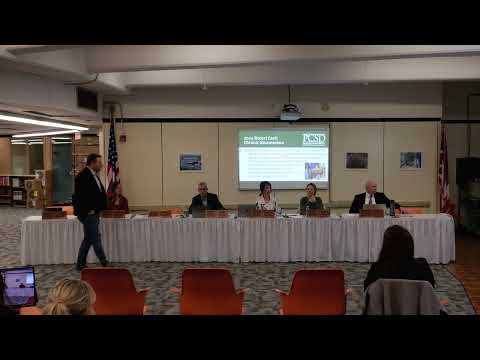
At a meeting of the Parma City Board of Education, a Pleasant Valley Elementary School representative reviewed the school’s latest state report card, reporting a rise in overall achievement, strong gap-closing performance and persistent weaknesses in fourth‑grade math growth.
The presenter said Pleasant Valley is the district’s largest elementary school, enrolling 944 students from about 780 families. The school’s report card showed an increase from three to four stars on the achievement component and five stars on the gap‑closing component, she said. The progress component received two stars, driven largely by lower growth in fourth‑grade math compared with the same cohort’s third‑grade results.
The report card data, the presenter said, indicate more students are performing at proficient, accomplished or advanced levels and fewer are at basic or limited levels in reading and math. The school highlighted a specific improvement in K–3 literacy: a reported rise from 27.2% to 45.5% over the period shown on the report card. The presenter described that change as the number of kindergarten through third‑grade students who moved from “off track” to “on track” for reading proficiency by the end of third grade.
School staff attributed gains to a set of instructional practices and interventions. The presenter described the school’s “instructional playbook,” which includes the board‑adopted curriculum and supplemental resources; weekly teacher‑based team meetings; monthly building leadership meetings; and the guided practice cycle—frequent checks for understanding followed by instructional adjustments. For targeted support, staff use intervention specialists, Title I teachers and English‑learner teachers during a daily prevention/intervention/enrichment block (described as PIE) to provide small‑group instruction tailored to specific skill deficits such as phonemic awareness, phonics, fluency, vocabulary and comprehension.
For gifted learners and English learners, the school coordinates schedules with gifted intervention specialists and provides instruction and enrichment “inside and outside of the classroom,” the presenter said. To address fourth‑grade math growth, teachers have begun using the Ohio State test dashboard from the Educational Service Center of Cuyahoga County to run item analyses and track multi‑year trends. Fourth‑grade teachers also reviewed value‑added reports to evaluate how instruction affected different learner groups.
Chronic absenteeism was another area of progress: the presenter reported a decline from 20.3% to 15.3%. The school described a “build a bridge” family‑partnership approach started in summer 2024, and attendance meetings led by Dean of Students Allison Coakley that bring teachers and support staff together to meet with families at risk of chronic absence and discuss solutions and supports.
The presentation closed with recognition of four third‑grade students who earned the highest levels on the fall third‑grade state reading test. A board member asked a follow‑up question about a school mascot; the presenter replied that the mascot’s name is Spark.
The presentation included several specific next steps: expanded use of the Ohio State readiness assessments for third and fourth grades before the spring state tests and increased emphasis on guided practice and checks for understanding to improve math outcomes. No formal board action on the Pleasant Valley report card was recorded in the transcript excerpt.