Get Full Government Meeting Transcripts, Videos, & Alerts Forever!
Get email alerts on the School Safety Ai topic
No spam. Unsubscribe anytime.
Davidson County delays vote on AI camera pilot after public questions on facial recognition, data and costs
Summary
Davidson County School leaders heard a technical briefing and extended public discussion on a state-funded AI safety pilot from Evident and Raptor Technologies but decided not to vote, postponing a decision until February while collecting community questions and state-required performance data.
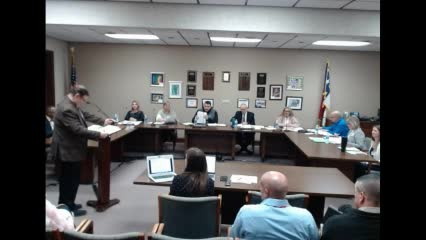
Davidson County Board of Education members heard a detailed presentation and community questions on Jan. 21 about a proposed two‑year pilot that would add Evident’s VI Suite AI analytics to existing school cameras and link alerts into Raptor Technologies’ notification platform. The board did not vote on the contract and agreed to take the matter up in February after further community Q&A and data reporting to the state.
The pilot is funded by a $2,000,000 state grant awarded to Davidson County Schools for an AI school‑safety pilot. Mia Bud and Sean Hall, representing Evident, and Robert “Bob” Johnson, representing Raptor Technologies, described how the system would run on on‑premise edge servers at each school, analyze video for a short list of event types (perimeter intrusion, slip/fall, weapons detection, mass movement and person down) and send a small trigger to Raptor for notification and response. “None of that’s gonna be turned on,” Sean Hall said of facial recognition in the pilot, describing the initial deployment as limited to object and event detection.
Why it matters: supporters say the system shortens the time between a camera seeing a threat and first responder notification from minutes to seconds, potentially improving emergency response; critics worry about false positives, privacy and future switches to facial recognition or license‑plate tracking. Sheriff Simmons and county safety staff backed the pilot as an early‑alert tool for exposed weapons and injured persons, while several board members and community commenters pressed for clear limits, reporting and parental notification.
Evident and Raptor described technical limits and privacy safeguards. The vendors said processing occurs locally on an edge server each school would host and that the solution “doesn’t hold any PII data, at all” and will not run facial recognition during the pilot. Raptor’s Johnson said the Raptor platform only receives a small signal such as “on camera A, I saw a fire, notify this group,” and that Raptor “holds no data. We’re receiving a signal, a trigger, basically.” The vendors said the systems can be configured to notify selected individuals — SROs, principals, nurses — and can optionally integrate with 911 via RapidSOS for automatic call‑center notification.
Board and public concerns focused on several recurring topics: whether facial recognition or license‑plate recognition could be enabled later, data retention and parental consent, the pilot’s recurring costs after the two‑year period, and false positives that could disrupt students. Several parents and board members raised Fourth Amendment and student‑privacy worries and asked for clear policy limits and reporting. One board member summarized the concern this way: parents “absolutely do not want their kids to be in a school that has AI that’s tracking their kids,” while Sheriff Simmons said he preferred to limit the initial use to weapons detection and other immediate safety events.
Vendors and county staff answered technical questions about accuracy and operation. Evident described training the weapon‑detection model from many annotated video frames and said the AI inspects camera frames in real time and raises alerts only when trained objects or behaviors are seen; the company estimated detection latency to be on the order of milliseconds to a couple of seconds, dependent on network conditions. The vendors said the state appropriation that funded the pilots envisions a rollout and that the state is considering how to fund recurring costs, but ongoing support after the pilot remains an open question.
The board did not take a formal vote on the contract. Instead, members directed staff to collect community questions, give vendors time to respond, and report back with quarterly data during the pilot if it proceeds. Vendors and staff confirmed the state requires regular reporting of pilot performance, including false positive counts and other metrics.
Supporters from law enforcement and school safety staff urged the board to try the pilot on three schools first, saying it would provide operational data and that the two‑year period allows the district to withdraw if the system proves ineffective. “I’ll take 10 seconds if it lets us take action,” Travis, the county safety coordinator, said of early warning windows. Opponents urged more protections, transparency and a clear commitment that facial recognition and plate‑reading would not be enabled without board policy and public discussion.
Next steps: the board will accept written community questions and forward them to vendors for timely answers before the scheduled February vote. The state — which allocated pilot funds and will review results — also expects interim reports on detection performance and false positives.