Get Full Government Meeting Transcripts, Videos, & Alerts Forever!
Get email alerts on the Public Health Funding topic
No spam. Unsubscribe anytime.
Rolette County public‑health director warns state aid shortfall is straining services
Summary
Rolette County Public Health described severe funding limits, restricted mill levy revenue and reliance on small grants to sustain immunizations, maternal‑child programs and a Medicaid Health Tracks program that the county says helps hundreds of children.
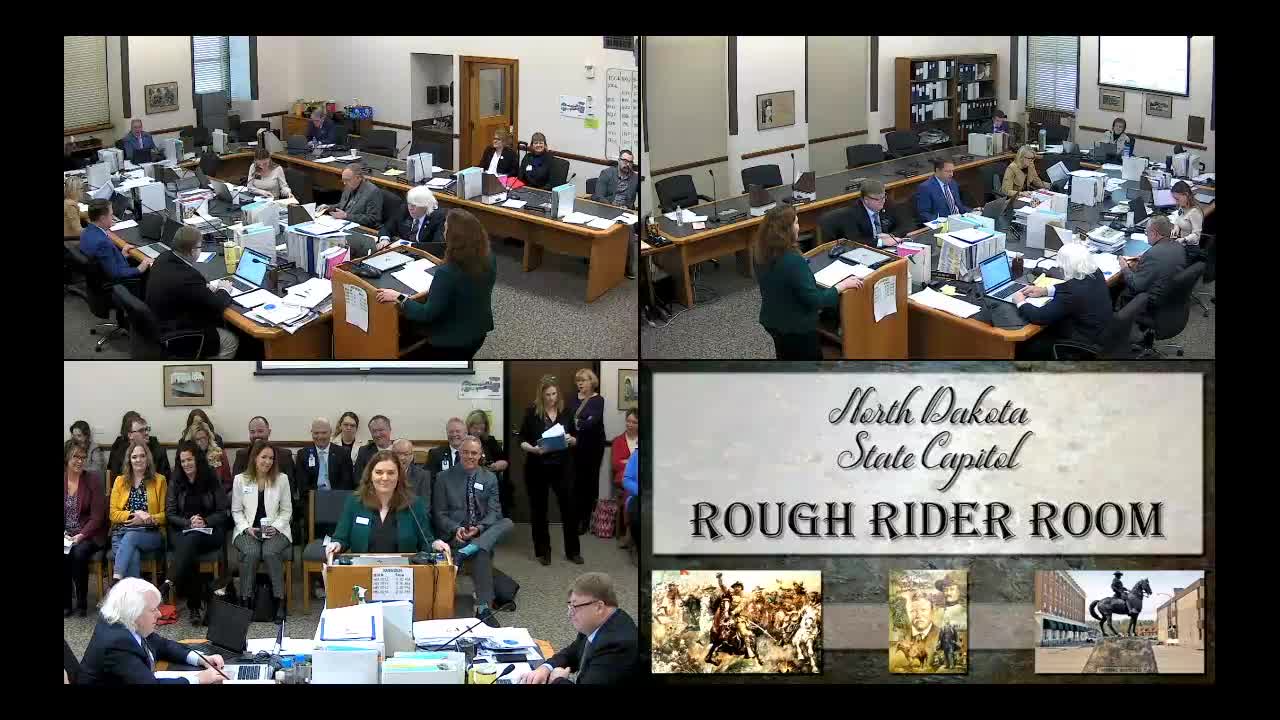
BISMARCK — Barbara Fradland, administrator for Rolette County Public Health, told the Human Resources Division that state aid and local tax caps leave highly impoverished counties without flexible funding to meet basic public‑health needs, and she urged the committee to maintain or increase state aid.
Why it matters: Local public health agencies use state aid and local mill levies for the only flexible revenue to respond to local priorities. Fradland said Rolette County’s mill levy cap and large areas of non‑taxable tribal land limit property‑tax revenue while the county’s public‑health needs remain high.
Key points from testimony - Rolette County receives 5 mills in local public‑health property tax revenue (the statutory maximum), which Fradland said equates to about $117,000 per year for the county and that base plus state aid leaves little discretionary funding.
- Fradland listed small annual grant amounts that are insufficient for some core functions: she said the local emergency‑preparedness award was roughly $3,704 per year and the base immunization grant about $4,800 per year, and she described a maternal‑child health funding line (figures in testimony were provided and are noted in the transcript). She urged more flexible state aid rather than narrowly designated grants.
- Health Tracks: Rolette County runs a Medicaid Health Tracks program that provides well‑child and developmental screenings for Medicaid‑eligible children. Fradland said the program sees roughly 600 children annually (testimony said the county “sees between 609 children” per year through the program) and that state Medicaid reimbursement does not cover all program costs. She described repeated administrative funding shifts and a 2016 change that allowed some administrative reimbursement, but said support was cut again in 2022 and the county has been using state aid and competitive grants to keep the service operating.
Ending Fradland asked the committee to preserve or increase the $8 million biennial state aid pool for the 28 local health units or to add $2 million to make distribution more equitable, saying the current base allotment does not reflect poverty, age or local tax base differences.