Get Full Government Meeting Transcripts, Videos, & Alerts Forever!
Get email alerts on the Public Health Policy topic
No spam. Unsubscribe anytime.
House passes bill to update disease‑control statutes after months of debate over emergency powers and referendum rights
Summary
House Bill 10‑27, a wide‑ranging update to Colorado’s disease‑control law, passed after floor debate and several amendments that addressed immunization timing, hepatitis C screening, and the role of local authorities during prolonged emergencies.
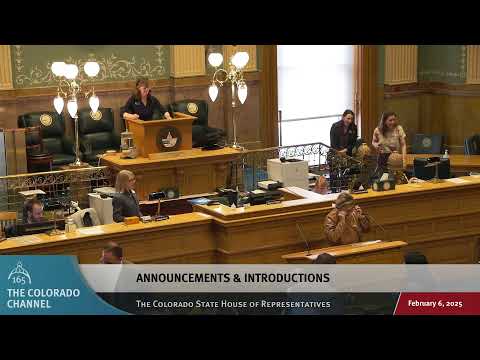
The Colorado House passed House Bill 10‑27 on Feb. 6 after extensive committee debate and multiple floor amendments. Sponsors framed the bill as a modernization of statutes governing disease control, seeking administrative streamlining and several targeted policy changes; opponents raised concerns about parental rights, the scope of executive emergency authority, and the use of a safety clause that would limit referendum rights.
Representative Gilchrist, the bill’s sponsor in the House, said the bill updates the state's public‑health response, removes an obsolete advisory committee, authorizes additional provider types to create immunization records, extends the period students have to come into compliance with school immunization requirements (committee amendment changed the period from 14 to 30 days), and aligns hepatitis C screening with CDC recommendations. Gilchrist also described committee amendments that eased burdens on out‑of‑state camp immunization record handling.
Floor debate focused heavily on the bill's emergency powers provisions and whether to include a safety clause that would prevent a referendum. Representative Johnson moved an amendment to remove a safety clause and add a petition clause to allow a 90‑day referendum period; proponents of the petition clause argued it preserves the people's right to petition and respects local input. Opponents argued the statutory changes require prompt implementation and administrative lead time, and they warned that a petition clause could delay necessary rulemaking. The House debated whether local governments, counties and school districts should have concurrent authority after an emergency state is declared; multiple amendments proposing to expand local authority were discussed and divided the House.
Other floor amendments removed the State Board of Health’s routine oversight of certain internal emergency plans and adjusted the role and timing for approval. Representative Johnson described a motion to strike the safety clause as a protection of the people's First Amendment petition rights. Supporters of retaining the safety clause said some statutory changes required by the bill are administrative and need to be in place at a fixed effective date to avoid implementation gaps.
The transcript shows both procedural and policy amendments were adopted in committee and on the floor (for example, amendments L009, L010, L011, L015 were adopted in committee; L015 and L015‑related actions were adopted on the floor; several floor amendments were later considered and voted on). Representative Johnson announced he would change his vote from committee support to opposing the final bill because of unresolved concerns about parental rights and complexity. After floor amendments and debate, the House adopted the final bill. The transcript records adoption by the House and committee report actions; reported division votes and recorded amendments indicate the measure drew sustained attention across rural and urban delegations.