Get Full Government Meeting Transcripts, Videos, & Alerts Forever!
Get email alerts on the Land Use Access topic
No spam. Unsubscribe anytime.
House adopts bill enabling local review of certain fencing projects in historic land‑grant area after heated debate
Summary
House Bill 10‑23, which requires local permitting for certain fencing projects affecting historic land‑grant access, passed on third reading after extended debate about local control, treaty rights and statewide precedent.
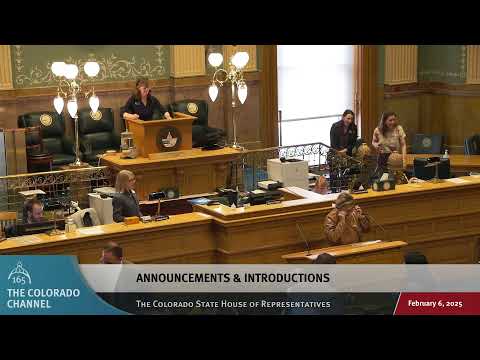
The Colorado House on Feb. 6 approved House Bill 10‑23, a bill requiring review by local governments for certain fencing projects affecting access in the San Luis Valley’s historic land‑grant area. Supporters described the measure as a local‑control tool to address long‑running access disputes tied to a communal land grant; opponents warned the bill could establish a statewide precedent and argued existing court remedies and enforcement mechanisms should be pursued first.
Representative Martinez, the bill’s House sponsor, told the chamber the measure responds to a long‑running dispute over access tied to the 1848 Treaty of Guadalupe Hidalgo and recognized communal grazing, hunting and wood‑gathering rights that have persisted for generations. Martinez said the bill simply requires a person putting up a fence in the affected land‑grant area to seek a permit from the local county and that the measure is designed to give counties “an additive boost” to handle enforcement at the local level.
Representative DeGraff expressed opposition on the floor, arguing the matter involved an existing Colorado Supreme Court ruling and that creating a new statewide law risks unintended, far‑reaching consequences. DeGraff said local enforcement mechanisms existed and cautioned against using the General Assembly as an “easy button” for individual disputes. He warned that a statewide statute could be “weaponized” beyond the sponsor’s intent.
Several members debated whether the bill represented genuine local control or amounted to state intervention. Supporters argued it gives counties discretion and a tool to enforce land‑use decisions locally; opponents said it could be used beyond the single dispute that prompted it and might duplicate existing legal remedies such as court orders or county liens. The record shows both sustained floor remarks and multiple speakers appealing to local control or judicial enforcement.
The House took a roll‑call vote by electronic machine. The Clerk announced the result as 45 yes, 19 no and 1 excused; the presiding officer announced House Bill 10‑23 adopted. The transcript records extended floor debate and multiple speakers from both rural and urban districts, and the sponsor invited colleagues to visit the district to view the site in question.