Get Full Government Meeting Transcripts, Videos, & Alerts Forever!
Get email alerts on the Building Codes Accessibility topic
No spam. Unsubscribe anytime.
House passes bill tightening accessibility standards for commercial and multifamily buildings after heated debate
Summary
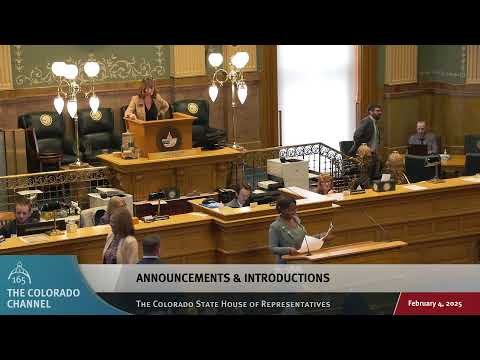
The House on Feb. 4 passed House Bill 10 30, a measure aimed at ensuring that municipal and county building-code updates include accessibility standards at least as stringent as the International Building Code and the Americans with Disabilities Act.
The House on Feb. 4 passed House Bill 10 30, a measure aimed at ensuring that municipal and county building-code updates include accessibility standards at least as stringent as the International Building Code and the Americans with Disabilities Act.
Representative Stewart, presenting the committee report, said the amendment package “defines better what a substantial update is” and limits the IBC provisions to multifamily and commercial buildings while clarifying that “codes cannot provide less protection than the Americans with Disabilities Act.”
The bill’s sponsor, Representative Joseph, asked the chamber to approve the measure after committee changes; lawmakers then debated the bill for more than two hours. Opponents warned the changes could raise housing costs and erode local control. Representative Soukla, who moved an amendment (L004) to narrow the bill further, argued, “If you care about affordable housing, do not put international building codes on us on the Western Slope.” Representative Froelich responded that accessibility in housing is important and that “if there's a bigger need for accessibility, it's probably in housing.”
At the committee stage the House adopted an amendment (L002) that, according to sponsors, limited the IBC application to multifamily and commercial construction and clarified the bill does not reduce protections under federal law. The chamber later considered Amendment L004, which would have removed multifamily dwellings from the bill’s scope; L004 failed on a roll-call vote, 22 yes, 40 no, with 3 excused. A subsequent motion to adopt a Soukla/Coukla-style amendment in the Committee of the Whole also failed on the same tally. The Committee of the Whole report was adopted by the House on a recorded vote of 41 yes, 22 no, 2 excused, and the bill ultimately passed “as amended” on the floor (final voice vote not otherwise recorded in the transcript).
Lawmakers pressing the affordability argument cited cost estimates and permit fees from specific counties. Representative Sukhla cited permitting costs in her district, saying it can cost $2,300 to obtain a building permit in Montezuma County but $120,000 in Gunnison County to obtain necessary approvals — a comparison she said illustrated how applying a single standard statewide could disproportionately affect the Western Slope. Multiple members contended that certain accessibility features can add substantial per‑unit costs; one lawmaker referenced an estimate of roughly $30,000 to make a newly built home fully accessible.
Supporters said the bill protects people with disabilities by aligning certain local code updates with recognized building standards and the Americans with Disabilities Act, and that most municipalities already incorporate IBC-style provisions when they update codes.
The bill record shows two principal floor actions: adoption of amendment L002 (voice vote; tally not specified in the transcript) and rejection of amendment L004 (recorded roll call, 22 yes, 40 no, 3 excused). The final passage was announced on the floor: “House Bill 10 30 passes. As amended.”
Implementation details and next steps were not specified on the floor. The transcript records extensive requests from members for additional cost data and for preserving local control when municipalities update building or land-use codes.
Lawmakers who spoke for and against the measure repeatedly emphasized they support accessibility while disagreeing on how best to balance it with housing affordability and local decision‑making.