Get Full Government Meeting Transcripts, Videos, & Alerts Forever!
Get email alerts on the Counter Uas Acquisition topic
No spam. Unsubscribe anytime.
Nominee vows to improve counter‑UAS coordination; senators press acquisition and repair rights
Summary
Senators asked Dan Driscoll about countering small unmanned aircraft system incursions, accelerating directed-energy and other countermeasures, and acquisition reform including data rights and right-to-repair; Driscoll promised to pursue greater interagency coordination and to work with industry and the committee on procurement solutions.
Senators used the confirmation hearing to press Dan Driscoll on countering small unmanned aircraft system (UAS) incursions, acquisition reforms and data-rights issues that affect readiness and repair timelines.
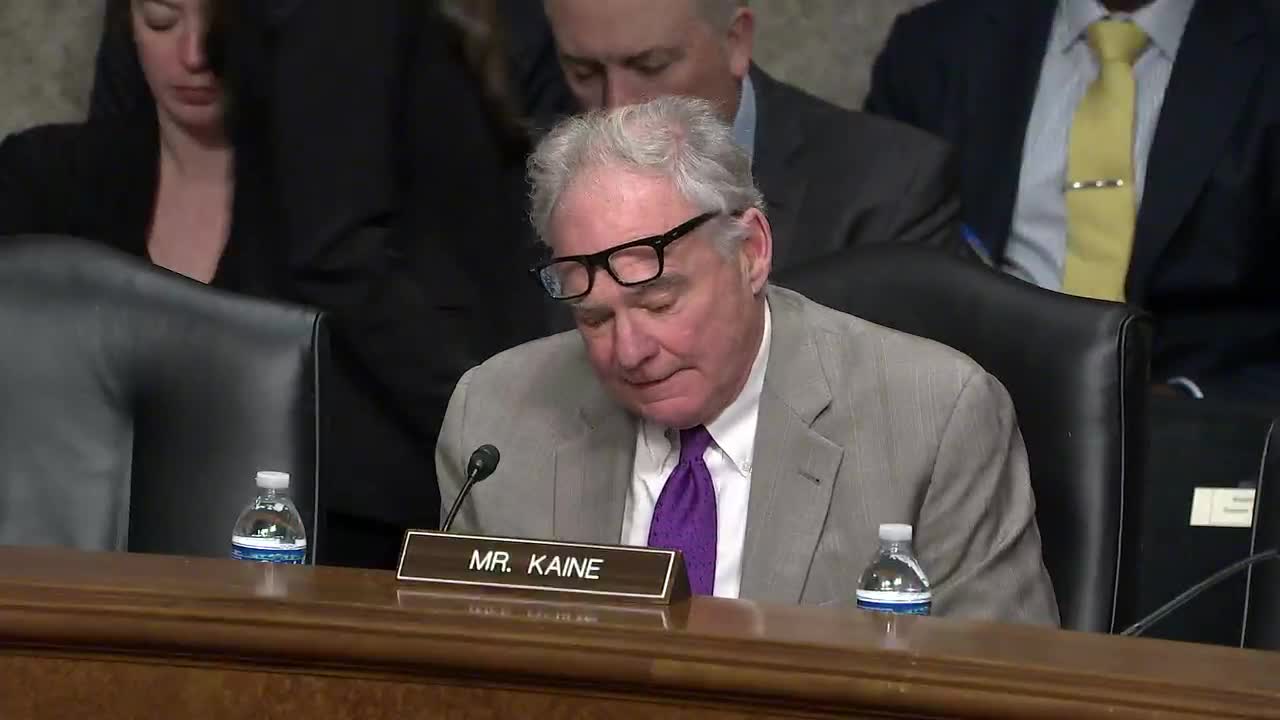
Senator Tim Kaine asked about repeated small-UAS incursions at bases such as Langley and noted the Army is the Department of Defense executive agent for counter‑small‑UAS efforts. Kaine said the incidents at Langley occurred over 17 days and that the Pentagon has not provided clear answers; he asked what Driscoll would do to ensure joint doctrine and coordination across services. Driscoll said "the buck falls between a lot of different agencies" and emphasized the need to build communications networks, establish standard operating procedures and empower agencies with appropriate authorities and technologies — including directed energy — to identify, interdict and learn from incursions.
Several senators, including Elizabeth Warren, raised acquisition problems that hinder rapid repair and sustainment. Warren described cases where contractors' data‑rights restrictions prevented the Army from obtaining simple parts quickly and gave an example of a cover for a safety clip that the Army was able to 3D‑print for a fraction of the contractor price when the contract permitted it. Warren said data rights and proprietary restrictions increase costs and reduce readiness. Driscoll replied "unequivocally" that the ability to obtain parts quickly and cheaply improves readiness and pledged to work with the committee on data rights and other acquisition reforms.
Why it matters: Small-UAS incursions present operational risks and intelligence gaps; acquisition restrictions can slow repairs and raise sustainment costs. Both areas bear directly on warfighting readiness and the Army’s ability to operate in contested environments.
What’s next: Driscoll committed to review counter‑UAS coordination and to work with Congress on acquisition and right‑to‑repair reforms if confirmed. Senators signaled they will follow up with requests for briefings and documentation.