Get Full Government Meeting Transcripts, Videos, & Alerts Forever!
Get email alerts on the Public Health topic
No spam. Unsubscribe anytime.
House restores certification route for backflow testing, passes HB10‑77
Summary
Lawmakers approved House Bill 10‑77 to allow certified nonplumbers as well as licensed plumbers to inspect, test and repair backflow prevention devices, with amendments to preserve regulatory reporting and clarify fire system work.
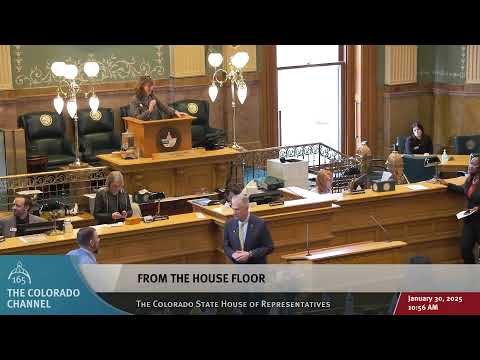
The House passed House Bill 10‑77 on second reading after floor debate emphasizing industry collaboration and consumer protection. The bill restores the ability of nonplumbers who hold a national backflow certification to inspect, test and repair backflow prevention devices, reversing a July regulatory change that would have limited work to licensed plumbers with additional certification.
Representative Ricks and Representative Leader, sponsors of the prior plumbing bill and the co‑sponsors of the measure, said HB10‑77 incorporates text from earlier legislation and months of stakeholder negotiation, including the Water Interim Committee, Water Utilities, the plumbing industry, contractors, labor unions, backflow businesses, DORA and CDPHE. "We need this bill to ensure that Colorado has enough inspectors to protect the state's drinking water," Representative Ricks said.
Floor amendments were added in committee and described on the floor. Amendment L004 preserves the existing regulatory framework for reporting backflow assembly testing to public drinking water systems and maintains Colorado Department of Public Health and Environment oversight, a sponsor said. Amendment L002 clarified that sprinkler fitters are explicitly permitted to install or reinstall backflow devices on standalone fire suppression systems.
Supporters said the bill prevents disruption to testing and water quality oversight and avoids the need for new rulemaking that could cause gaps in service. Representative Richardson urged the chamber to "do no harm," saying the bill corrects an unintended consequence of prior legislation that threatened a long‑standing sector. The transcript shows the committee report and then final passage by voice vote; the House approved the bill on second reading as amended.