Get Full Government Meeting Transcripts, Videos, & Alerts Forever!
Get email alerts on the Army Recruiting Jrotc topic
No spam. Unsubscribe anytime.
Senate committee presses Driscoll on recruiting shortfalls, 300-school JROTC waiting list
Summary
Senators pressed nominee Dan Driscoll on Army recruiting challenges, the JROTC waiting list and the Future Soldier training program; Driscoll pledged to review recruiting strategy and work with the committee on JROTC expansion and waiver processes.
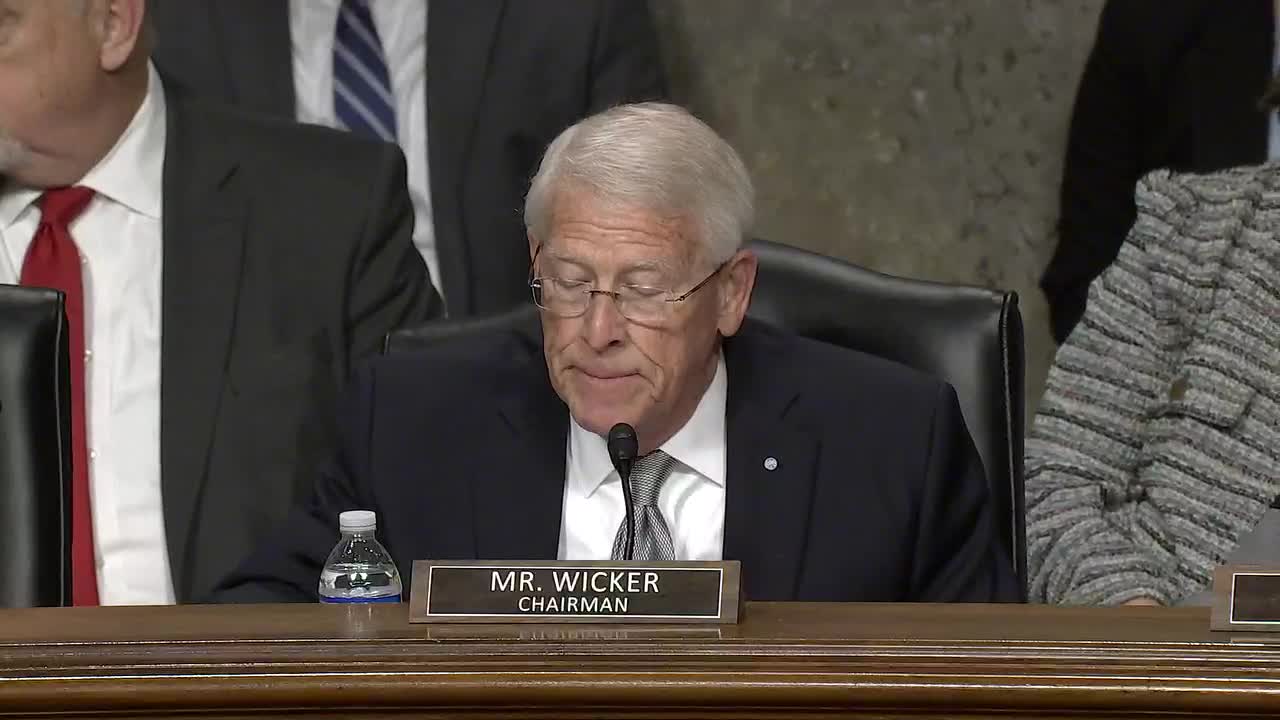
At the Senate Armed Services confirmation hearing for Army nominee Dan Driscoll, Chairman Roger Wicker and other senators pressed Driscoll on persistent recruiting shortfalls and a congressional directive to expand Army JROTC units.
Wicker said the Army “has more than 10,000 fewer recruits than it did in 2023” and noted roughly 300 high schools remain on a JROTC waiting list despite statutory direction to expand units. He told the nominee his committee "intends for the statute to be followed" and asked how Driscoll would reduce the backlog.
Driscoll said the issue "requires focus from the top" and described JROTC as a community-level pipeline that can produce multi-generation service. He committed, if confirmed, "to looking at this, working with the team" and to cooperating with Wicker’s office. Driscoll pointed to the Future Soldier Preparatory Course at Fort Jackson as an example of a scaled program that appears to improve basic training outcomes and ASVAB scores.
Ranking Member Jack Reed raised concerns about readiness if the Army’s time and training are diverted to border missions. Reed said fully readying formations "requires extensive time, training, and opportunities to innovate," and asked Driscoll how he would ensure soldiers’ training is not consumed by border support. Driscoll replied that the Army "stands ready to execute on any mission from the president of the United States and secretary of defense," but said he would consider the stress assigned missions impose on families and readiness if confirmed.
Senators also pressed on waiver processes and administrative changes that affect access to service. Driscoll suggested a deep review of medical-record digitization and waiver incentives, saying some digitized records have produced unintended consequences that exclude otherwise qualified applicants; he recommended exploring pathways and mechanisms for waivers.
Why it matters: The Army’s ability to meet recruitment goals determines force size and readiness. Statutory direction to expand JROTC units is intended to increase community ties and the recruiting pipeline; the committee signaled it expects compliance and faster implementation.
What’s next: Driscoll pledged to review recruiting strategy, JROTC implementation and waiver procedures if confirmed and to work with this committee on scaling successful preparatory programs.