Get Full Government Meeting Transcripts, Videos, & Alerts Forever!
Get email alerts on the Dual Language Education topic
No spam. Unsubscribe anytime.
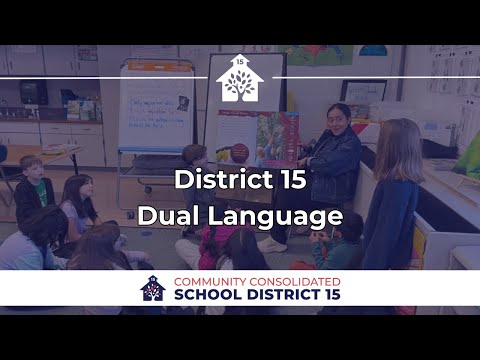
Palatine CCSD 15 outlines K–5 Spanish-English dual language model, highlights student benefits
Summary
Palatine CCSD 15 described its kindergarten-through-fifth-grade Spanish-English dual language program, which begins with 80% Spanish instruction in kindergarten and phases to a 50/50 split by third grade; district speakers and community members highlighted cognitive and cultural benefits and the option to continue through middle school.
Palatine CCSD 15 presented details of its Spanish-English dual language program for incoming kindergarten students, describing an 80% Spanish/20% English start in kindergarten that shifts 10 percentage points each year until reaching a 50/50 split in third grade, district staff said.
The program, open to native Spanish speakers, native English speakers and students with varying proficiencies, runs from kindergarten through fifth grade; after fifth grade students may continue in designated dual language middle schools or return to their home school for a monolingual program, a principal said.
"District fifteen's Spanish dual language program is a strong reflection of our district's mission to honor our diverse learners in reaching their full potential," District staff member (unnamed), Palatine CCSD 15, said. The presenter said students in the program study the same grade-level curriculum as their monolingual English peers but receive instruction in both Spanish and English over the six-year K–5 sequence.
A parent speaker (unnamed) described reasons for enrolling children: "We chose the dual language program for our kids because we really wanted them to learn how to read, write, and speak in 2 languages. But also we really wanted to give them the opportunity to be immersed in another culture that's different from our home culture." The parent also cited cognitive benefits, saying the program "enhances their problem solving skills. It improves their memory and increases mental flexibility."
The principal of Kimball Hill (unnamed) said the school has seen an increase in cross-cultural friendships since implementing the program and described classroom practices such as pairing students who are stronger in one language with peers who are stronger in the other. "You hear your little voices using such big academic numbers or such beautiful form sentences," the principal said, adding that students learn to connect, compare and bridge languages.
A student (unnamed) reflected on personal pride in bilingualism, saying, "Bilingual is my superpower." The principal gave a classroom example in which a fifth grader used Spanish to assist a family at a PTO book fair at Jane Addams, and said that moment underscored the program's practical benefits.
Program structure and participation details cited at the presentation: - Open to all incoming kindergarten students and composed of native Spanish speakers, native English speakers and students with varying proficiencies. - Instructional language split: kindergarten 80% Spanish/20% English; each year shifts 10% toward English until a 50/50 split is reached in third grade; 50/50 continues through fifth grade. - Students complete the program at the end of fifth grade and may opt to continue in dual language at designated middle schools or return to their homeschool for monolingual instruction.
Funding sources, enrollment caps, specific designated middle schools for continuation and program start date were not specified during the presentation.