Get Full Government Meeting Transcripts, Videos, & Alerts Forever!
Get email alerts on the Child Care Ratios topic
No spam. Unsubscribe anytime.
Delegate Barnes, co-sponsor McAskill seek to loosen child-care ratios, file amendments to the bill
Summary
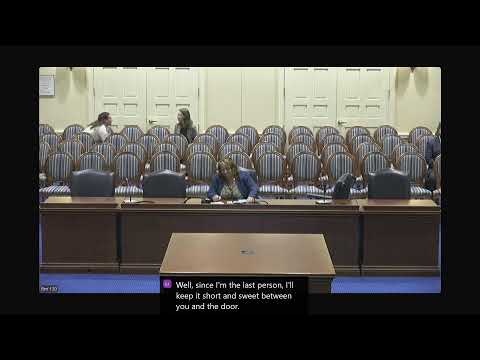
Sponsors told the Ways and Means Committee that House Bill 477 would expand child-to-provider ratios in family child-care homes and child-care centers and asked MSDE to study out‑of‑state practices; stakeholders urged caution, citing workforce stress and infant care challenges. No vote was taken; the item was heard as a bill hearing.
House Bill 477, introduced to the Ways and Means Committee on Feb. 5, would relax statutory limits on the number of children per caregiver in family child‑care homes and child‑care centers and require the Maryland State Department of Education (MSDE) to study how other states set ratios for family providers and recommend changes.
Sponsor remarks framed the measure as a cost‑containment and access tool for the state'funded child‑care scholarship program. "Our state ratio of childcare providers to children is so low compared to our peers," Delegate Barnes told the committee, adding that the state's scholarship program has grown rapidly and that the committee previously expanded participation.
Barnes said the bill's original ratios were "more aggressive" than intended and that sponsor amendments—filed to the committee'floor system—both lower the center ratios and direct MSDE to examine other states' approaches for family child‑care homes. The sponsor said those amendments make the bill closer to peer states and that he deferred to the committee on policy specifics.
Beth Morrow, director of public policy at Maryland Family Network, testified in support of the committee's work on child care but cautioned against simple state‑to‑state comparisons. "State by state comparisons as are called for in the study language in the amendments are fraught with nuance," she told members, and she urged attention to workforce stress, turnover and the difficulty of caring for infants.
Committee members asked clarifying questions. Delegate Roberson reviewed the amendment's age‑group changes in the floor system and summarized the amended ratios in response to committee queries; Roberson said the amendment adjusts age groups and ratios across several brackets. Delegate Plokovich Carr noted written testimony from the Maryland State Childcare Association recommending a work group or broader look at regulations for family providers.
No formal committee action or vote was recorded in the transcript; the item was presented as a bill hearing and concluded with the sponsor thanking the chair.
Why it matters: The child‑care scholarship is a major state expense, and sponsors described the bill as a way to expand capacity without cutting benefits to families or providers. Opponents and experts cautioned that easier ratios could increase staff burnout or risk safety if not matched with supports such as higher reimbursement, shared services, or incentives to serve infants.
Next steps: The bill will proceed through the committee process; sponsors said they submitted amendments and expect further consideration by Ways and Means and Appropriations (for reimbursement and fiscal impacts).