Get Full Government Meeting Transcripts, Videos, & Alerts Forever!
Get email alerts on the Prescription Drug Pricing topic
No spam. Unsubscribe anytime.
House bill would expand Prescription Drug Affordability Board authority to set statewide price limits
Summary
Sponsors urged that the Prescription Drug Affordability Board be allowed to set upper payment limits for commercial plans as well as state and local governments; supporters cited high drug costs and international price gaps, while industry and patient witnesses warned of access risks and urged other reforms.
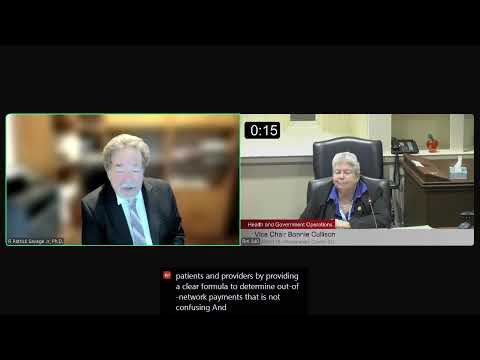
Vice Chair Bonnie Collison urged the House Health and Government Operations Committee to give a favorable report to House Bill 4-24, legislation to expand the authority of the Maryland Prescription Drug Affordability Board to set statewide upper payment limits (UPLs) for prescription drugs. Collison framed the bill as a tool to reduce drug prices for all Marylanders by allowing the board — created in 2019 and already working on government plans — to use its processes to set ceilings in the commercial market.
The bill’s sponsors said the board already has an established cost-review and stakeholder process and that expanding authority is the logical next step. “Between 2020 and 2024 the price to the State for two diabetes and heart drugs grew from $14.5 million to $29.3 million,” Vice Chair Bonnie Collison said, and she cited examples of U.S. list prices far above German prices for the same drug brands to illustrate the scale of the gap. Executive Director Andrew York of the Maryland Prescription Drug Affordability Board described ongoing cost-review work on six drugs and said the board’s existing processes would require regulatory updates but are fundamentally compatible with the change the bill proposes.
Supporters included patient advocates and organized groups. Benny DeMarco of the Maryland Health Care for All Coalition, AARP, AFSCME and others urged expansion to help patients who “leave prescriptions at the counter.” Michelle Eberly, executive director of the Maryland Health Benefit Exchange, provided written and oral support and said the eight high-cost products identified for review accounted for a material share of spending in the individual market.
Opponents including pharmaceutical industry representatives and some patient witnesses told committee members they feared UPLs could disrupt supply chains or reduce access to specialized medicines. Kristen Pardy of PhRMA testified that no state has implemented UPLs and warned states to tread carefully. Patient witnesses described worry that policy actions could trigger denials, prior authorization or changes in coverage that would affect continuity of care; several said they had experienced barriers to treatment or high out‑of‑pocket costs.
Several committee members and witnesses noted the board’s multi-year history: the board was created in 2019 but funding and stakeholder appointments delayed implementation until later. Sponsors stressed that the bill includes a contingency that would delay any statewide UPLs until state and local government pilot authority is successfully implemented. Andrew York told members that regulations governing the board’s policy-review process are open for public comment and that staff expect to complete reviews on the board’s initial drugs by the end of the year.
The committee heard technical and policy questions about whether savings would reach consumers. Sponsors pointed to the Maryland Insurance Administration’s role in rate review and urged that lower drug costs would put downward pressure on premiums over time. Opponents argued that insurers and pharmacy benefit managers (PBMs) largely determine out-of-pocket costs at the counter and that UPLs alone would not directly lower pharmacy co‑pays for many patients. Several witnesses and members urged complementary legislation addressing PBM practices, accumulator programs and insurer pass-through of rebates.
The committee did not take a vote during the hearing. Sponsors said they would work with the board and stakeholders on regulatory and implementation details.
Supporters: Vice Chair Bonnie Collison (bill sponsor); Delegate Jen White Holland (co-sponsor); Andrew York (Executive Director, Maryland Prescription Drug Affordability Board); Michelle Eberly (Maryland Health Benefit Exchange); Benny DeMarco (Maryland Health Care for All Coalition); patient witnesses. Opponents: PhRMA representative Kristen Pardy; several patient and provider witnesses who cautioned about access and supply risks. No formal action or vote was recorded at the hearing.