Lifetime Citizen Portal Access — AI Briefings, Alerts & Unlimited Follows
Bill would replace state treasurer on Maryland Environmental Service board with planning secretary
Loading...
Summary
Delegate David Stein’s House Bill 344 would remove the state treasurer from the Maryland Environmental Service board of directors and add the Secretary of the Department of Planning; sponsors say the change eases a staffing burden on the Treasurer’s Office while keeping oversight.
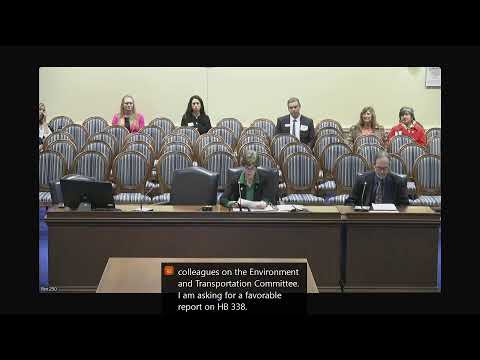
Delegate David Stein, sponsor of House Bill 344, told the House Environment and Transportation Committee on Feb. 5 that the bill would "remove the state treasurer from the MES board of directors, and replace that position with the secretary of the Department of Planning." He framed the change as a practical response to evolving demands on the Treasurer’s Office following its takeover of the 529 college savings program in 2023.
The bill’s lead sponsor said the move would “assist both MES and the treasurer's office by retra by replacing the treasurer on the MES board with the secretary of planning,” and urged the committee to grant a favorable report.
Maryland Treasurer Derek Davis, who appeared in support, agreed that the duties required by ongoing management of the 529 program and other trustee responsibilities have required substantial time and staff attention. “The duties and responsibilities of the office, with 529 … require a lot of ongoing attention from myself and the staff,” Davis said, adding that he supports shifting the board seat to the planning secretary because that office “may be a better fit at this point in time.”
Dr. Charles Glass, executive director of the Maryland Environmental Service (MES), testified in support of the bill and described operational reasons for the change. MES operates as a non-budgeted, independent unit funded by contracts and, Glass said, “in order to proceed, the board has to approve those contracts… it requires 5 of our 7 voting members to be present and to approve any item.” He said vacancies and conflicts among technically qualified board members have at times created precarious quorum situations, and that the planning secretary’s engagement on environmental boards makes that office a sensible replacement for the treasurer on MES’s board.
No formal vote occurred during the hearing; the sponsor and witnesses requested a favorable report and the panel moved on to other bills after testimony and brief questioning.