Get Full Government Meeting Transcripts, Videos, & Alerts Forever!
Get email alerts on the Social Media Policy topic
No spam. Unsubscribe anytime.
Edgewood council discusses officials' social media use after Linke v. Fried decision
Summary
Council members and the city's attorney discussed when officials' social media use counts as an official act, legal risks under Washington law, and best practices such as separate accounts and clear disclaimers. No policy was adopted.
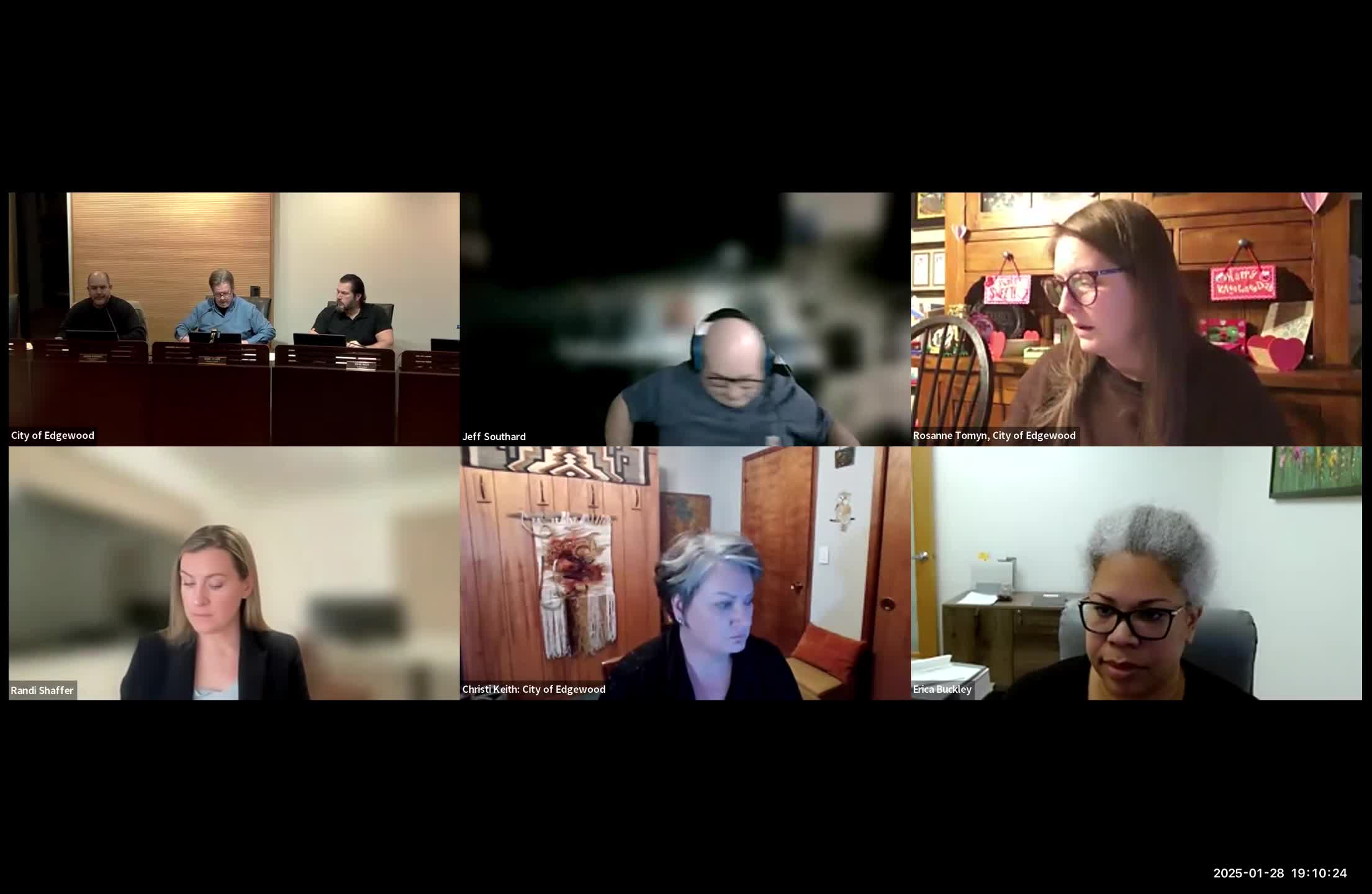
Edgewood Mayor Olsen and council members discussed legal and practical limits on elected officials' social media use at the City Council meeting on Jan. 28, 2025, focusing on the U.S. Supreme Court decision cited in the transcript as Linke v. Fried and on Washington state public-records and open-meeting laws.
The conversation matters because council members' personal posts can create legal exposure for the city under Washington's Public Records Act and Open Public Meetings Act and can blur whether a post is a private comment or an official action. Attorney Randy Schafer told the council that avoiding that blur is the primary way to reduce risk.
Schafer, a lawyer with the firm covering city legal matters that night, said the risks fall into two categories: the city's responsibilities in setting a social-media policy and the individual conduct of council members. "There's the city's action with having a social media policy, and there's also the actions that the council members can take as individuals," Schafer said. He advised separating private and public accounts, marking official posts, or using a disclaimer that a personal page "is not an official city account." He added that inconsistent moderation' deleting or blocking comments on a public-facing page' is what created legal trouble in the case the council reviewed: "The issue with the Linke case is that there was no, moderating of the comments. He was just deleting things, blocking things. There was no consistency."
Council Member Christy Keith, who requested the item, said the topic arose from ethics training and concern about appearances when council members repost or share city material on personal feeds. "One of the easiest examples is to have a statement' have a policy that says the city approves no personal social media use to discuss official city business," Keith said, urging the council to make the boundary clear so that individuals and the city are protected.
Council Member Roseanne said the training she attended warned that sharing city posts from personal accounts or reposting city content could be treated as creating an official forum, exposing personal communications to public-record requests. "...talking about an organization on my personal Facebook page opens up my personal communications in FOIA," she said, noting that appearing to speak for the city can carry liabilities beyond First Amendment claims.
Schafer summarized practices his office recommends: maintain separate private and official accounts; if a public account is used, label official versus personal content; adopt a clear city policy on moderation; and avoid using personal accounts to conduct or record official business. He also reminded members that federal court rulings do not erase Washington-specific public-records or open-meetings obligations.
The council concluded the discussion with no formal vote or action to adopt a policy recorded in the meeting minutes. Schafer said the city attorney's office can provide model policies and further guidance if the council requests it.
The exchange occurred during the regular council meeting while the city's attorney or an attorney from the same office was available to answer questions; no ordinance or written policy was proposed or approved at this meeting.
Looking ahead, council members said they would continue the dialogue and consider returning the matter for a formal policy discussion if they want the city to prepare a written social-media policy for adoption.